



Category :
Tatsudayama Public Toilet Project
立田山公衆トイレプロジェクト
Public toilet @ Tatsudayama, Kumamoto [unbuilt]
Design Yu Yamada, Shota Kaneko, Mako Shimanuki /SNARK Inc.
Structural design: Kakeru Tsuruta /TECTONICA INC.
Total area: 50.00㎡
Proposal: June 2020
森を纏うトイレ
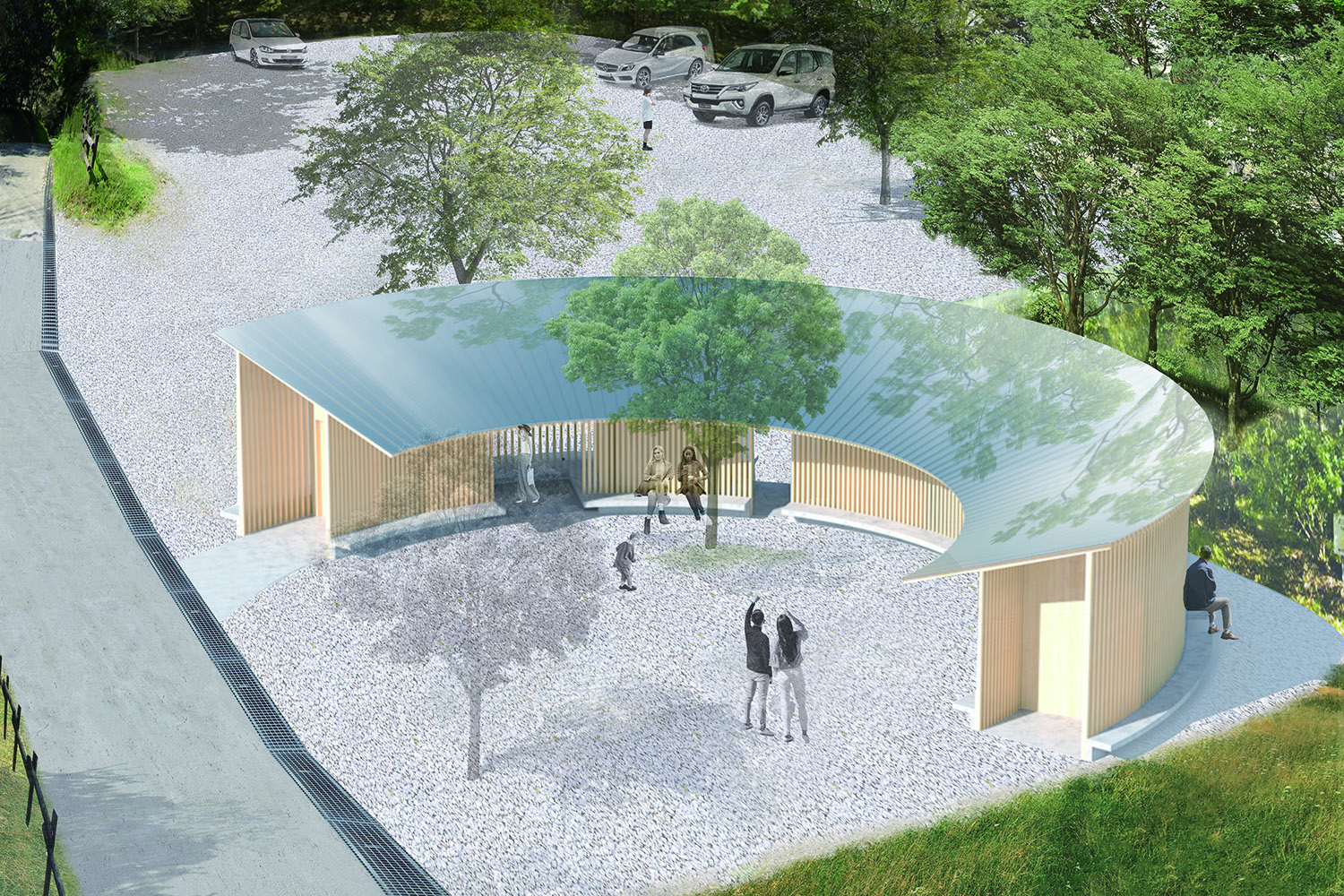
熊本市内の緑地公園内に建つ公衆トイレの計画である。市民の憩いの場となっている森の中に、人と自然・人と人を繋ぎ、利用者が選択的に関係を築ける場所としてのトイレを提案した。要求された設備の他に大きな洗い場や休憩スペースを設ける事で多様な使い方に対応し、自然の中での様々な活動の起点となる建築を思い描いた。
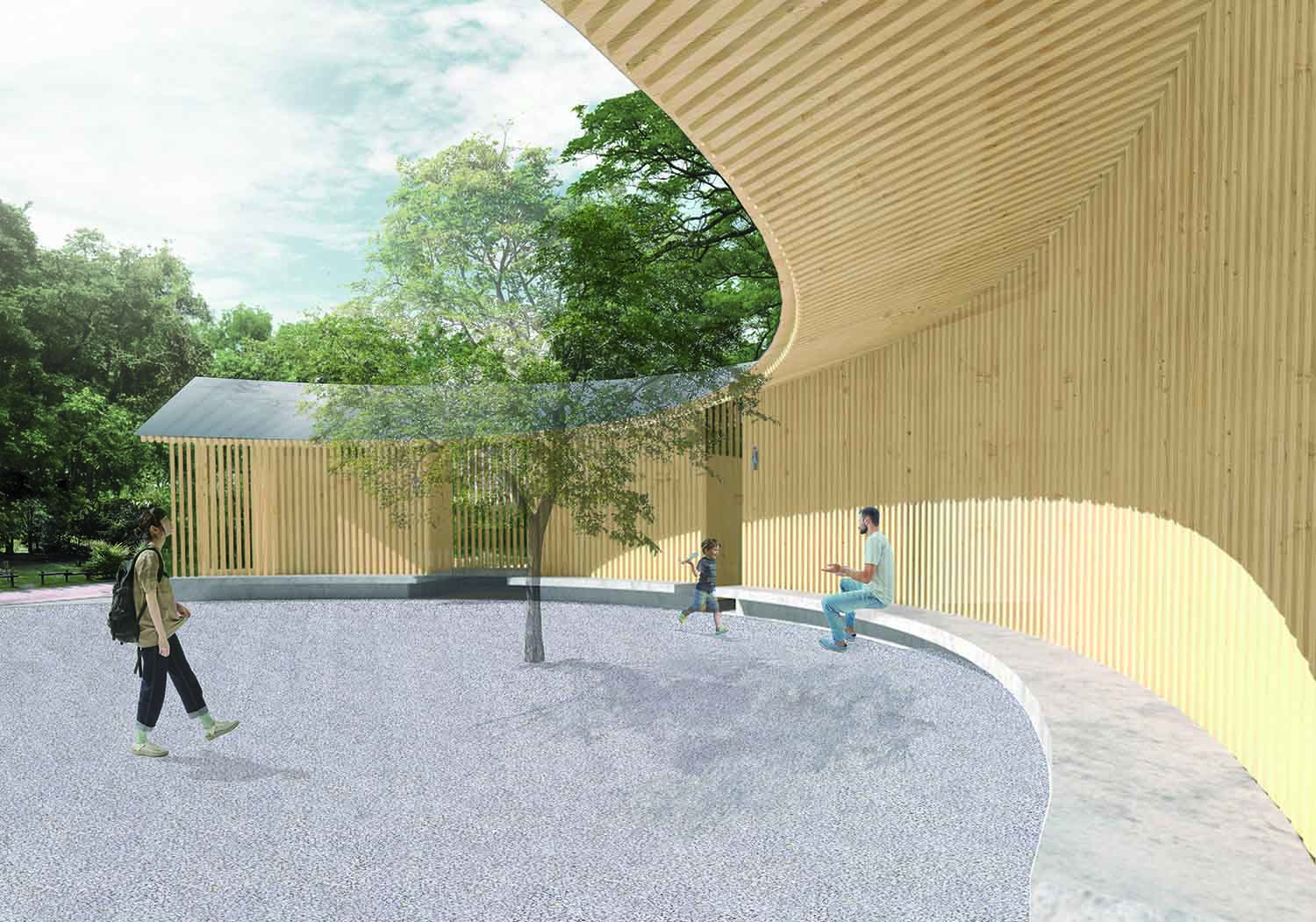
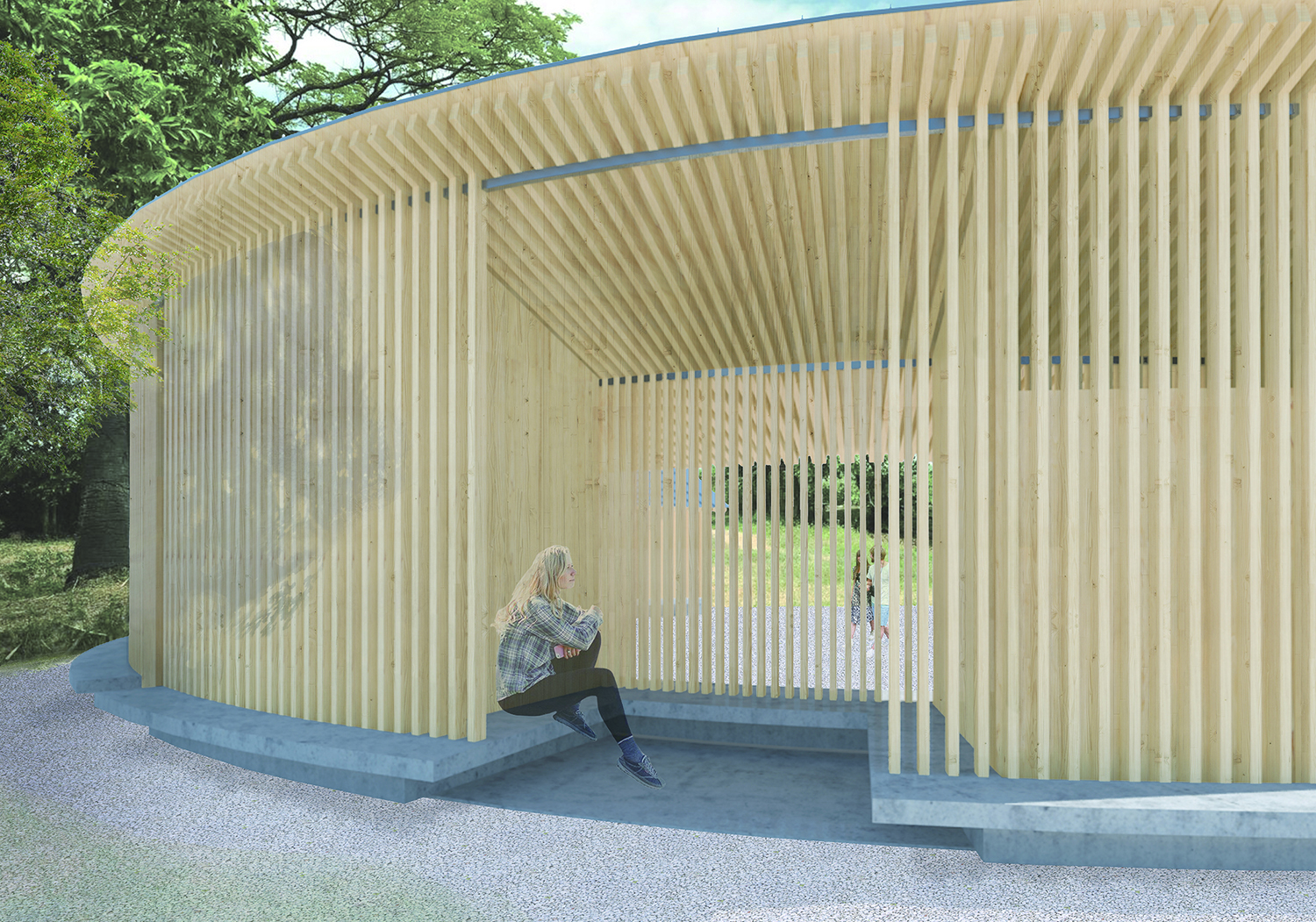
間伐材を利用した50mm x 100mm の小径材を敷地内の既存の木を避けながら円弧状に並べ、自然の中に溶け込む軽やかな架構とした。等間隔で並べられた柱の隙間は視線と風の抜けを生む。柱は見込み方向に大きく、円弧上に並べられているため正対した面のみ視線が抜け、トイレとしてのプライバシーにも配慮している。見る位置によって視線の抜けや見え方が変化するシークエンシャルな架構である。夜はトイレ内部の灯りが柱の隙間から外に漏れ周囲を優しく照らすことで防犯性も高めている。外周部には基礎の立ち上がりと一体のコンクリート製のベンチを設けることで柱脚を雨濡れや虫害から守り耐久性を向上させた。屋根にはステンレス鏡面等の反射性の高い金属材を葺く事で敷地背面に広がる森を低く構えた広場側へ抽象的に反射し、虚像としての森を纏うことで象徴的な佇まいを獲得している。
Restroom Clothed in the Forest
Located within a green park in Kumamoto City, this public restroom was designed as a place to connect people with nature and each other, allowing users to engage with their surroundings selectively. Beyond the required amenities, we incorporated a large wash area and resting spaces to accommodate diverse park activities, envisioning the building as a hub for interaction within the forest.
The structure features 50mm x 100mm thinned timber arranged in an arc, carefully positioned to avoid existing trees while blending into the landscape. The spacing between the pillars provides natural ventilation and filtered views. Because of the depth of the timber and the curved layout, sightlines only pass through when facing the pillars directly, ensuring privacy. This creates a “sequential” experience where the visual connection to the forest shifts as one moves. At night, light from within glows through the timber, illuminating the surroundings for safety. Along the perimeter, a concrete bench integrated with the foundation protects the timber bases from rain and insects while providing a place for visitors to sit. The roof is finished with highly reflective stainless steel, abstractly reflecting the forest behind the building. By “wearing” the reflected forest as a mirror image, the architecture achieves a symbolic presence that harmonizes with its environment.