



Category :
House in Nonakamachi
野中町の家
Residence @ Maebashi, Gunma
Design: Rei Oshima /SNARK Inc.
Structural design: Shin Yokoo, Keita Kisami /OUVI
Interior coordinate: Tsuyoshi Yazawa /poubelle
Construction: Sakura Construction
Total area: 116.32㎡ (1F/58.16㎡ 2F/58.16㎡)
Completion: Jan. 2023
Photo: Ippei Shinzawa
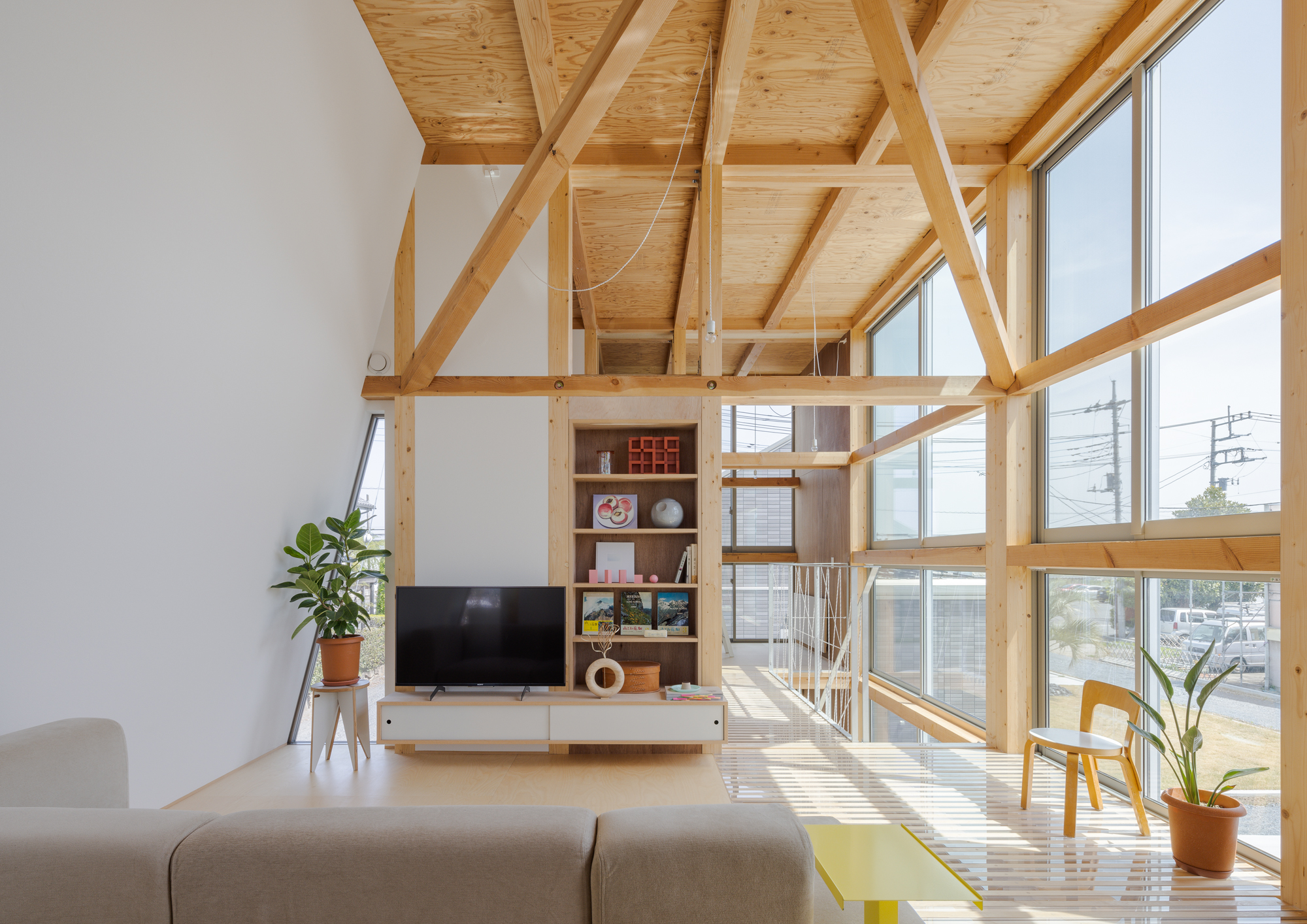
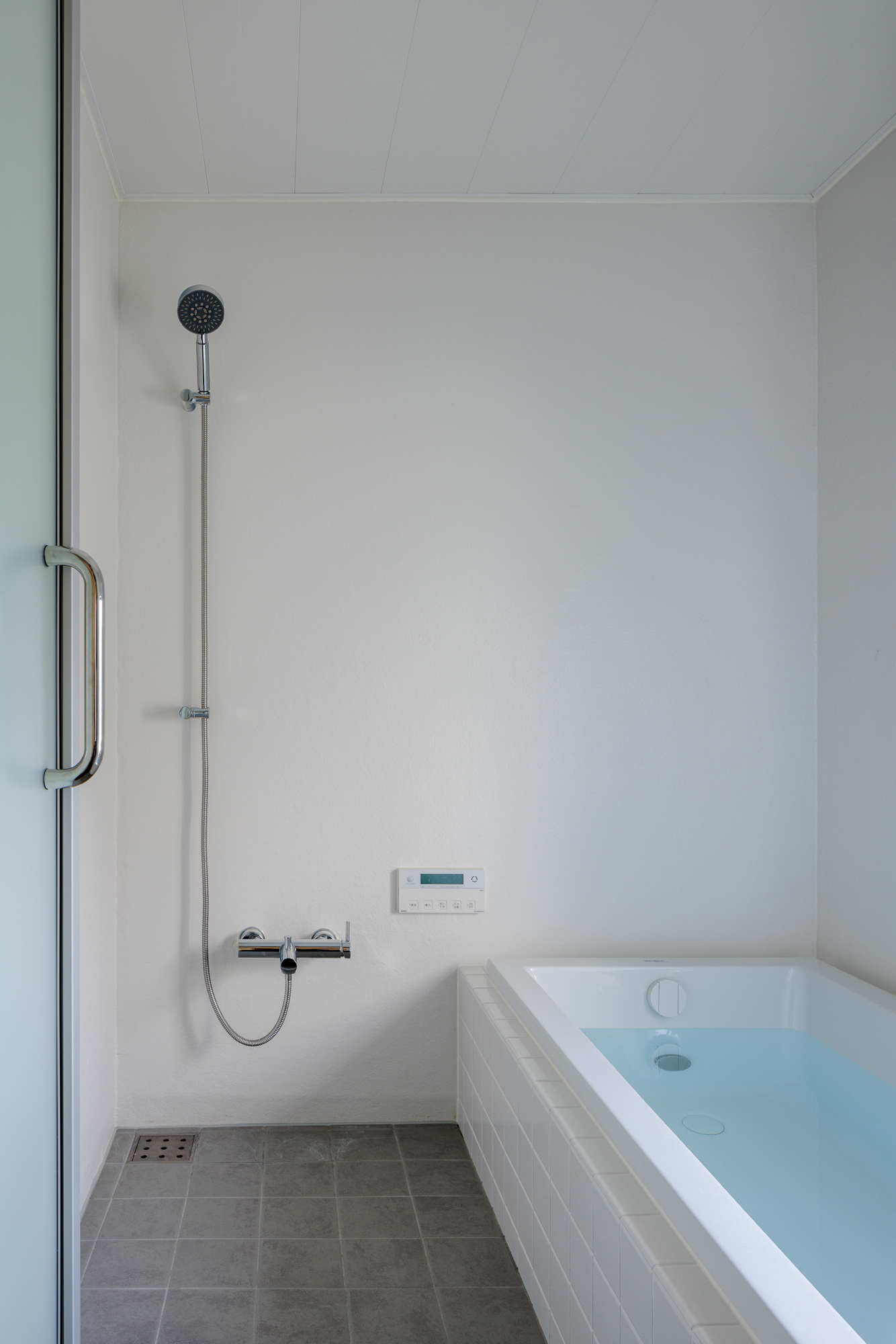
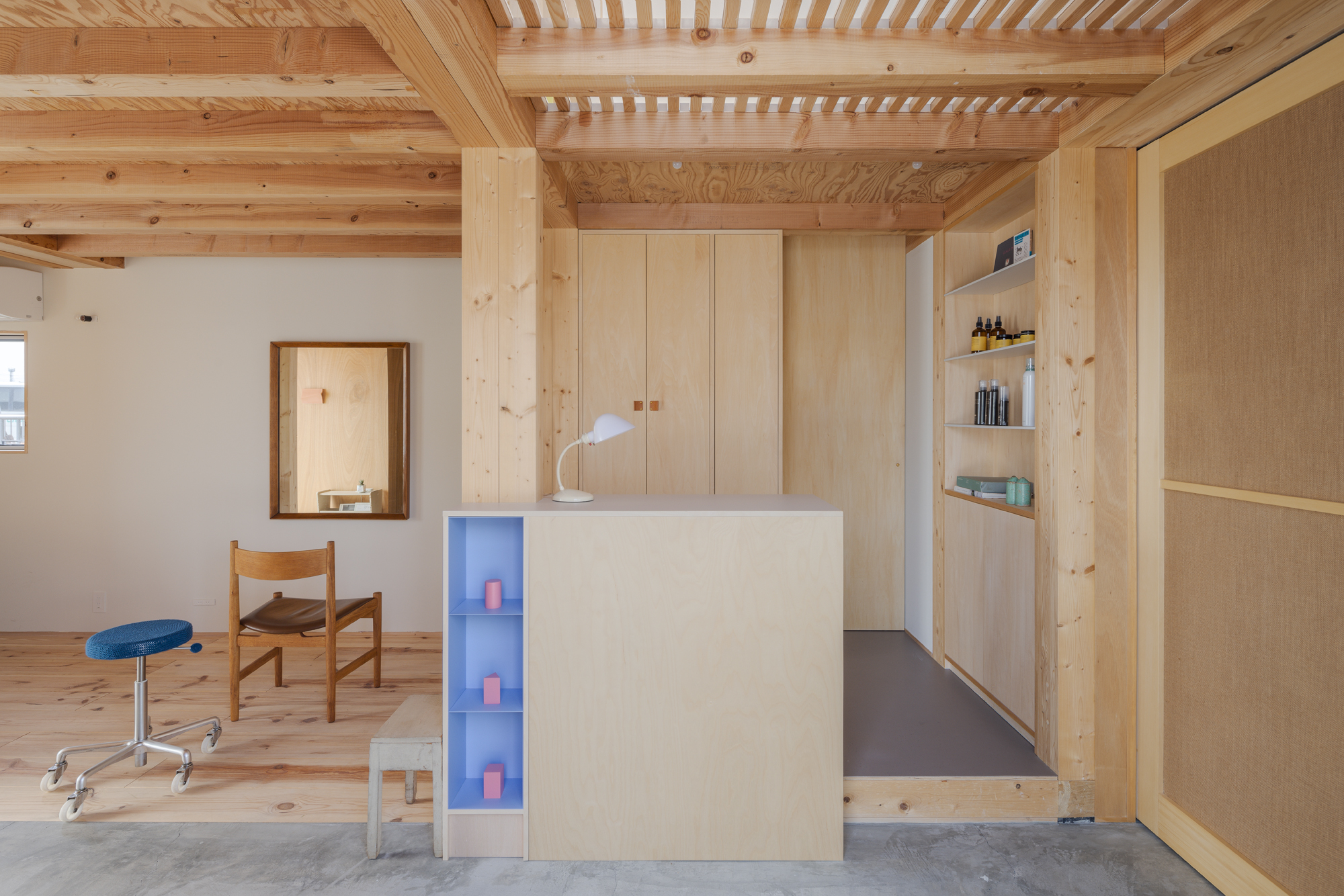
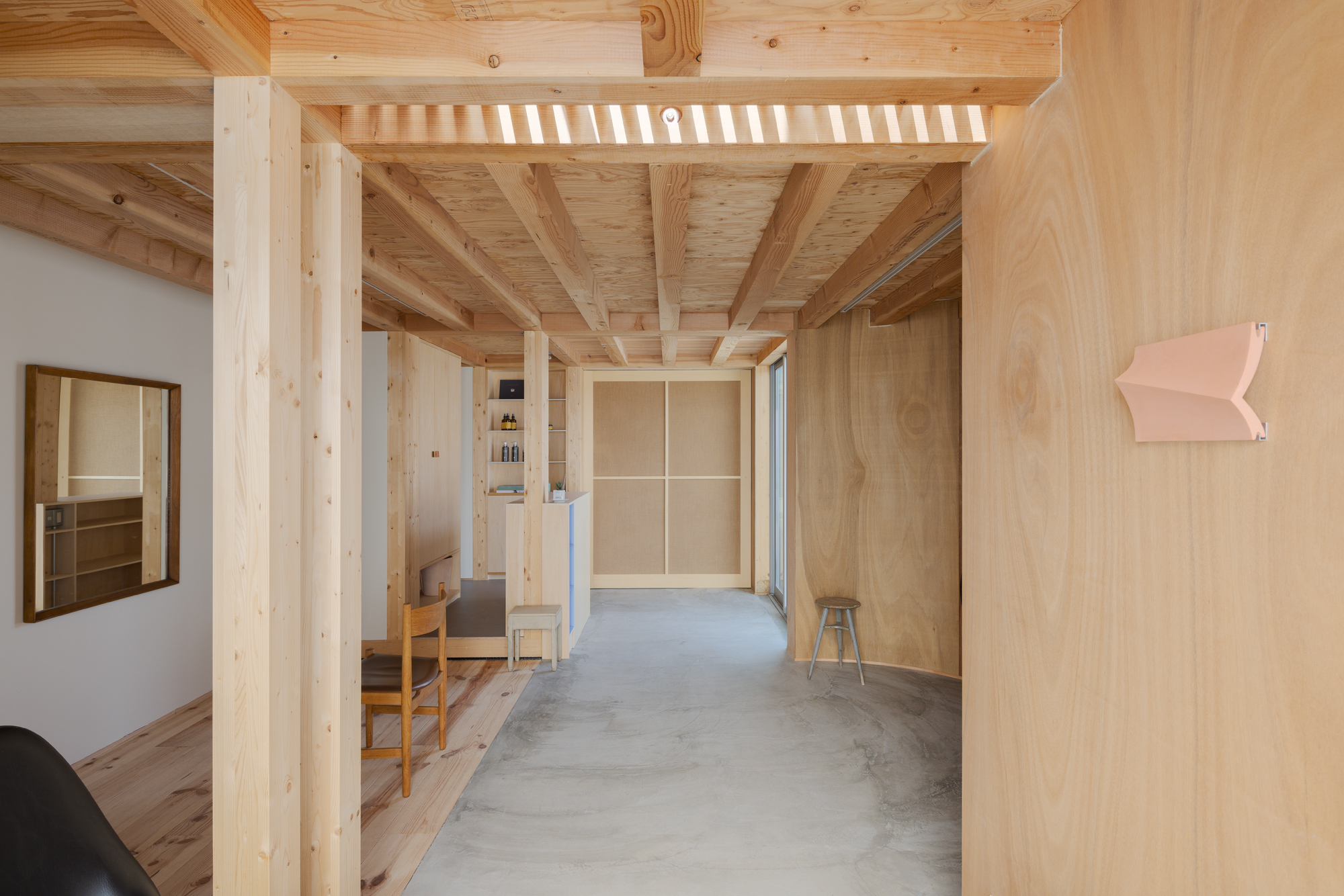
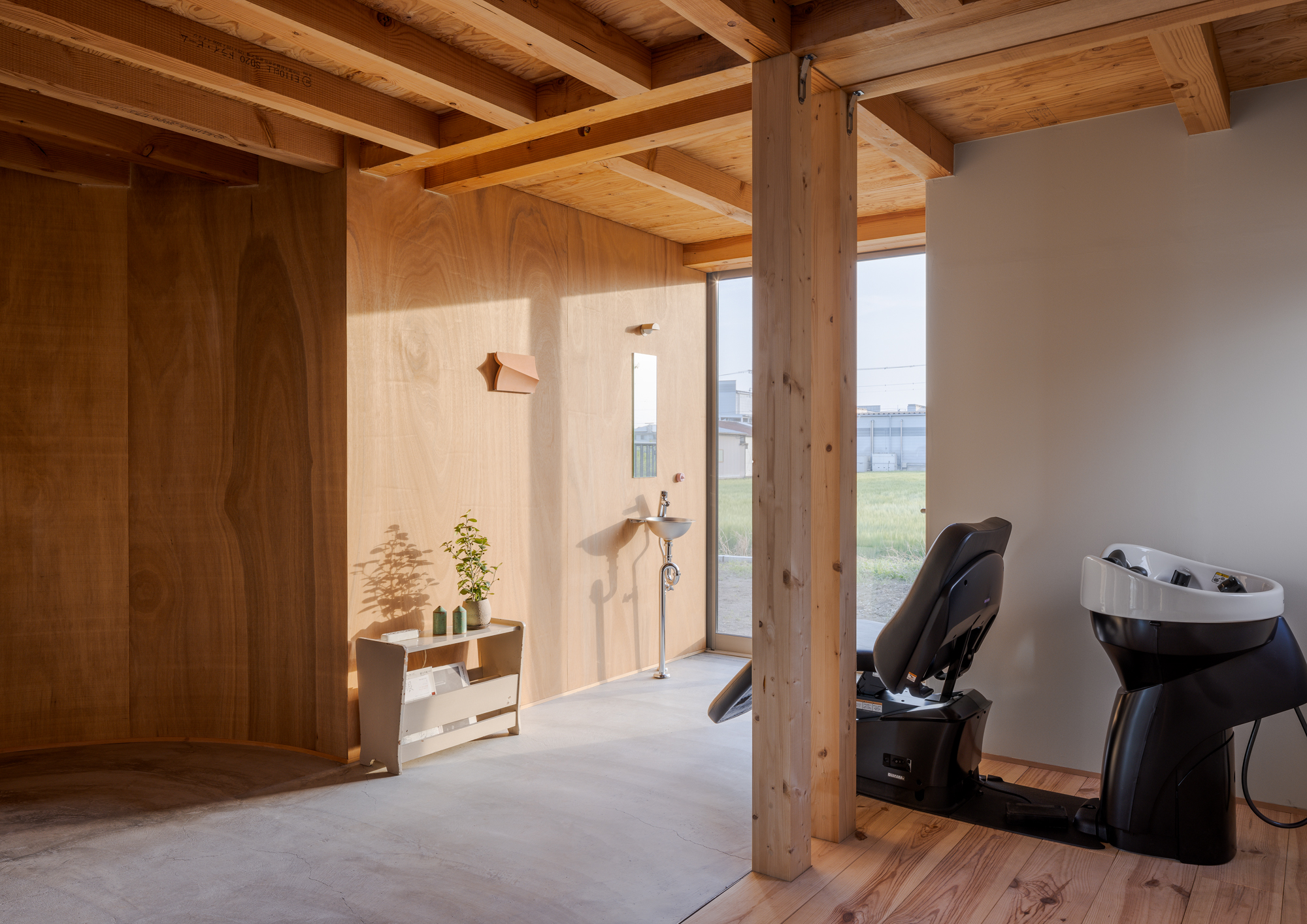
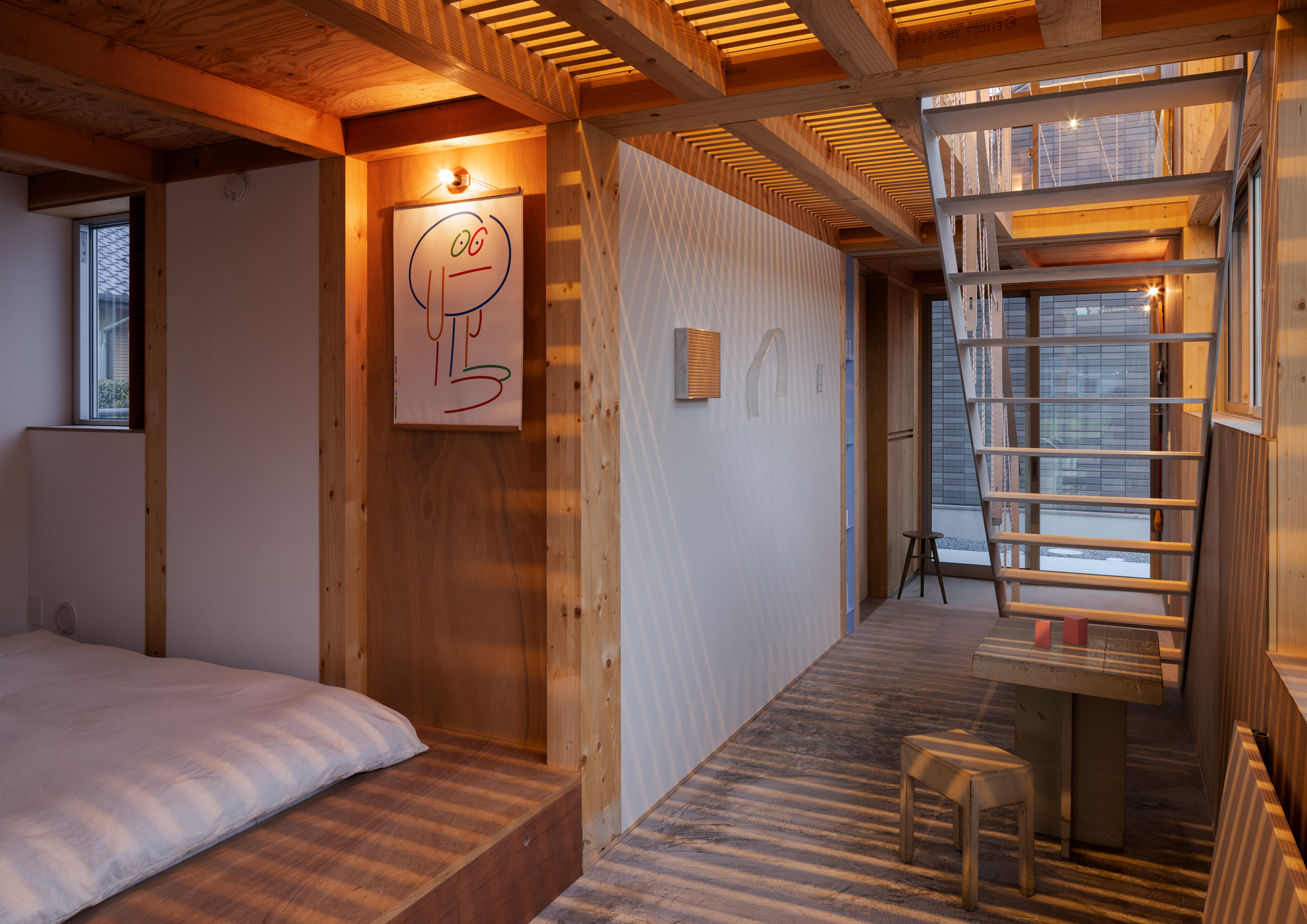
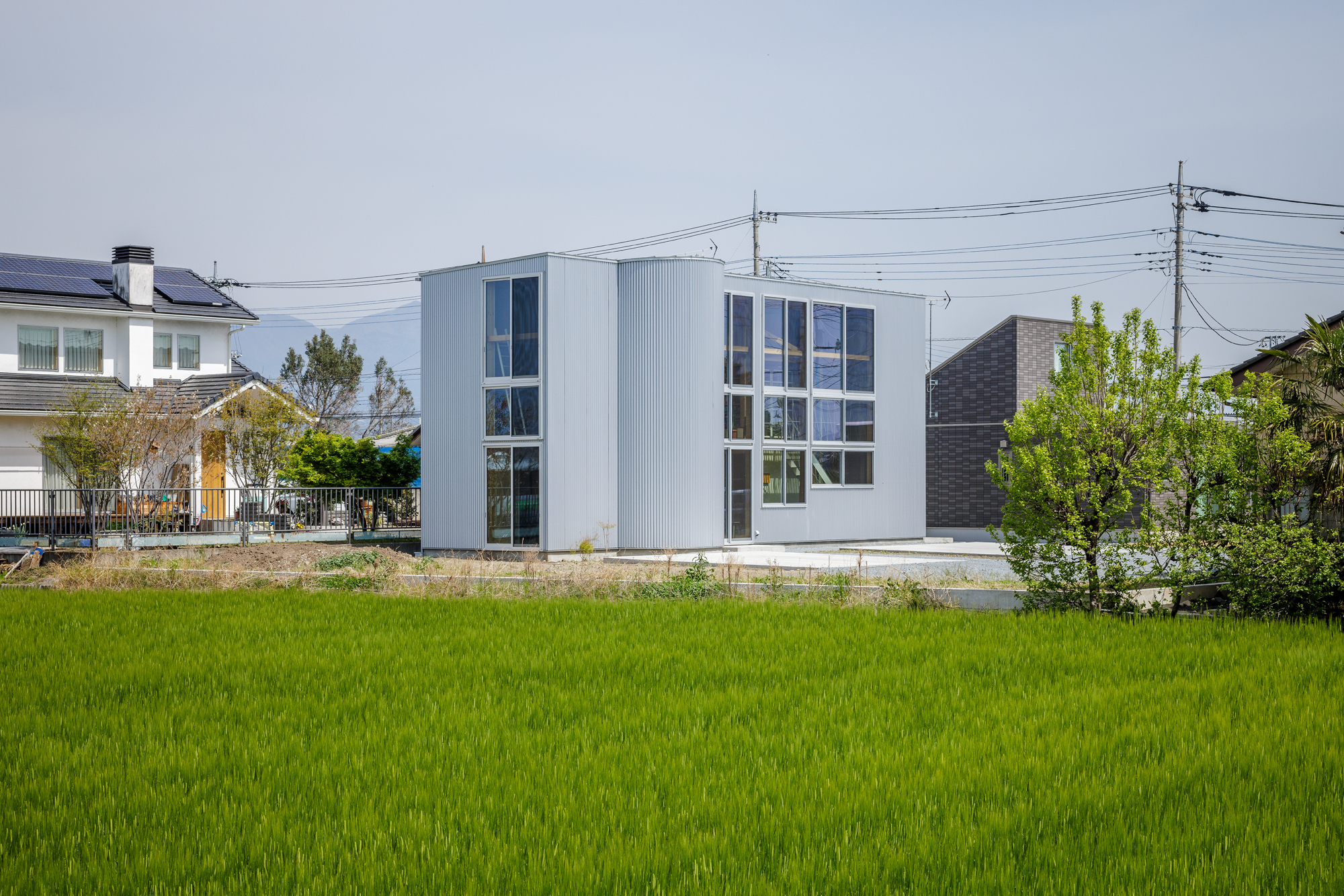
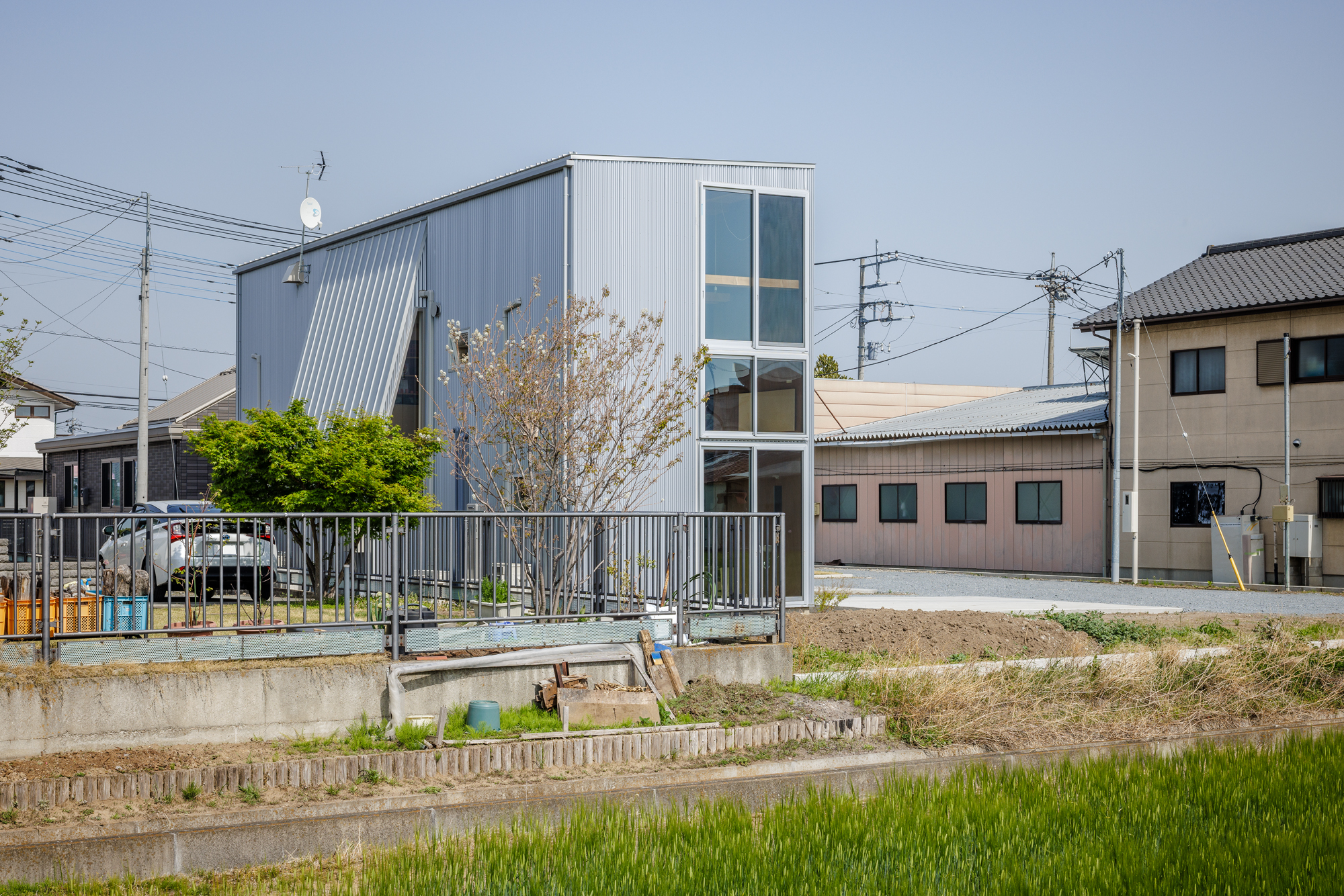
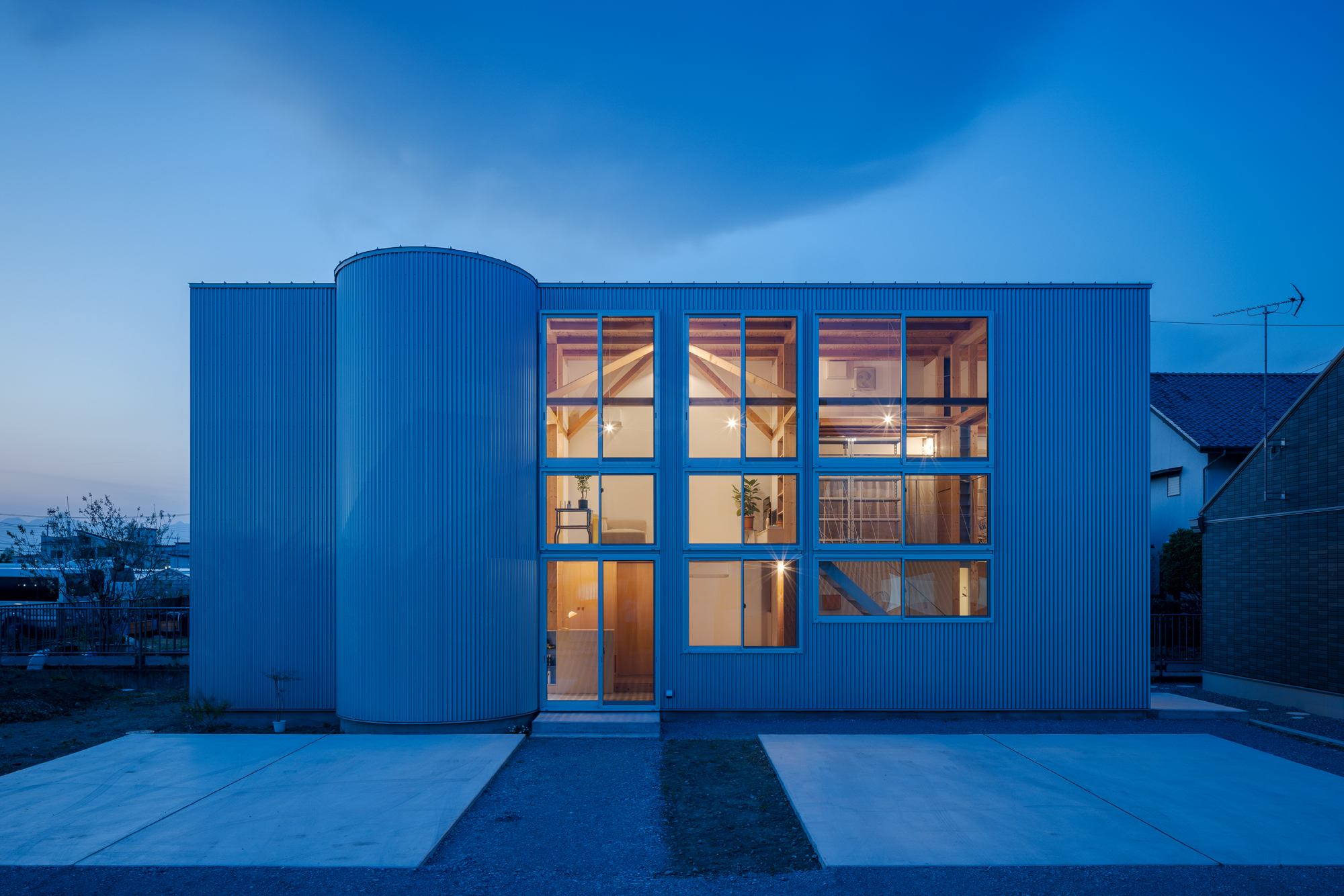
梨畑の広がる郊外に建つ、美容室を1階に併設した住宅である。
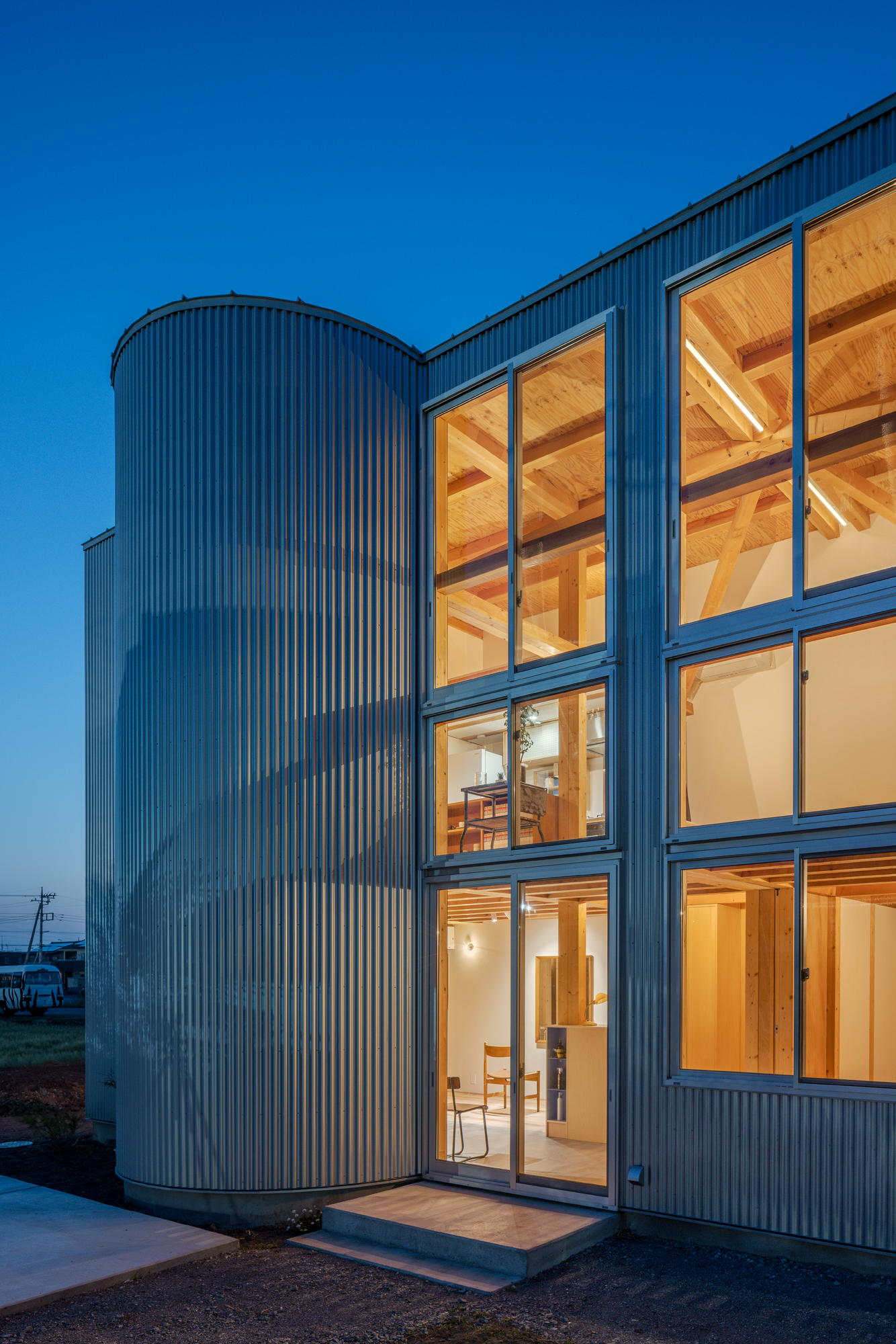
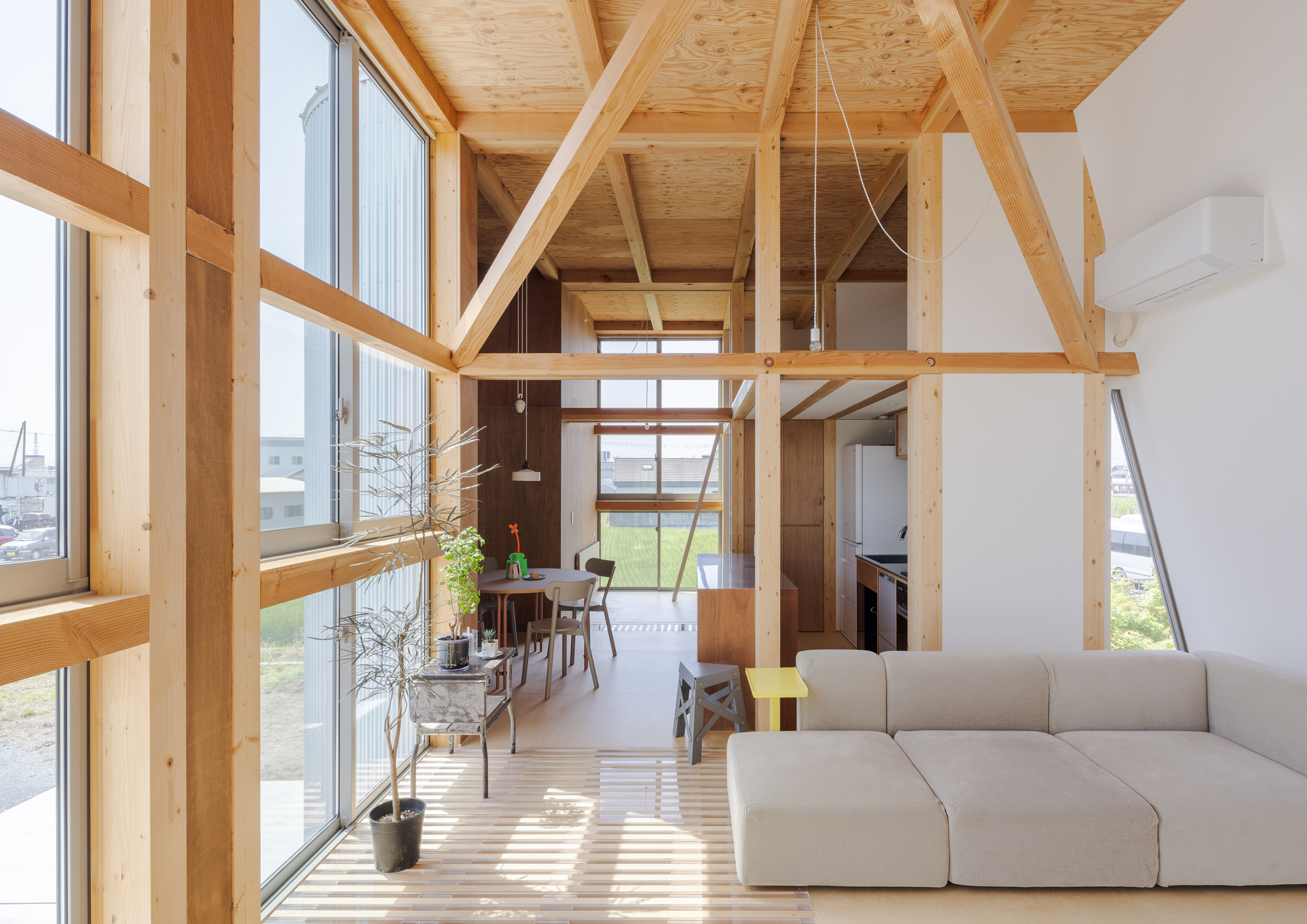
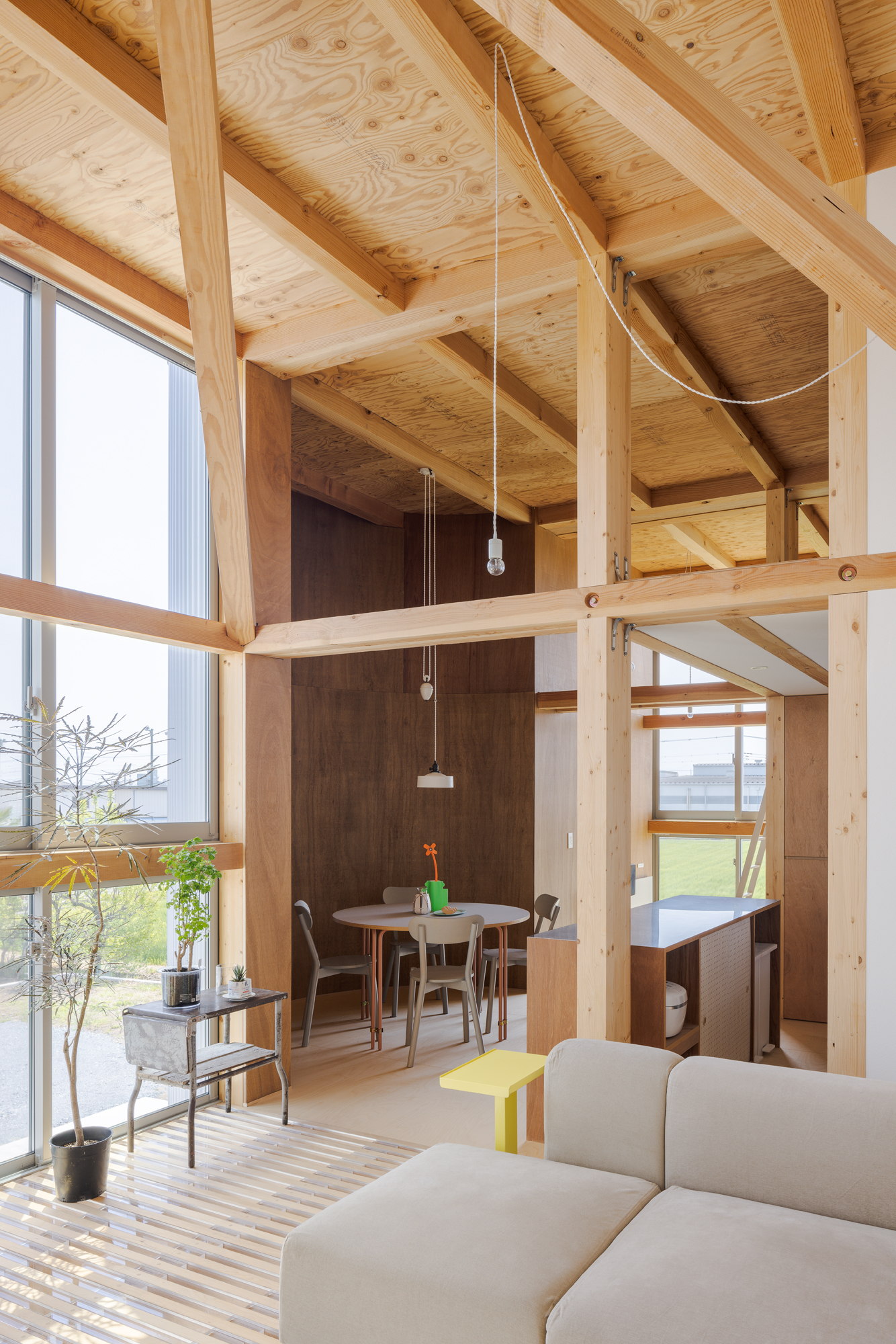
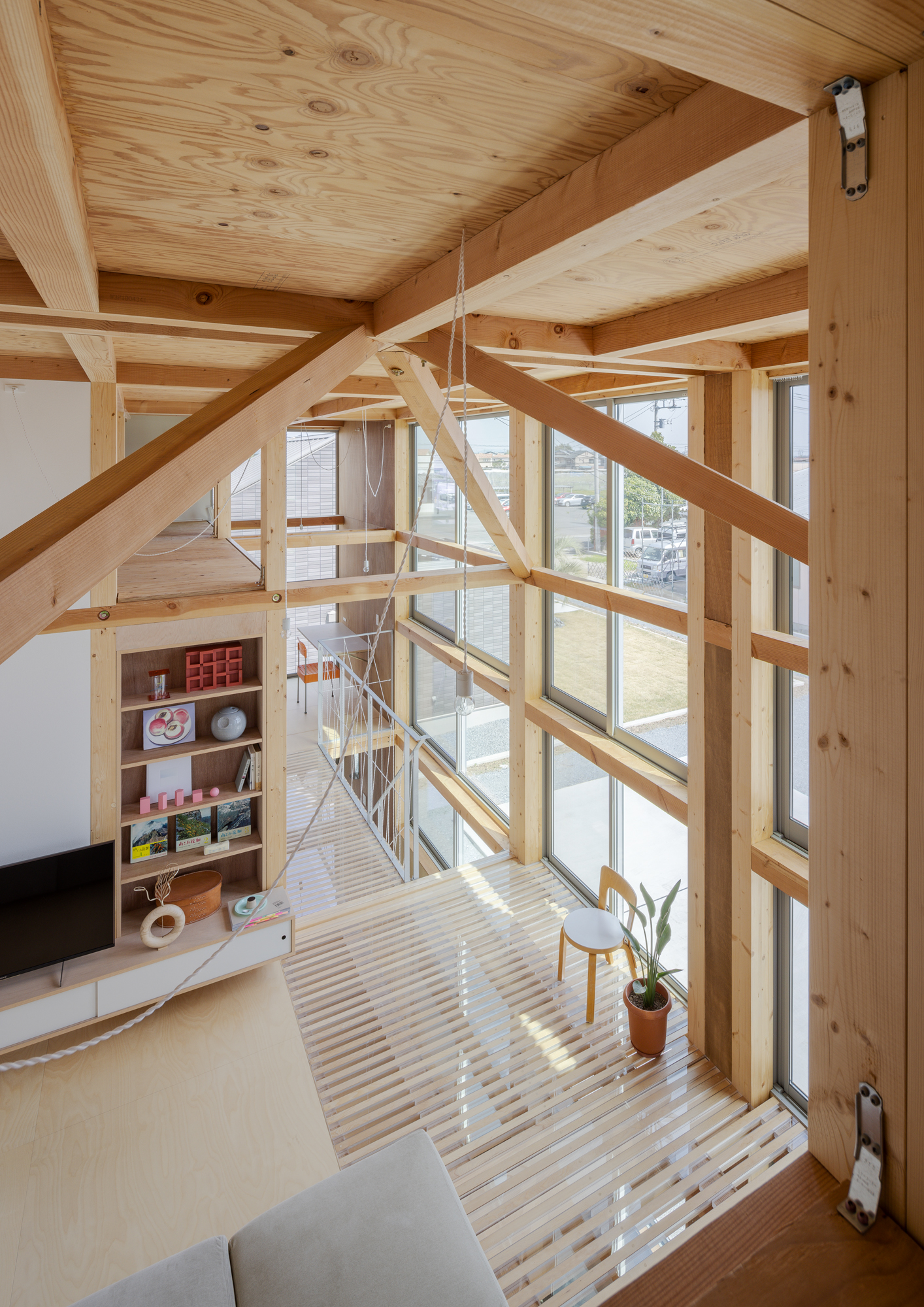
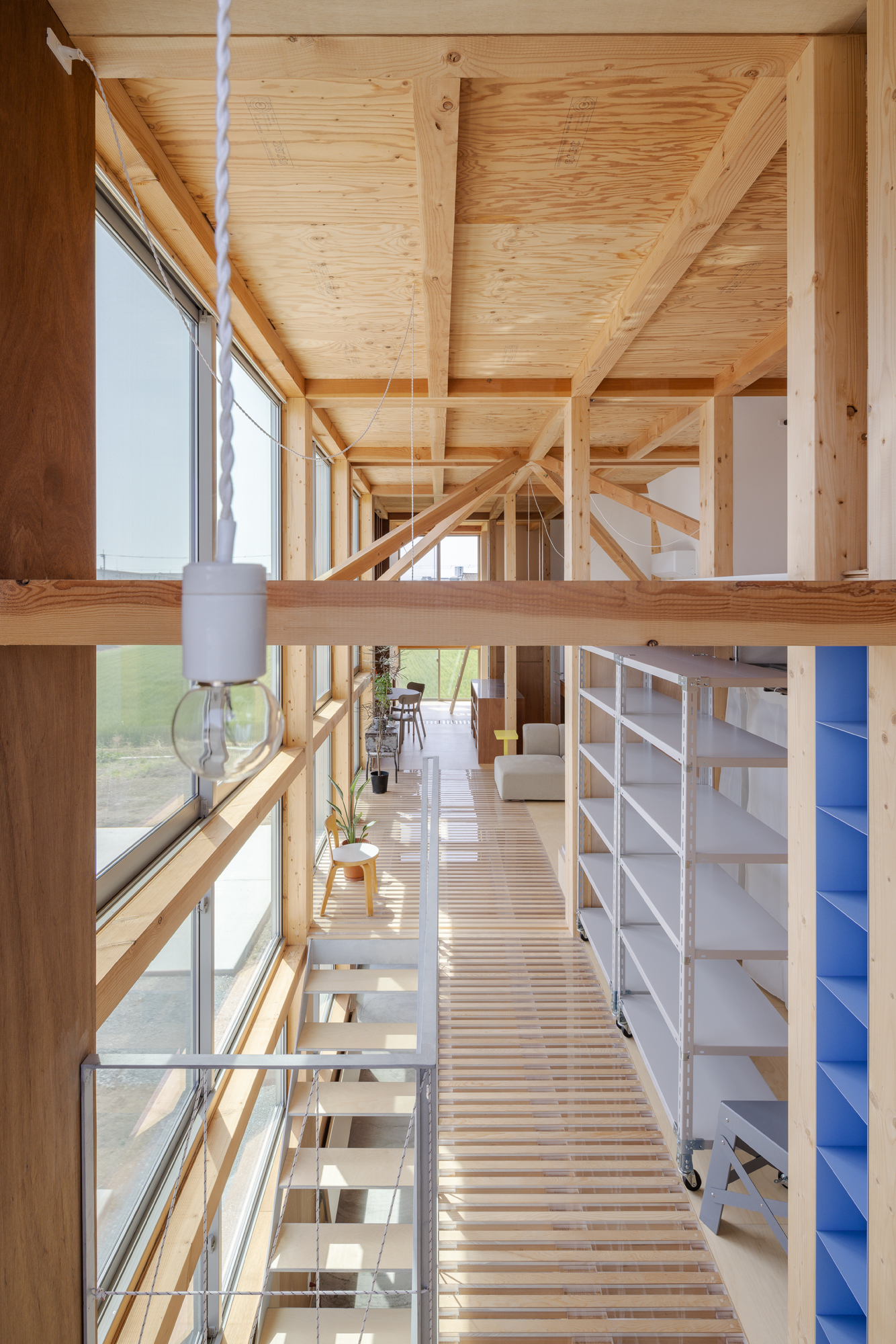
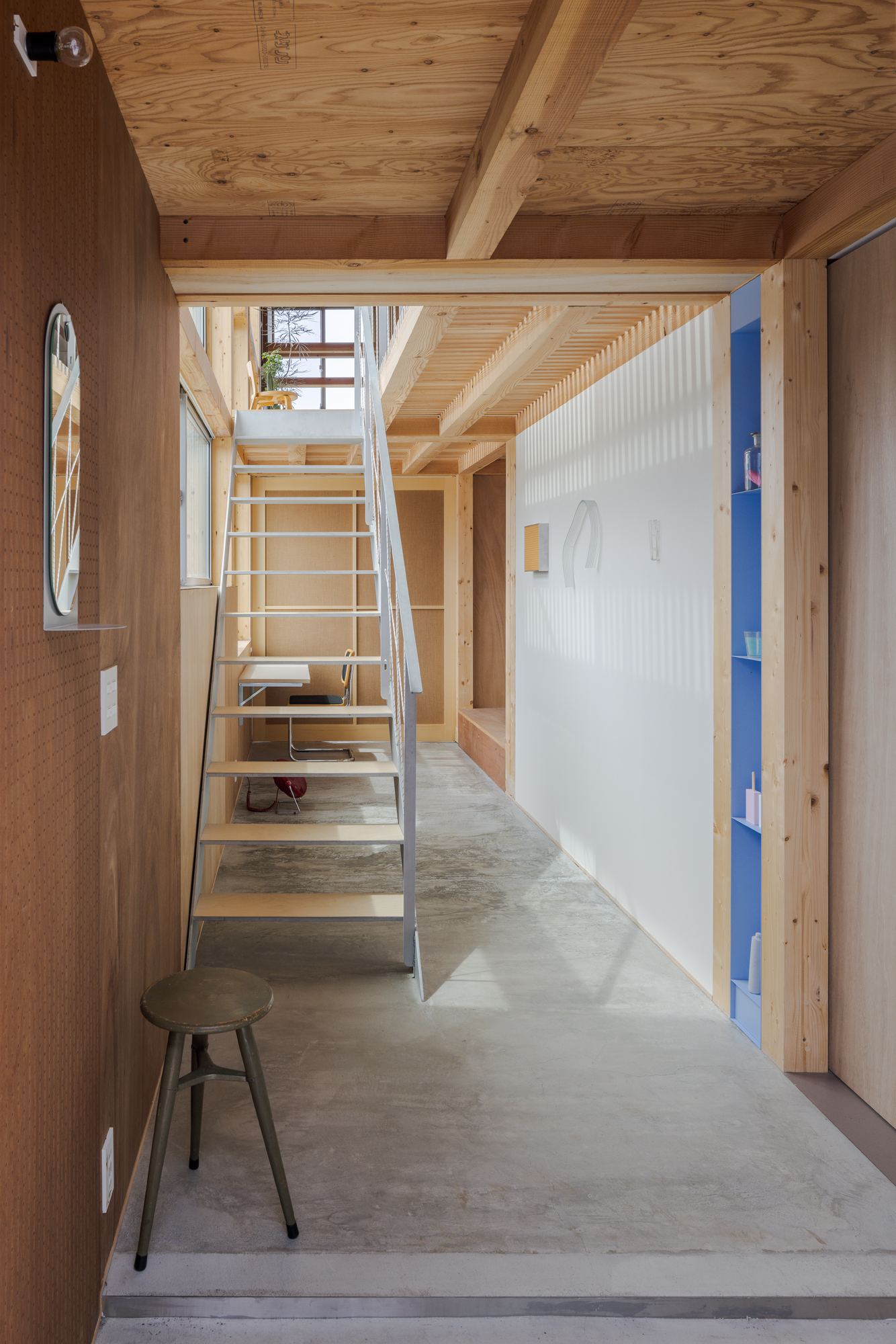
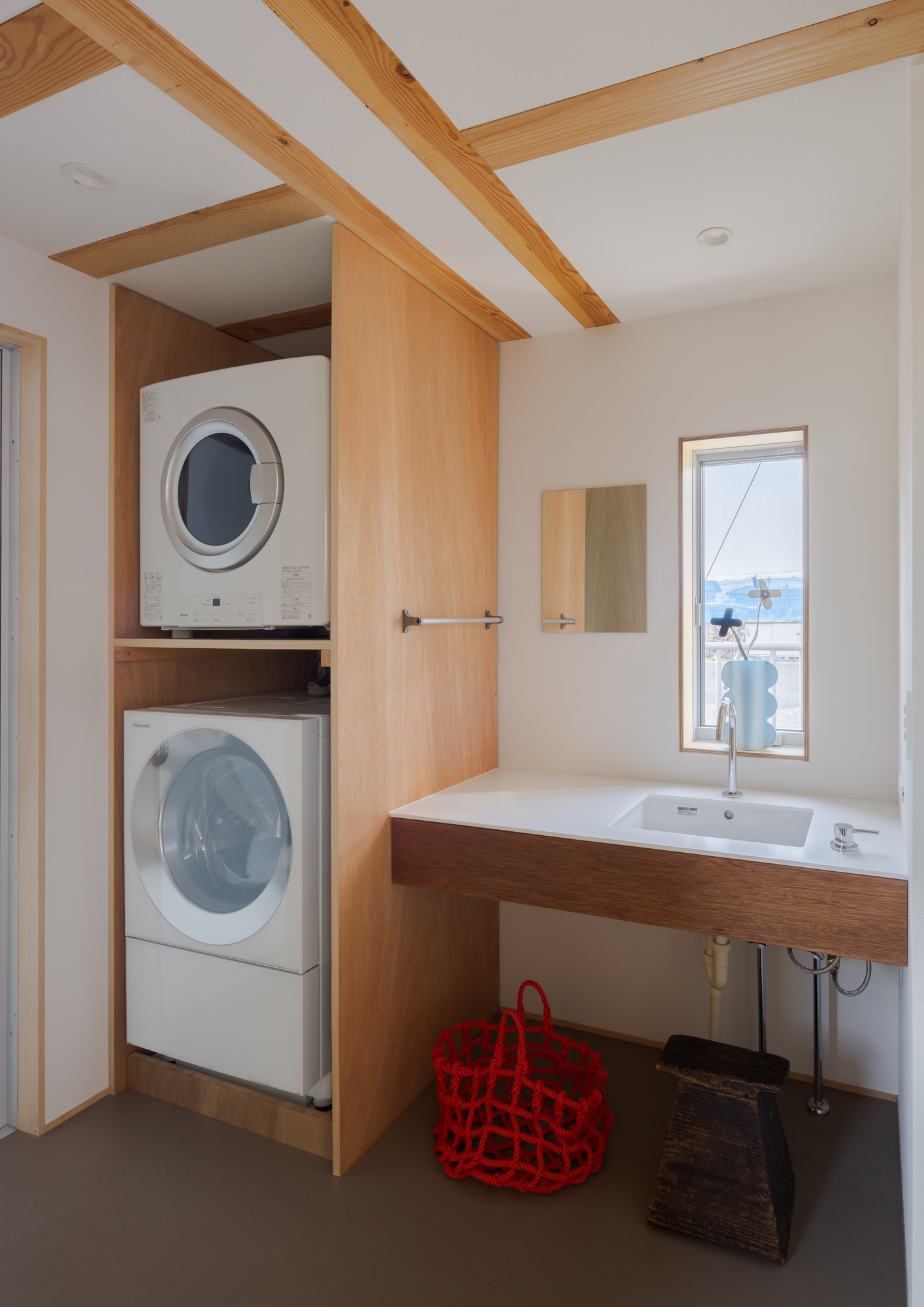
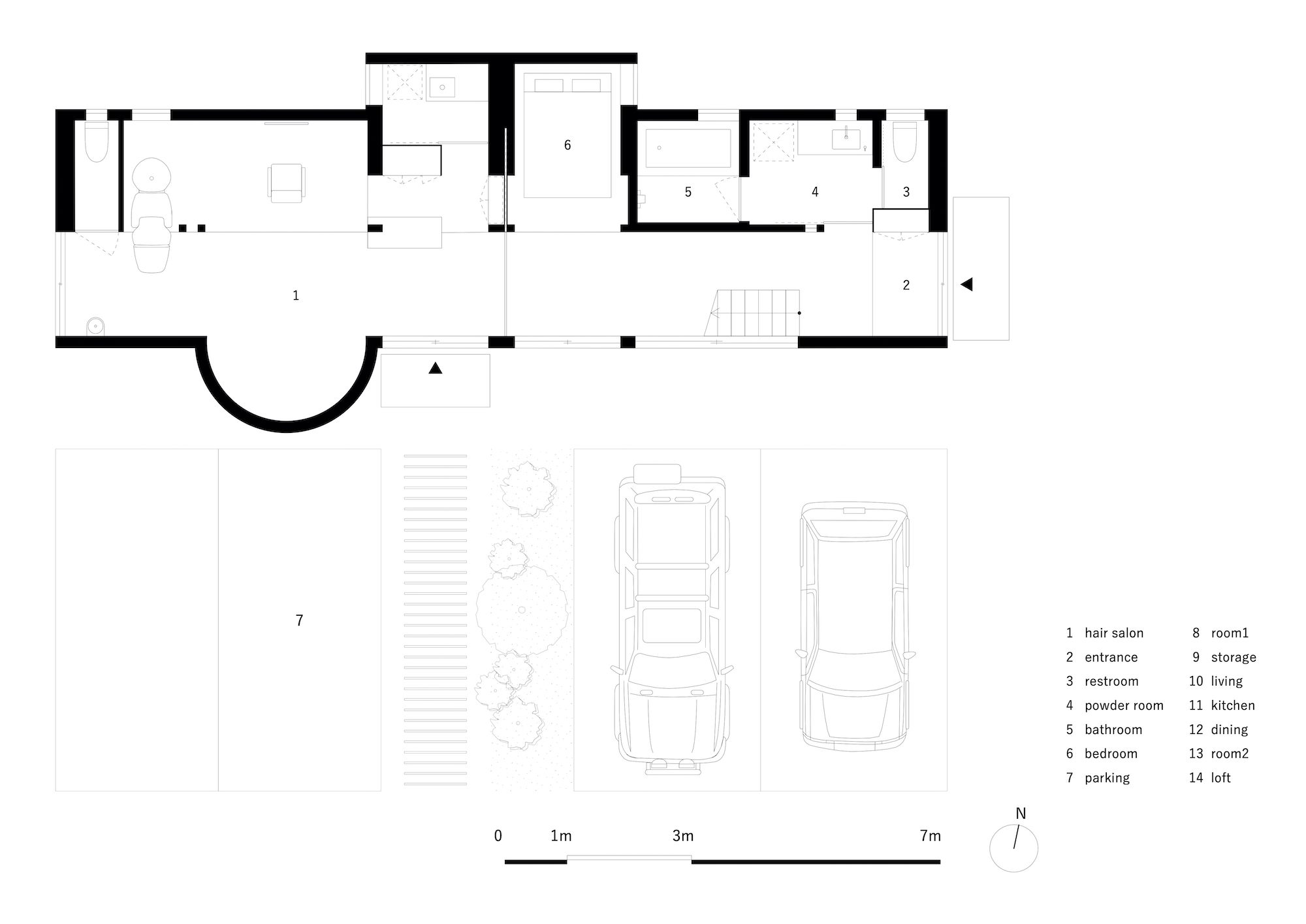
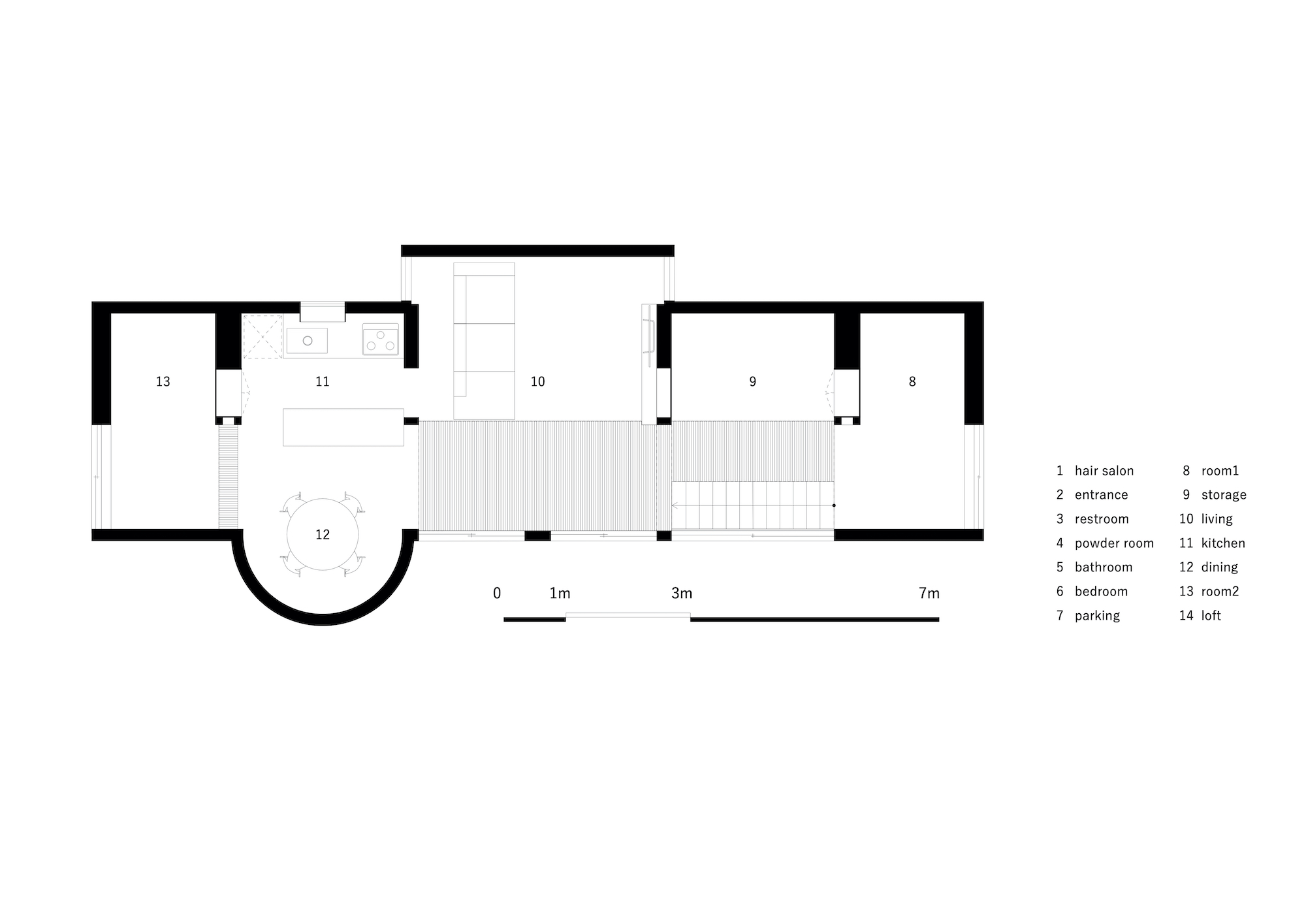
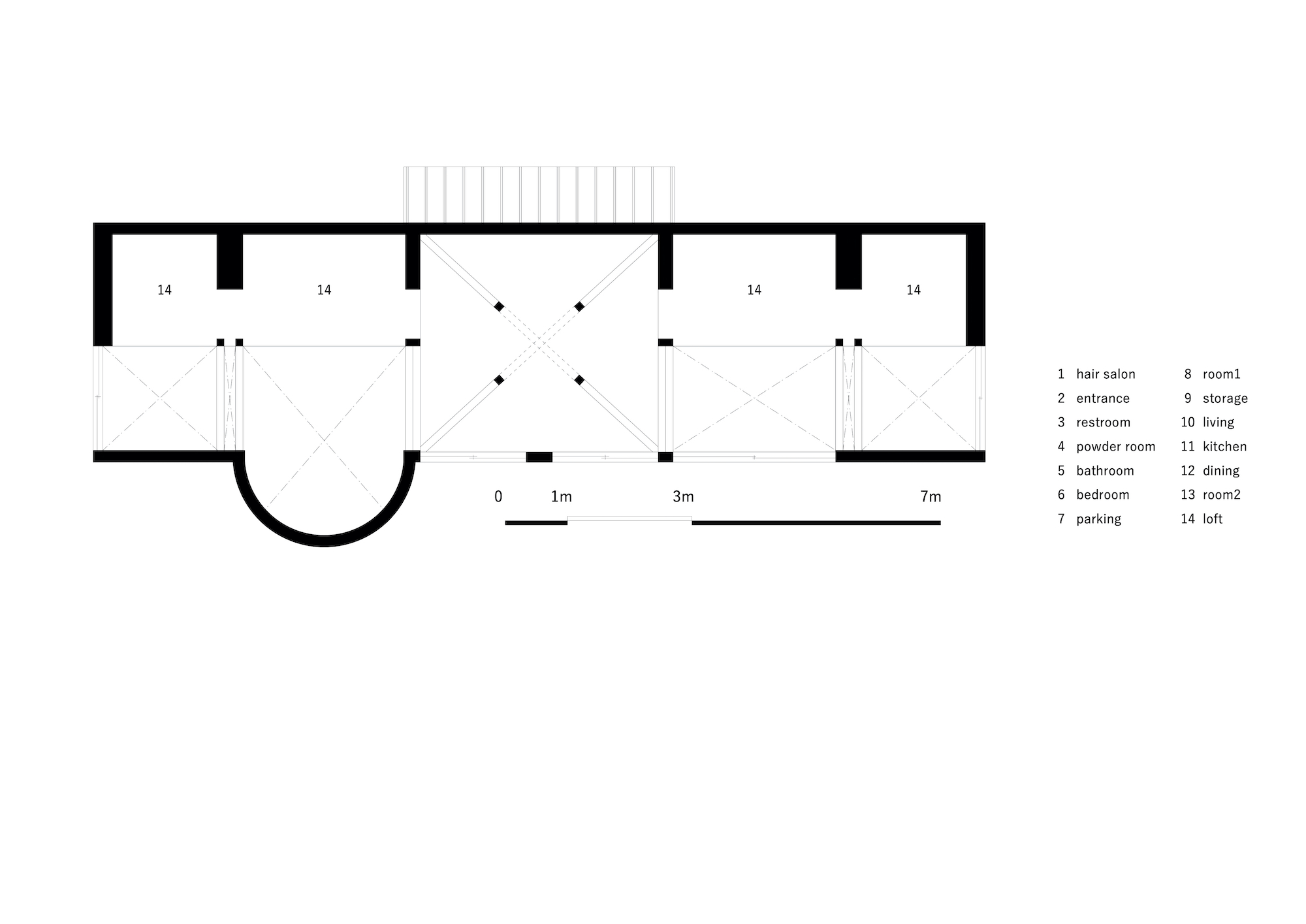
ゆとりのある敷地のため市街地のように近隣との距離感から建物の骨格を判断していくのではなく、空が大きく感じられるおおらかな周辺環境に適合していく手法で設計を進めた。間口14m、奥行3.6mの長方形ヴォリュームを基本に、4寸角のみを使用した架構と2階の中心部では斜めの杖柱が屋根を支える設定とし、生活に必要な住むための機能を北側1間に集約。短手方向に必要な構造壁も北側に集約することで南側1間は豊かな外部環境を十分に取り込んだ空間が東西に貫く構成とした。
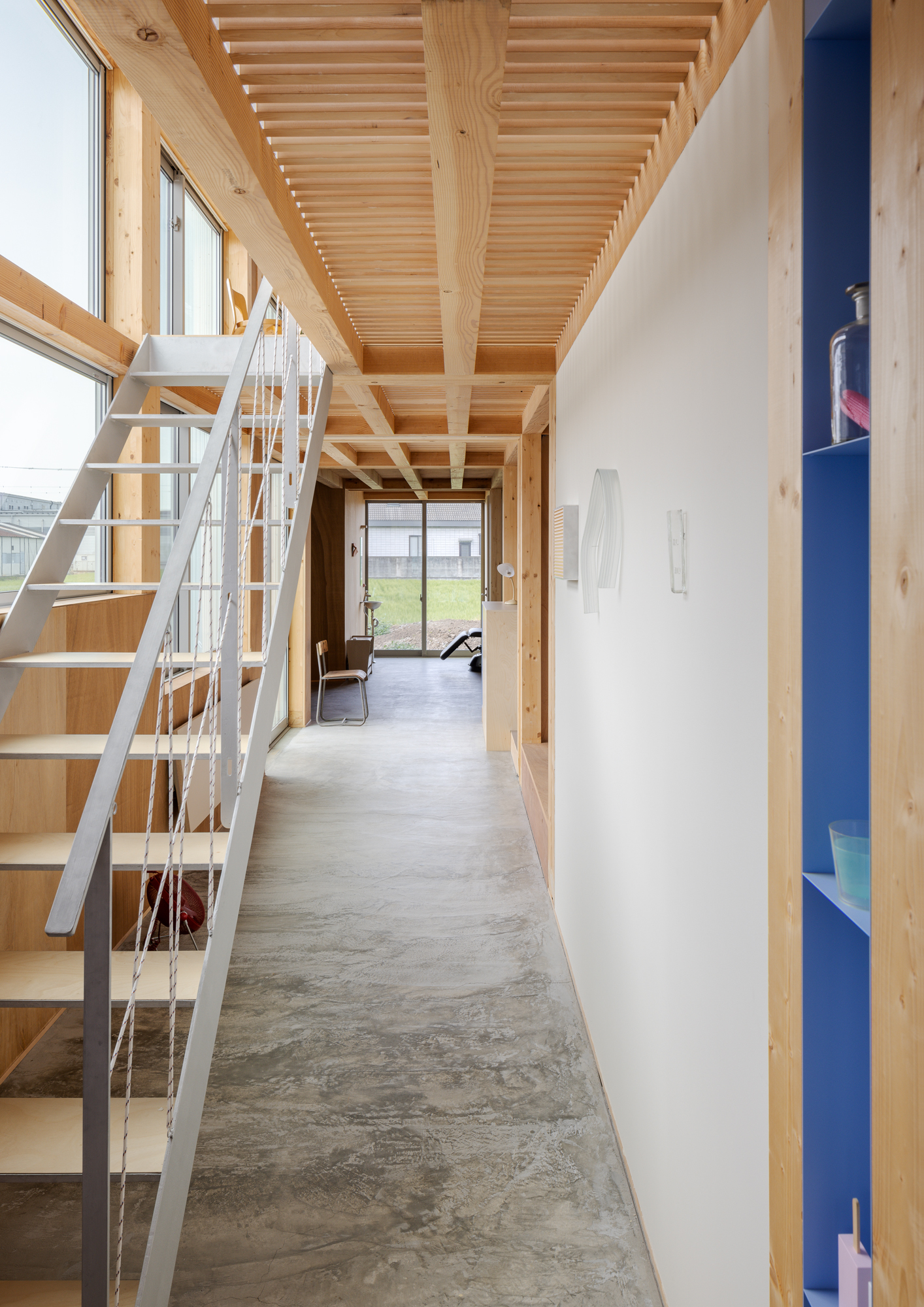
この家では縦長の窓によって地面から空までの広がりの中に置かれる。隣地から大きく引きをとることで、窓から入る日射が2階のルーバー床を介して1階に影を落とす。「外」と「内」というはっきりとした分け隔てではなく、環境や時間によって段階的に変化する場所を目指した。そこには部屋名がなく猫が太陽の動きに合わせてくつろぐ場所を変えるように、ある時は洗濯物を干す場所になり、ある時はデスクワークをする場所になるなど、住まい手が生活のリズムや気分に合わせて自在に変化する空間である。
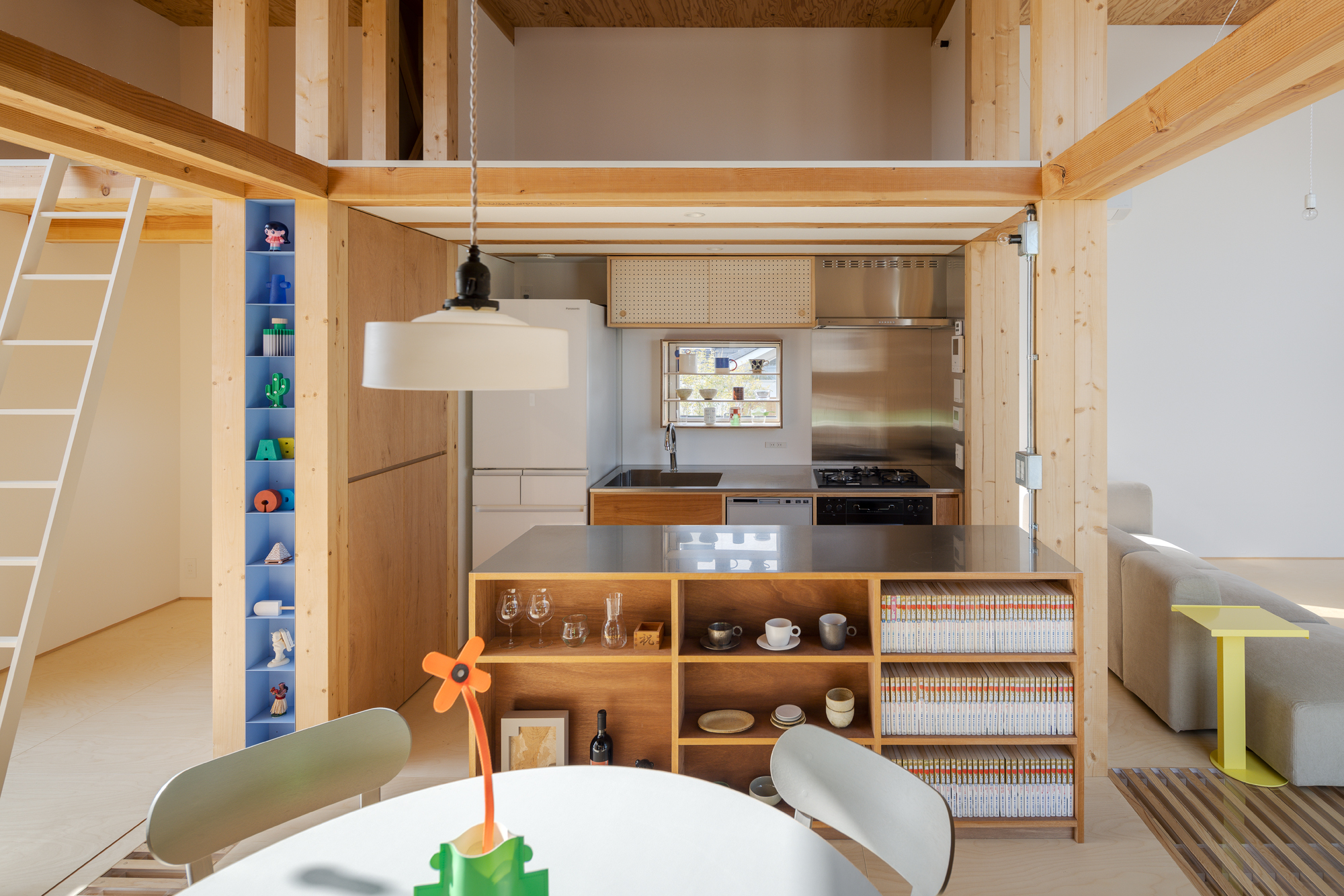
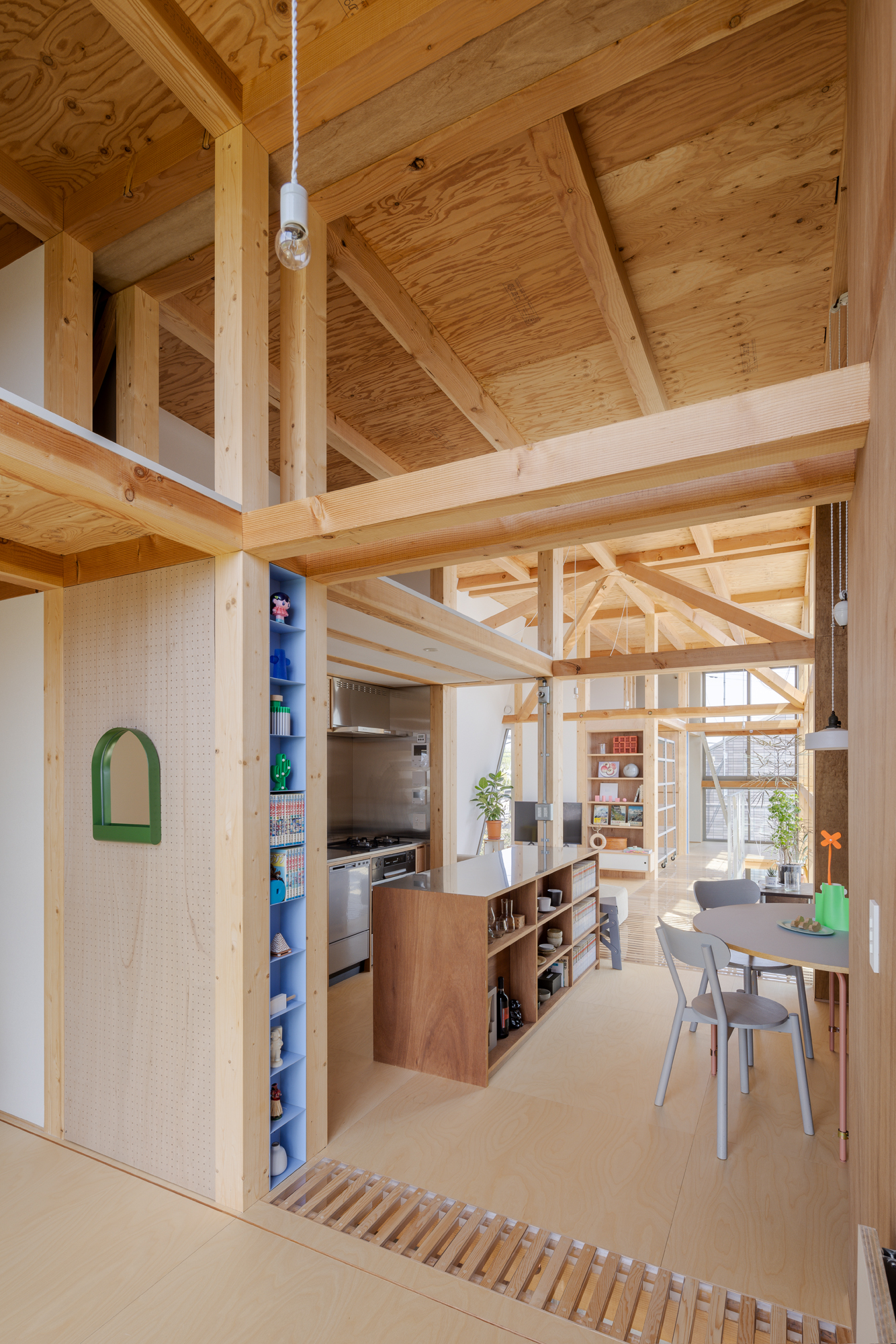
計画を始めた当初、ウッドショックにより木材が十分に供給されない設計事例が多々あった。そこでプレカット工場の動向から土台柱梁全てを4寸角の材を使用することで問題を回避し、かつ架構が薄さを持つことで軽さを獲得し、建築の強さが薄まることでより環境にアジャストしていく感覚を得た。また、耐力を十分に満たすために短手方向の柱はダブルで寄り添う構成とし、配線ルートや建具の引き込みところを考慮しながら通り芯の一部を303mm広げる設定とした。柱間や桁間に生まれたクラックがひとつながりの空間をゆるやかに分節すると同時に生活が入り込む隙間となり、住まい手がこれから手を加えることができる余地が、このおおらかな建築に寄り添うきっかけを与えてくれる。
[力学的構造の前にあるストラクチャ―]
まず始めに、全ての部材が120×120となるように、基準となる二つの平面モデュール(1820×1820、2730×1820)を提案したことで、木造における大梁、小梁といったヒエラルキーを持たない線のようなフレーム、もしくはソリッドなストラクチャーが表出した。次に、それらを互いにくっつけたり、離したりしながら連続させたことで、ストラクチャー同士の間にコンクリートの壁に見られるクラックのような、機能を持たない隙間が生成された。当初は目的の見えなかったクラック部分も、設計や現場が進むにつれて、設備や建具などのスペースになっていき、平面計画にも可変性を与えていった。また、四つのモジュールを統合するスパンの大きい屋根架構には、四つのダイアゴナルケーン(斜めの杖柱)を一点に集約し、中央の柱を省略している。横尾真 /OUVI
Located in the suburbs of Maebashi, the capital city of Gunma Prefecture in Japan, the House in Nonakamachi combines a single-family residence with a hair salon. Unlike houses in dense urban areas, its design was not dictated by proximity to neighbors. Instead, it takes advantage of the open rural setting, celebrating the vast sky and distant horizon. The structure is a rectangular volume measuring 14 meters wide by 3.6 meters deep, constructed entirely from 4-inch square timbers, with diagonal braces supporting the roof at the center of the second floor. Essential living functions and structural walls are concentrated along the north side, allowing the south side to open to the surrounding landscape through tall vertical windows.
The generous setback allows sunlight streaming through the windows to filter down to the first floor via the louvered second-floor deck. Rather than sharply dividing indoors and outdoors, the aim was to create a space where their relationship shifts gradually with changes in weather and time. It is not defined by a single function; instead, it adapts to the residents’ moods and daily rhythms—like a cat moving with the sun from one resting spot to another—sometimes serving as a place to hang laundry, other times as a desk for work.
When planning began, the project faced a global lumber shortage. Anticipating industry conditions, we avoided supply issues by using standardized 4-inch square timbers consistently throughout the building, from foundation to beams. This approach also produced a light, flexible structure that feels attuned to its surroundings. To ensure stability, the short sides of the building use double columns, and the central axis is widened by 303 millimeters to accommodate utilities and built-in elements. These gaps subtly divide the space, providing margins that allow residents’ lifestyles to unfold, while leaving room for future customization.
[Structure Underlying Structural Dynamics]
The House in Nonakamachi embodies a design philosophy the architect calls “structure underlying structural dynamics.” This begins with a modular system in which every member is a four-inch square, dissolving the conventional hierarchy of large and small beams in timber construction. The result is a hybrid of linear frames and solid elements that responds flexibly to its environment. This system created unplanned voids—like cracks in a concrete wall—that later became integrated into the design as spaces for utilities and built-ins. The adaptability extends to the roof, which unites four modules and employs diagonal braces to eliminate the need for a central column, producing a large, open space. (Shin Yokoo, OUVI)