



CREATORE with PLUS Nagoya
クリアトーレ ウィズ プラス 名古屋
Showroom @ Marunouchi, Nagoya
Client: PLUS CORPORATION
Design: Rei Oshima, Sunao Koase, Yu Yamada, Mako Shimanuki /SNARK Inc.
Construction: SPD meiji
Furniture: Roccadia design and works, MACRI
Steel Product: gambit
Display: TOSHIKI STUDIO, KIAN
Floor area: 989.09㎡
Completion: Jan. 2022
Photo: Daisuke Shima /ad hoc
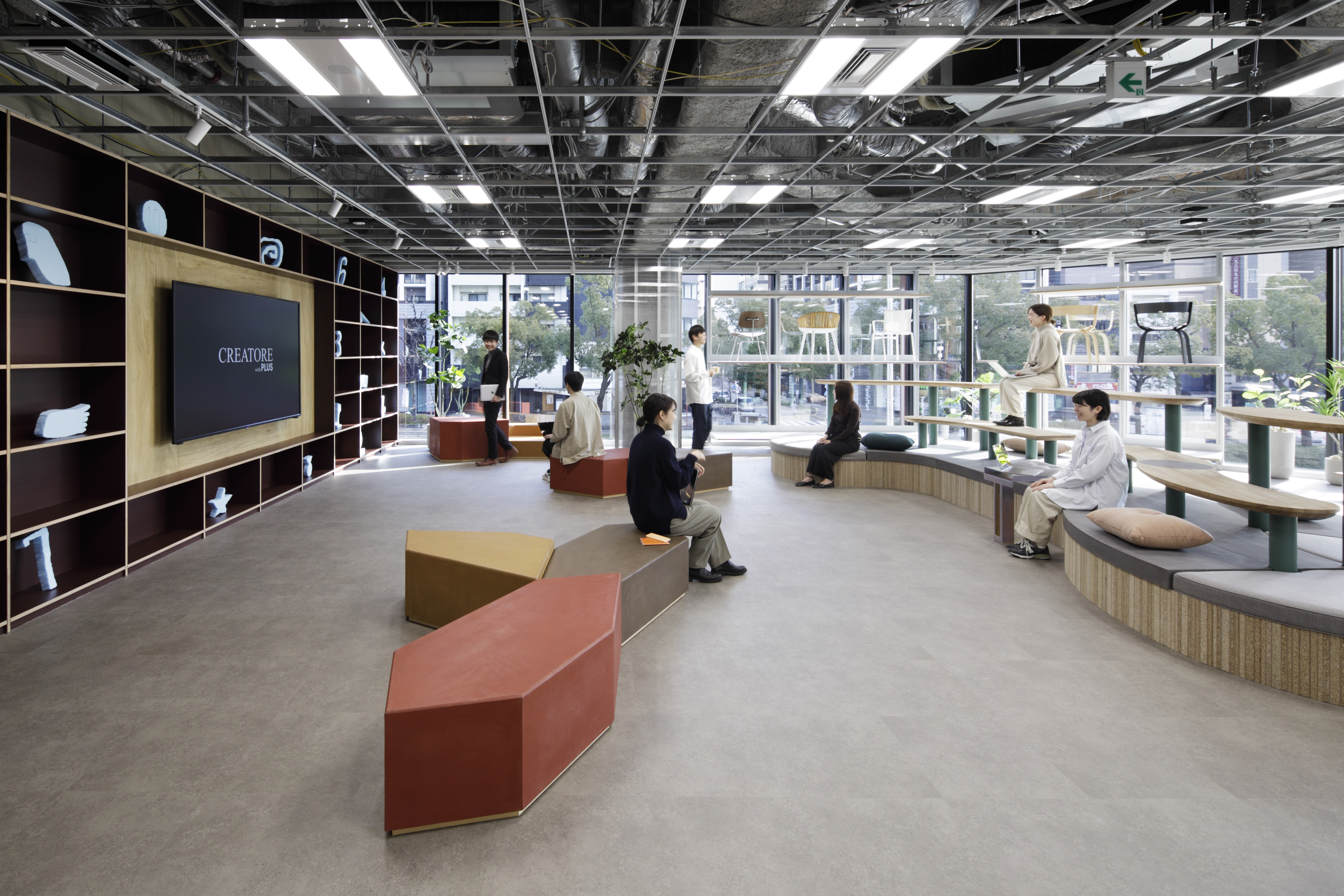
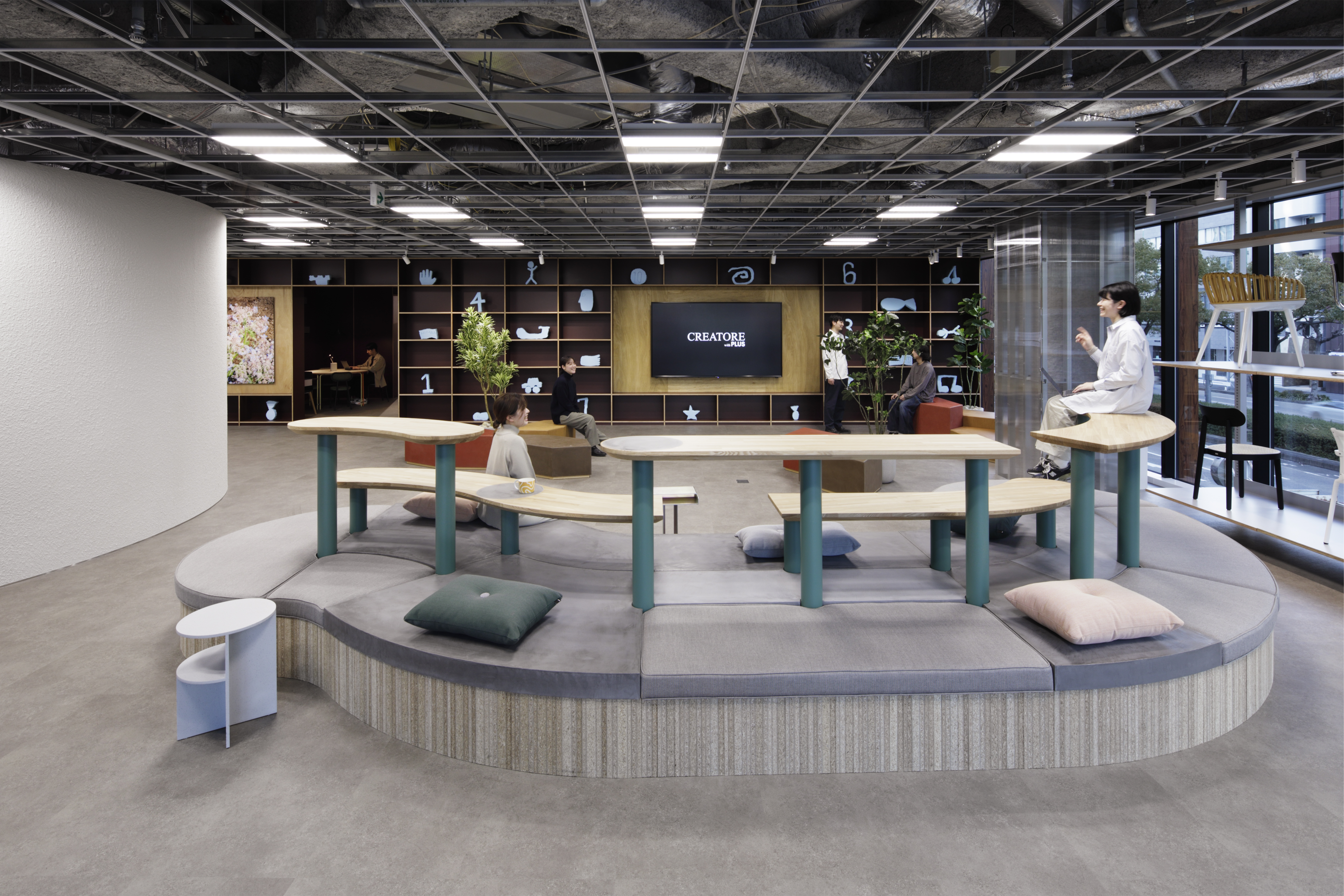
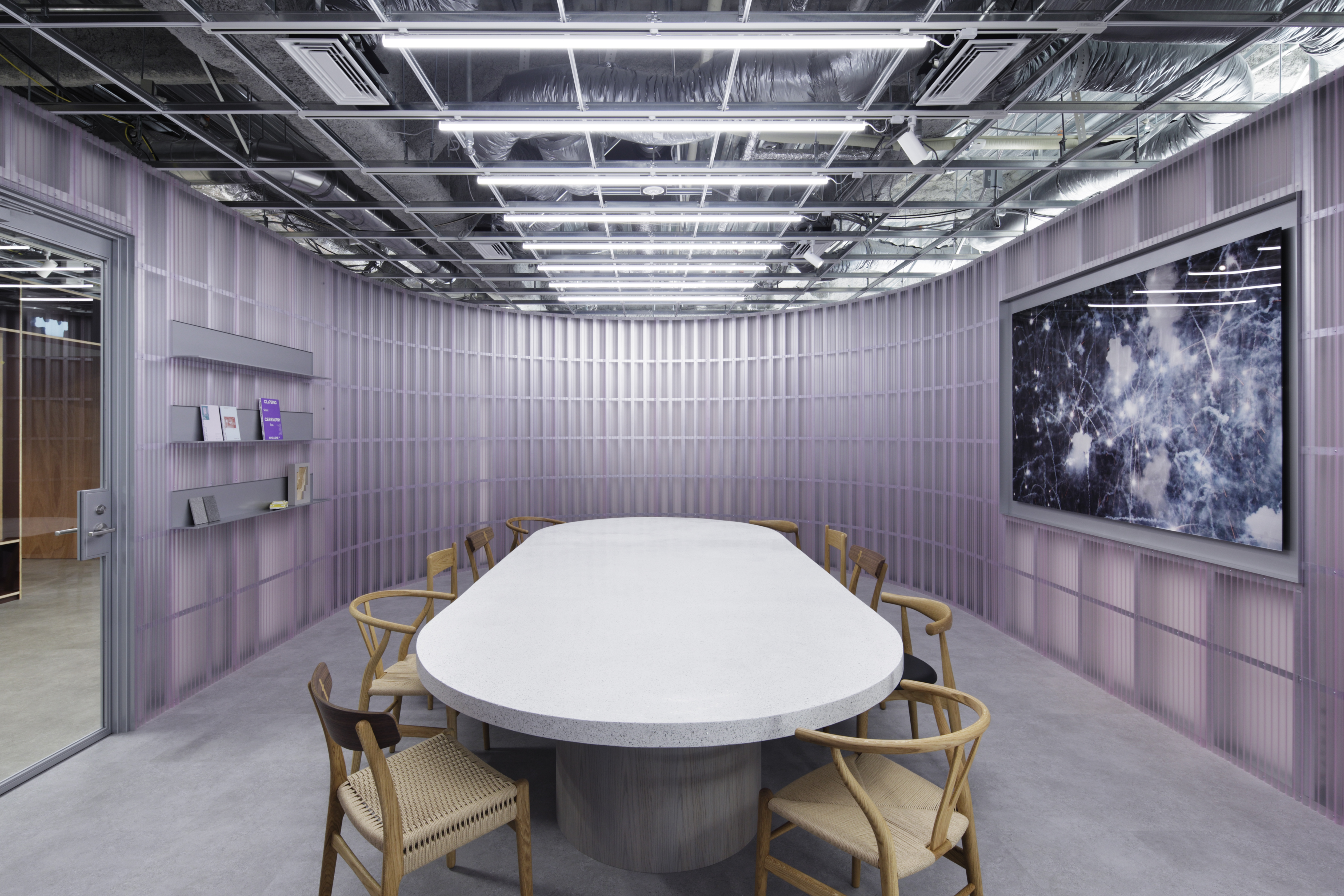
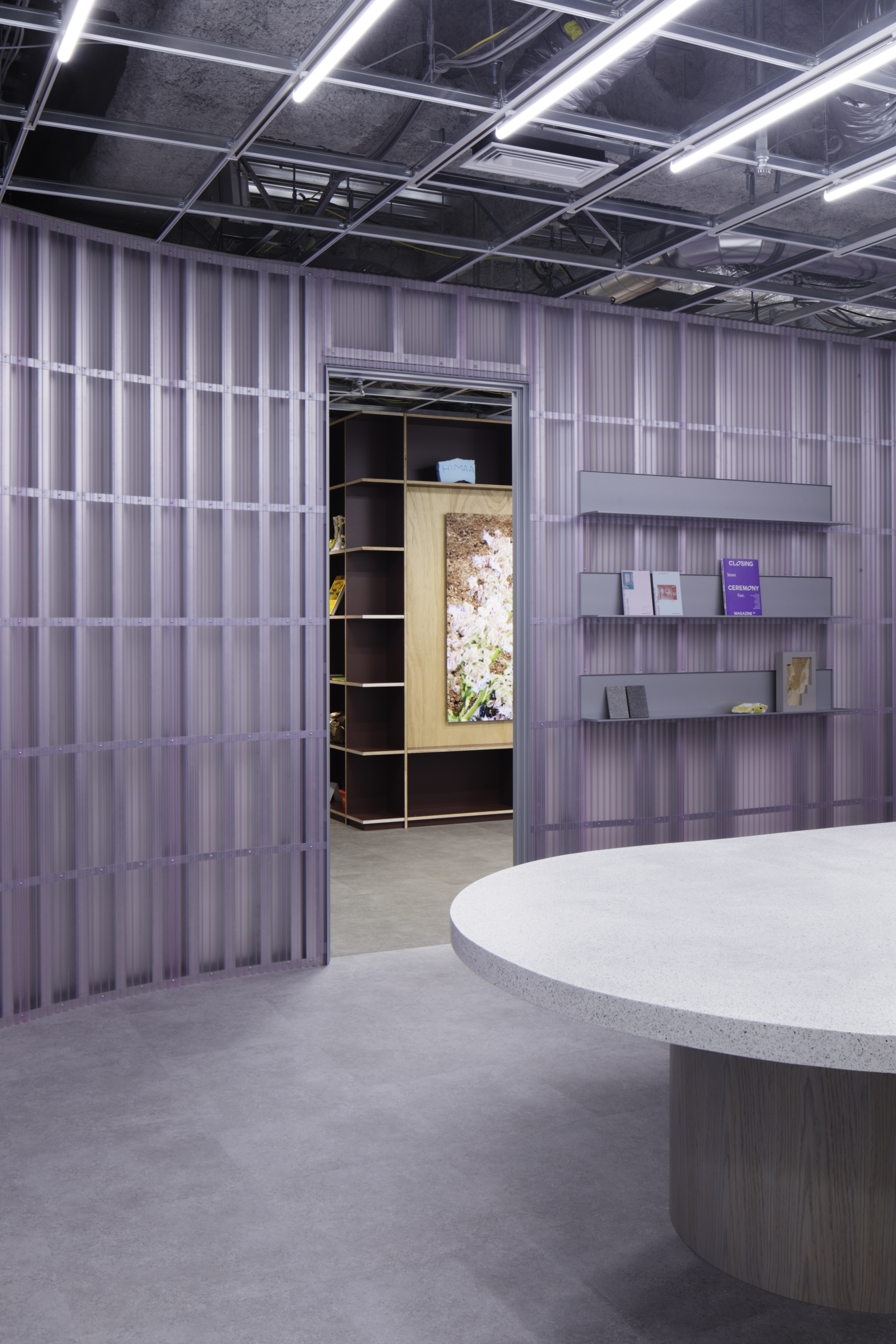
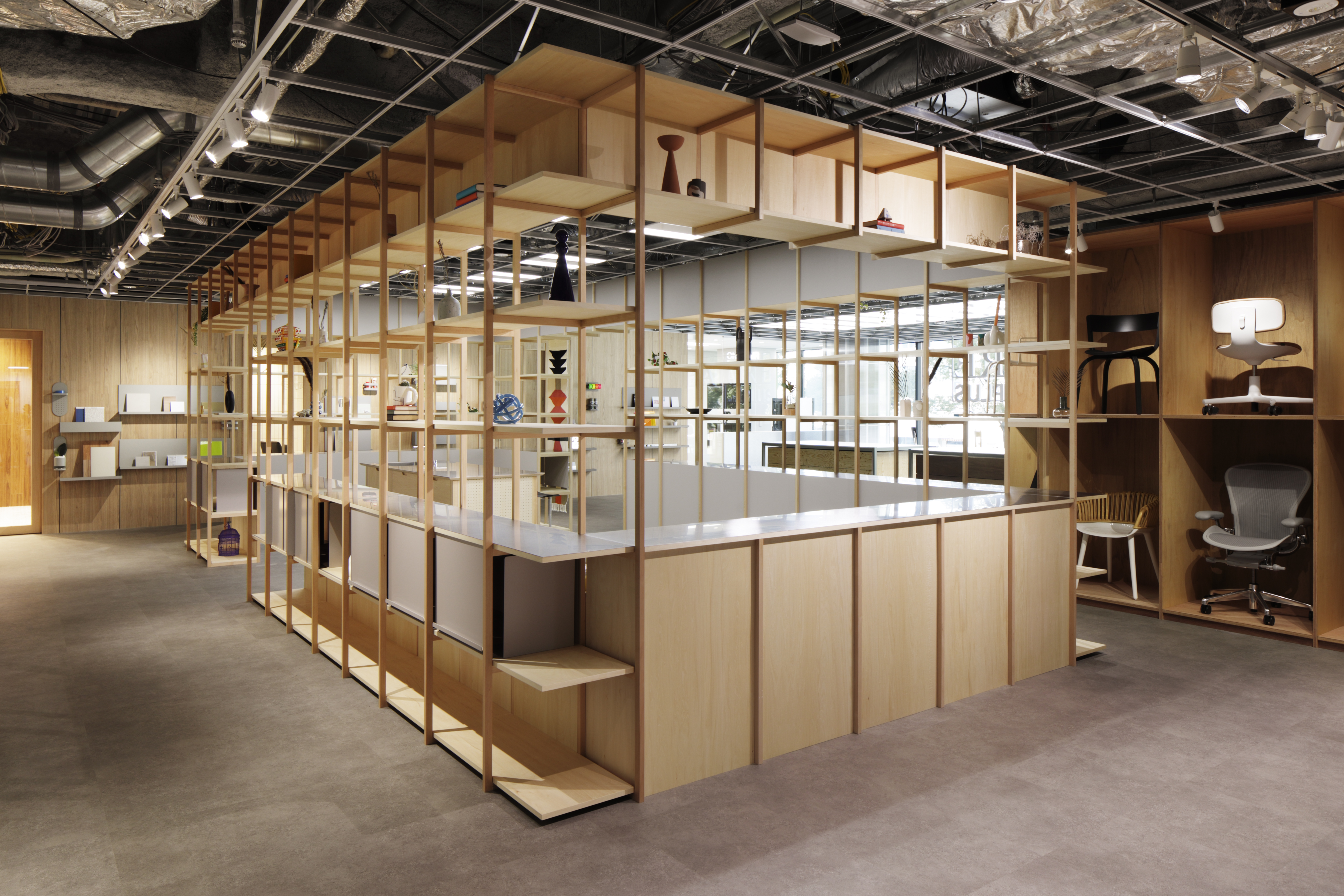
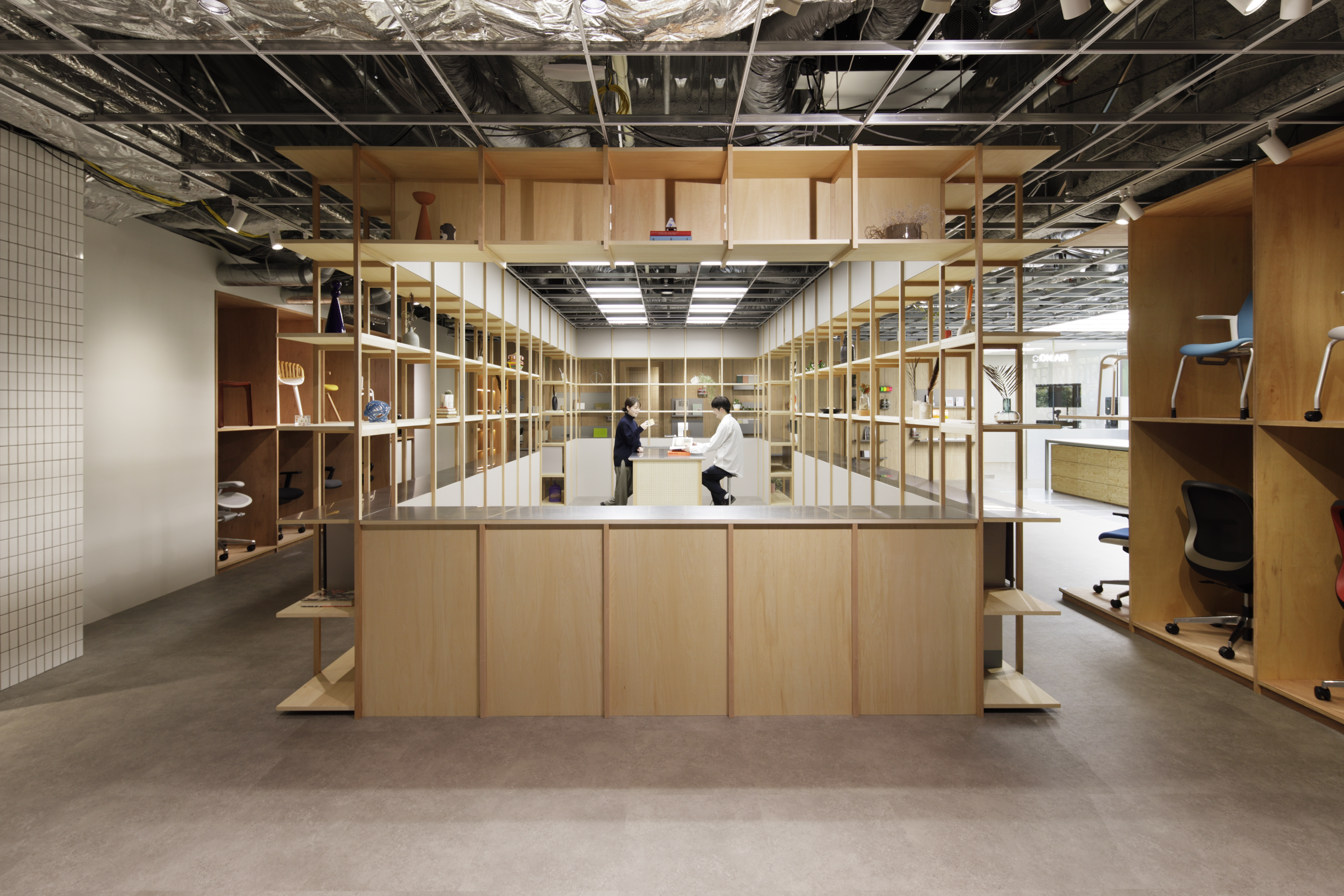
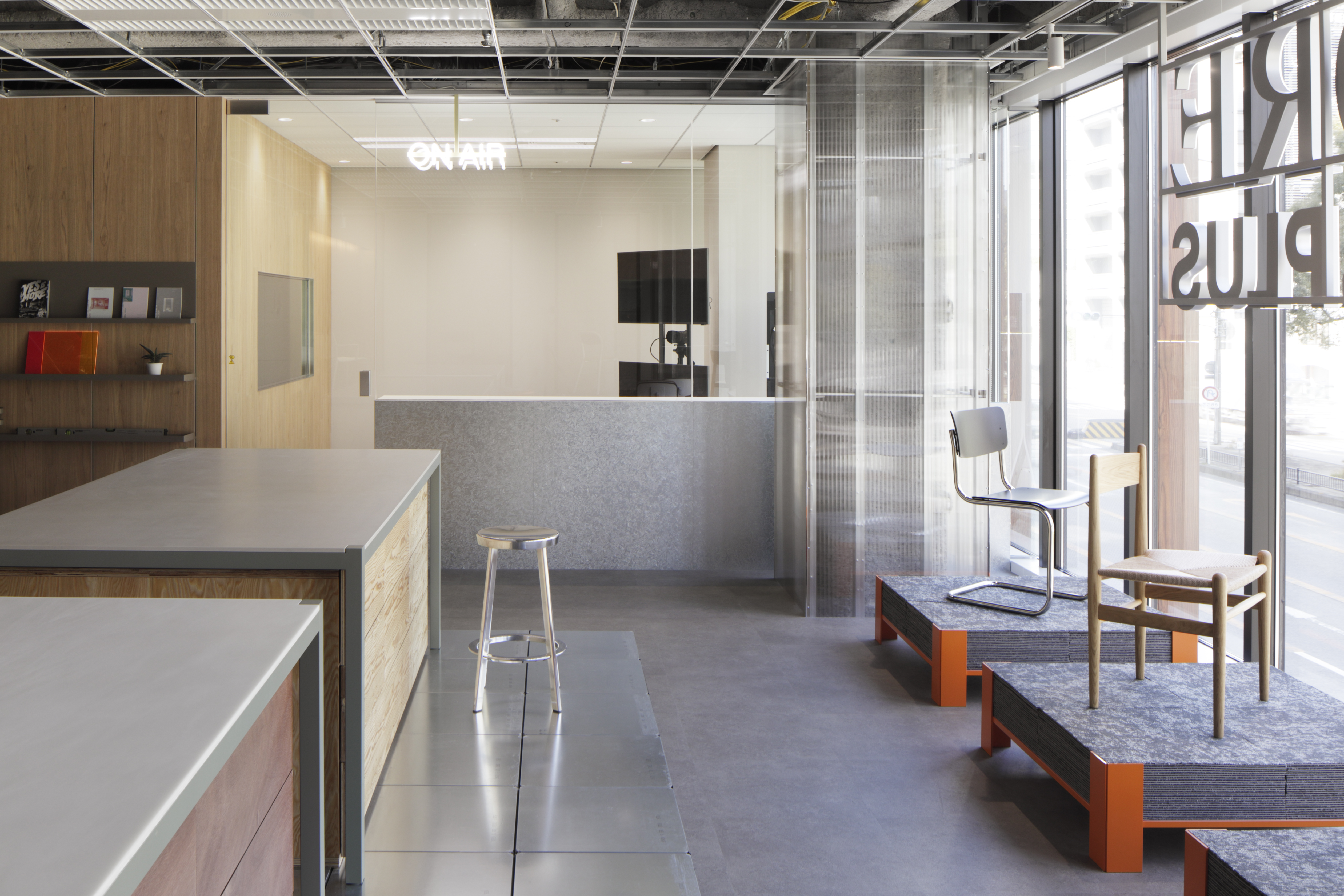
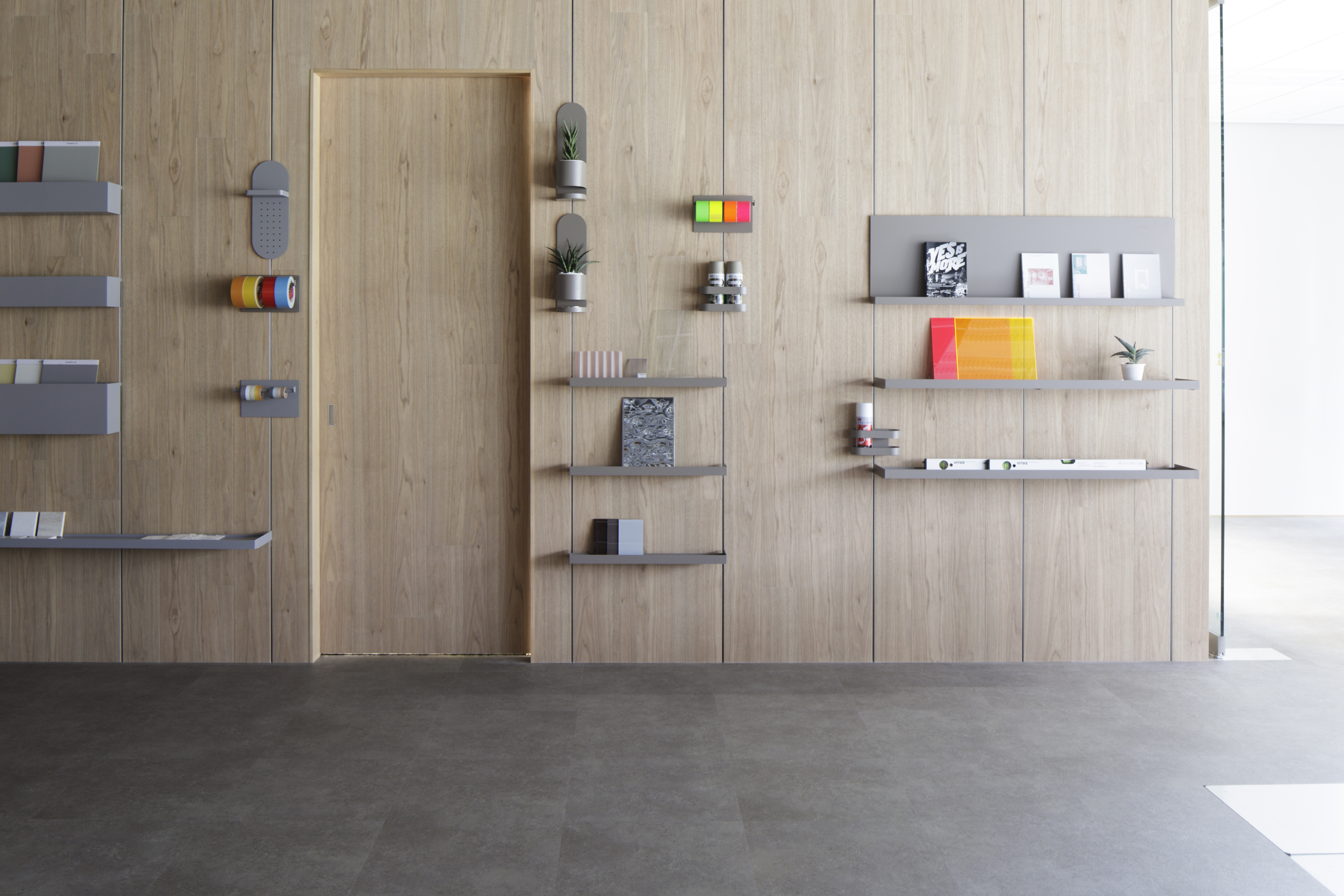
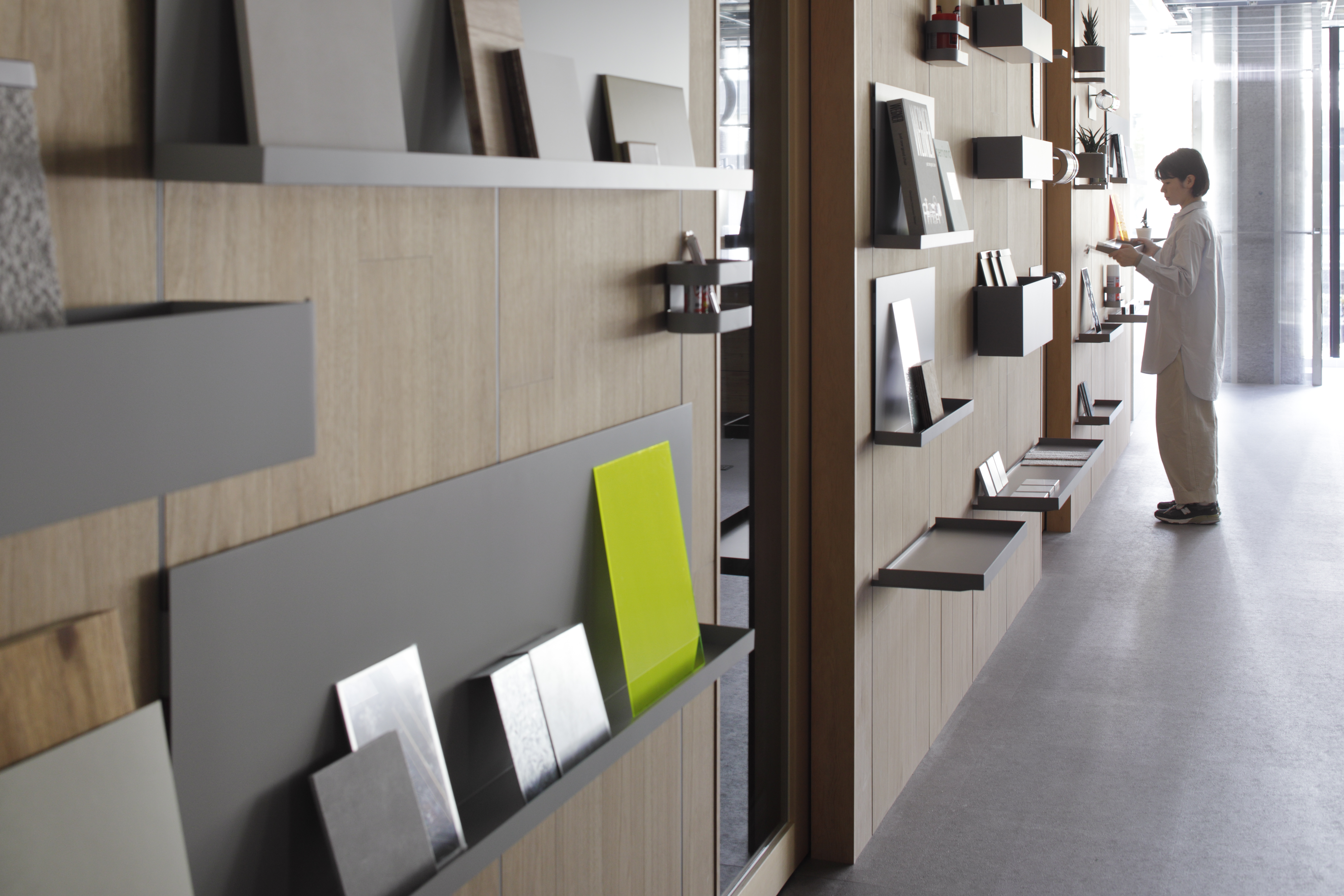
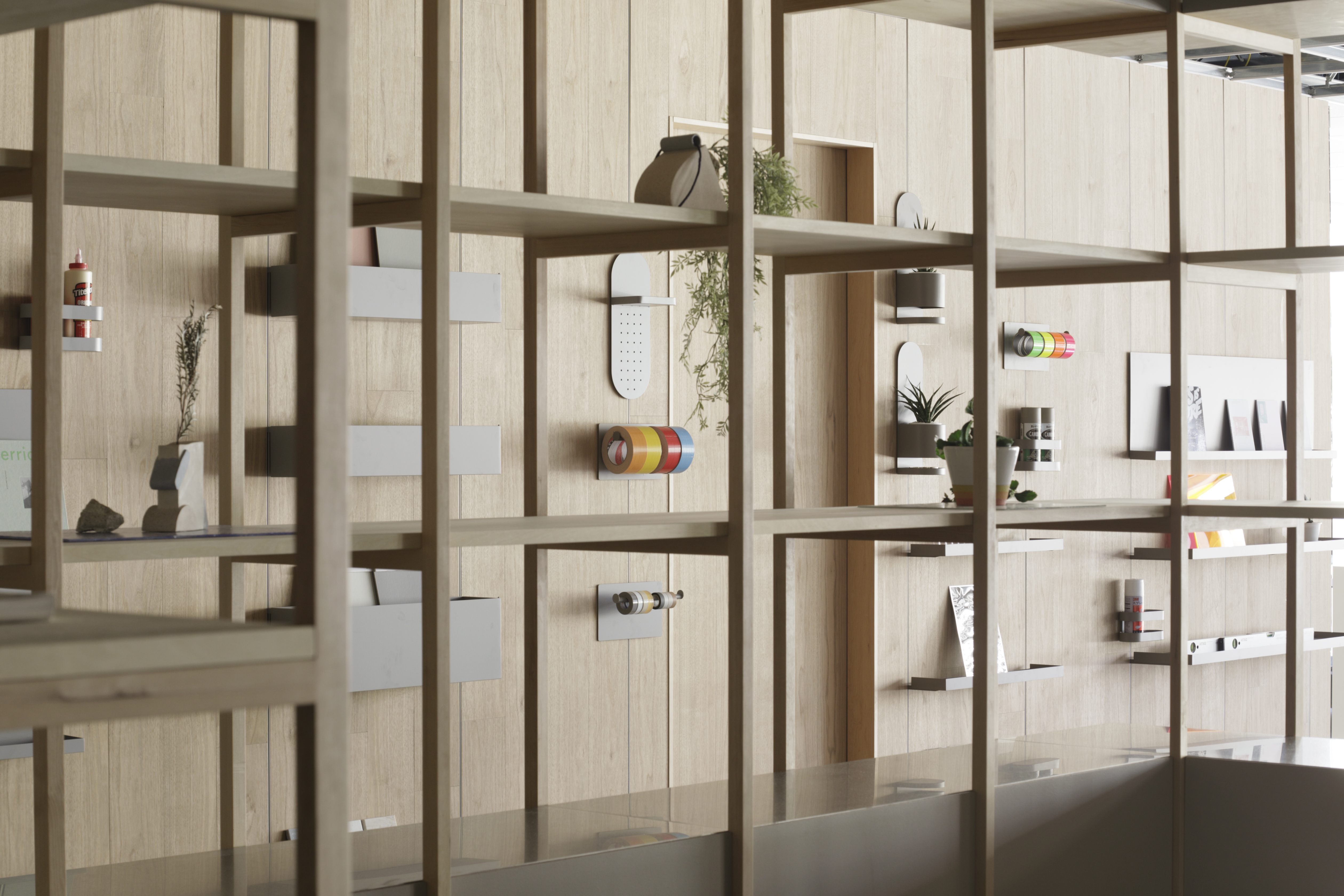
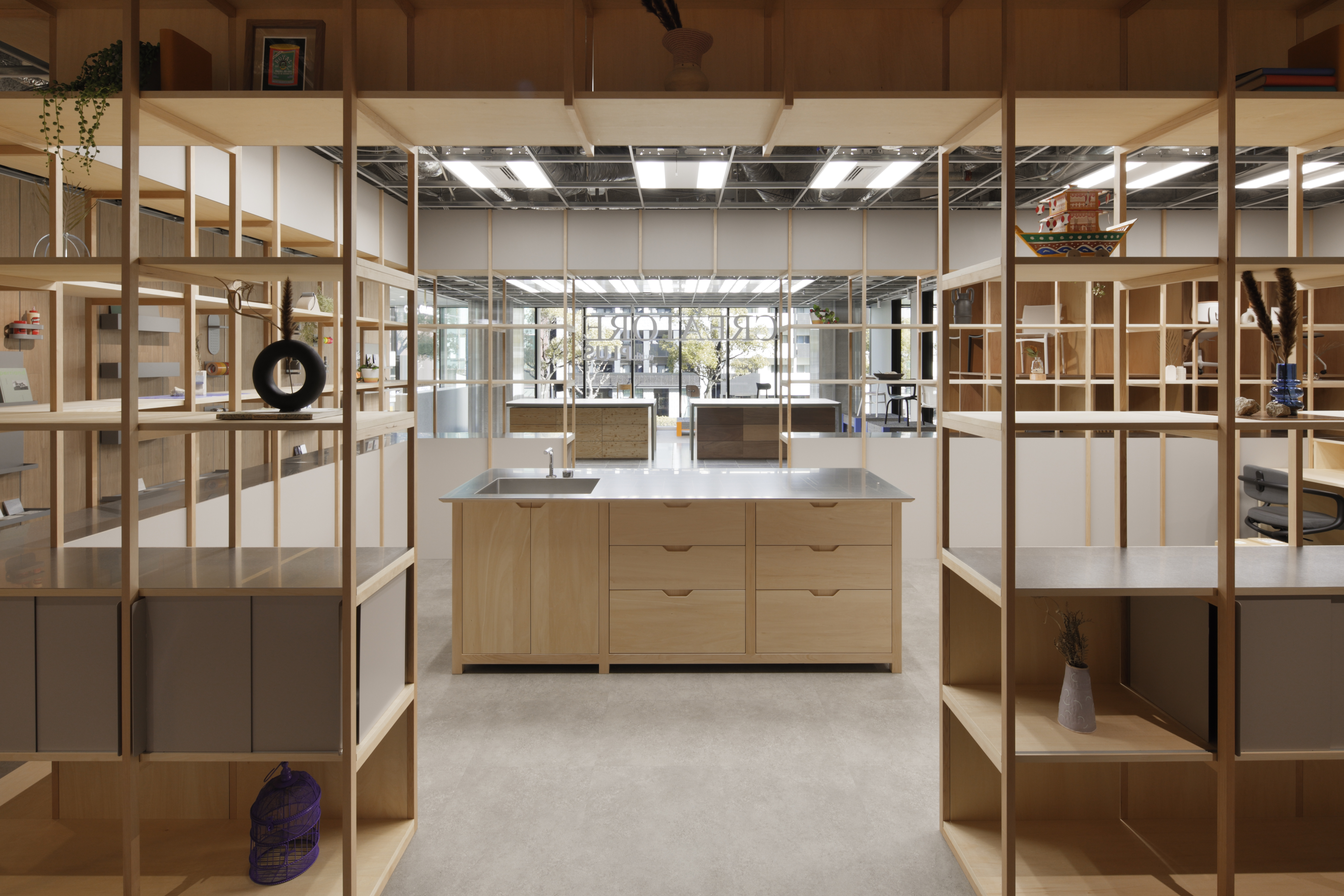
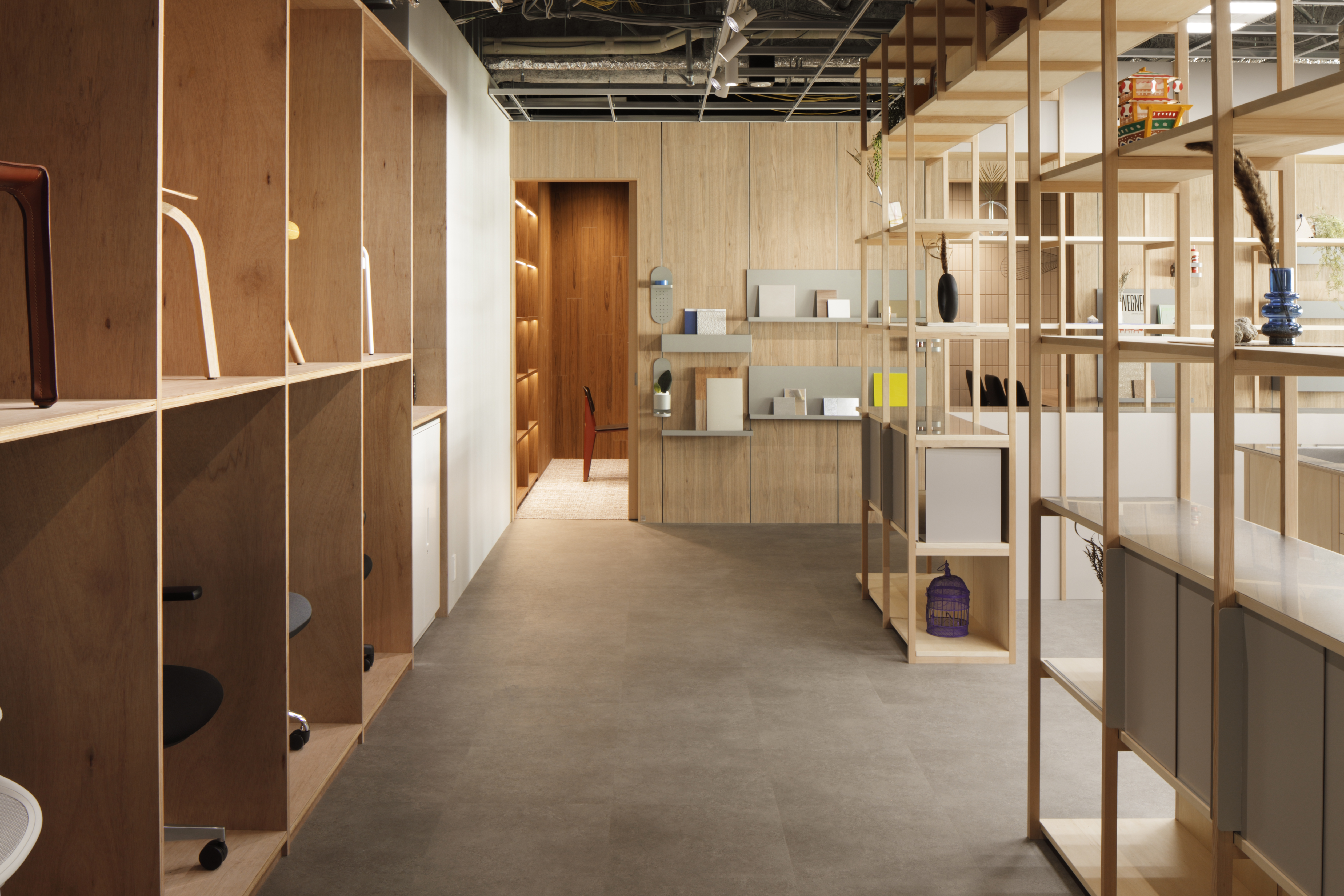
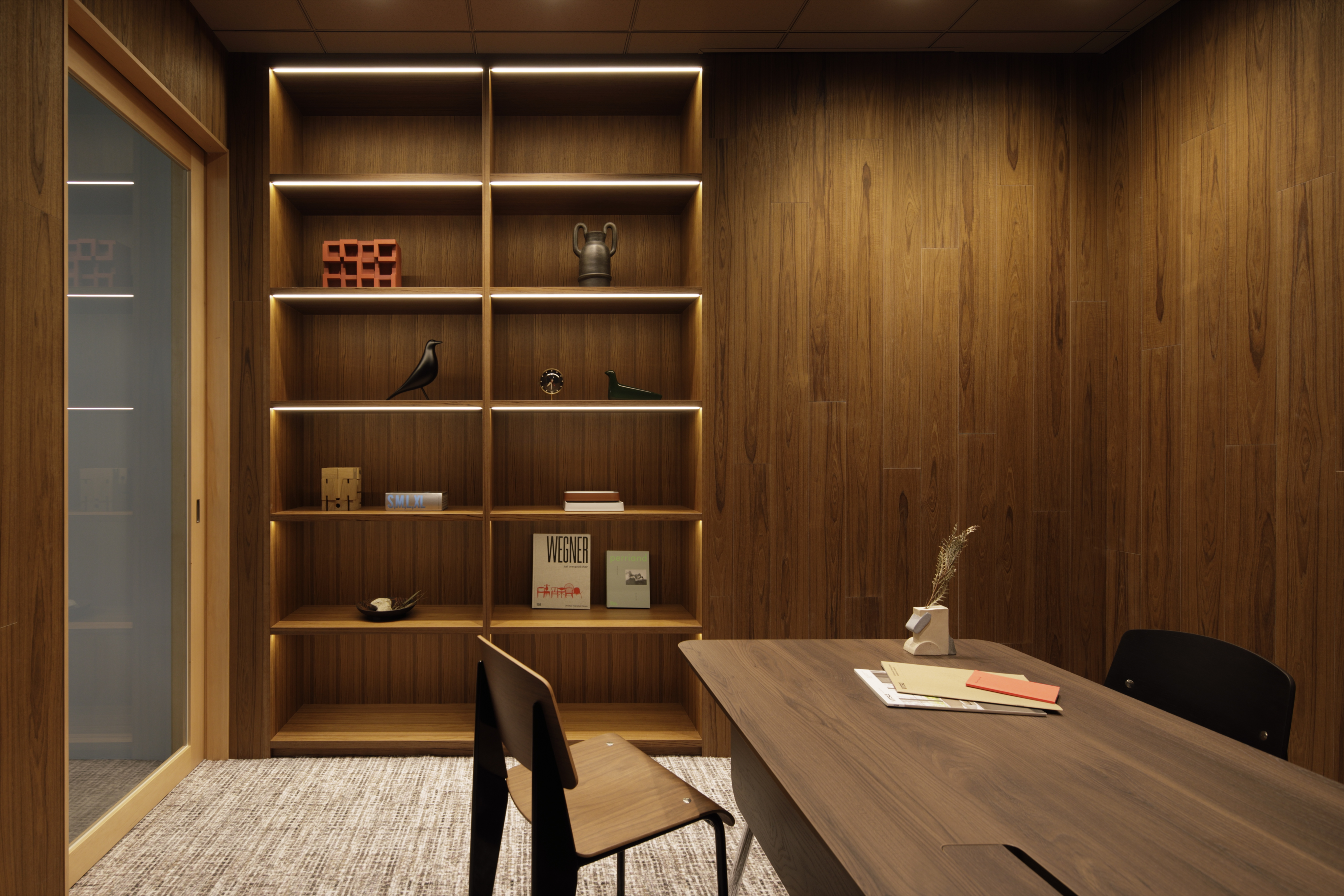
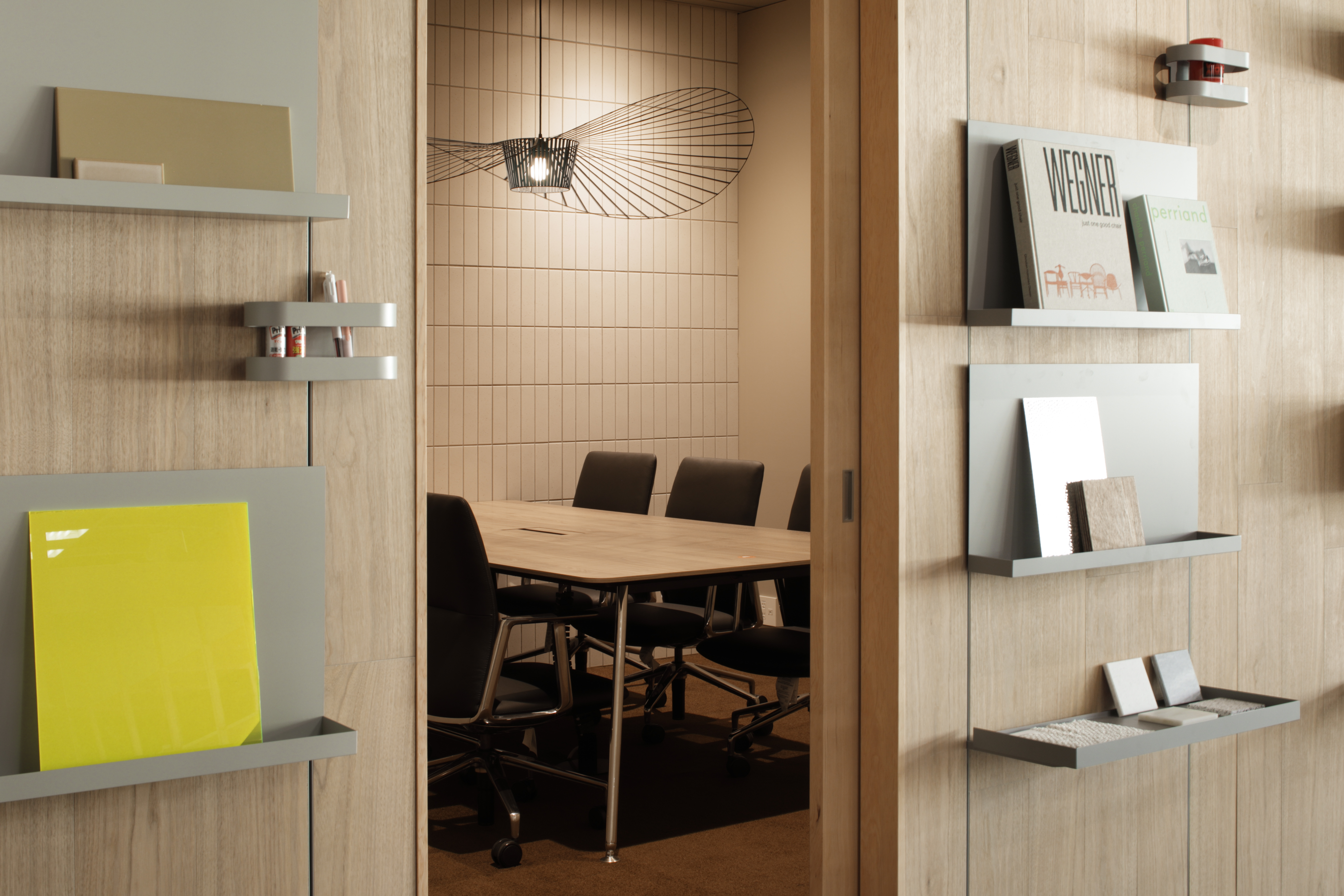
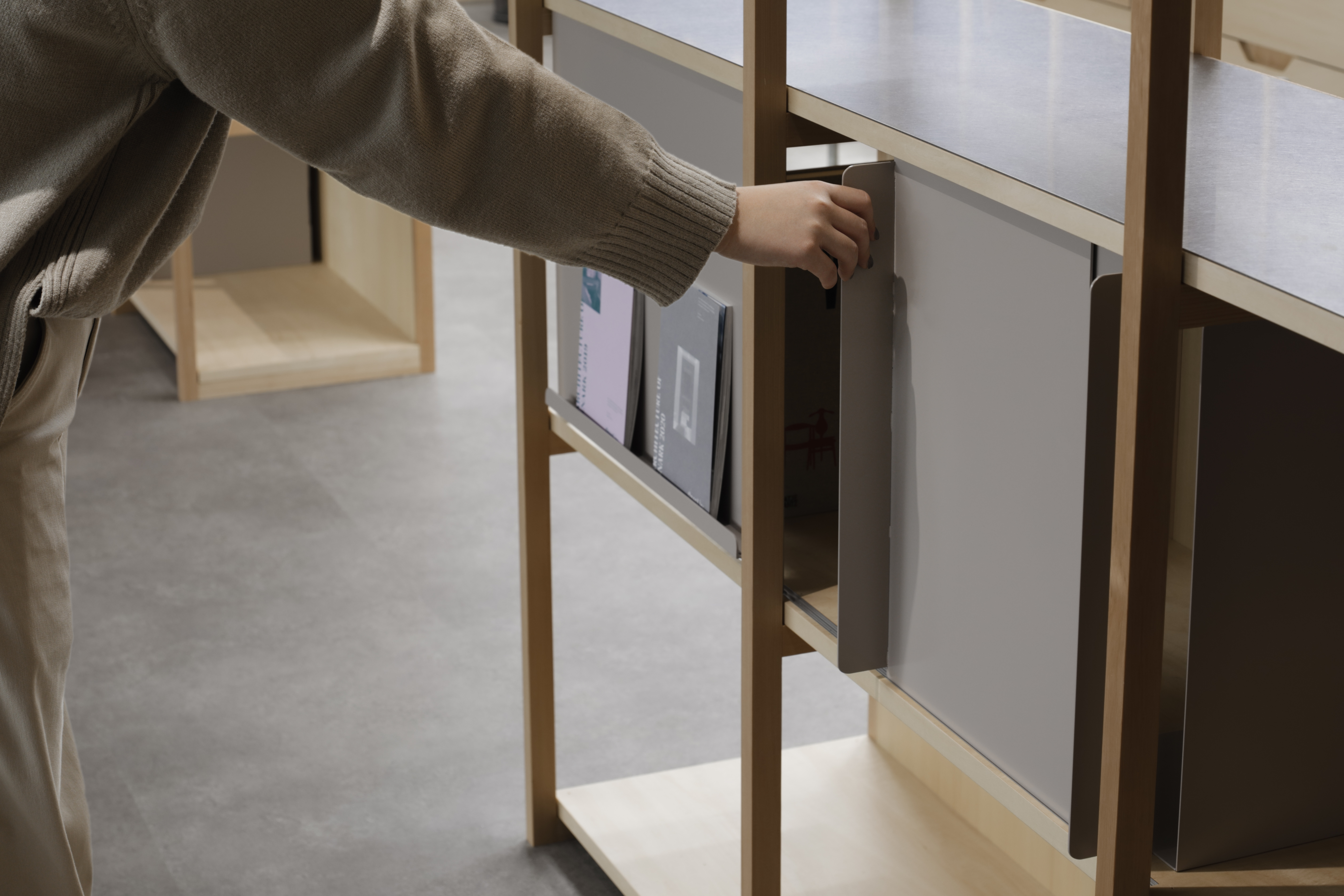
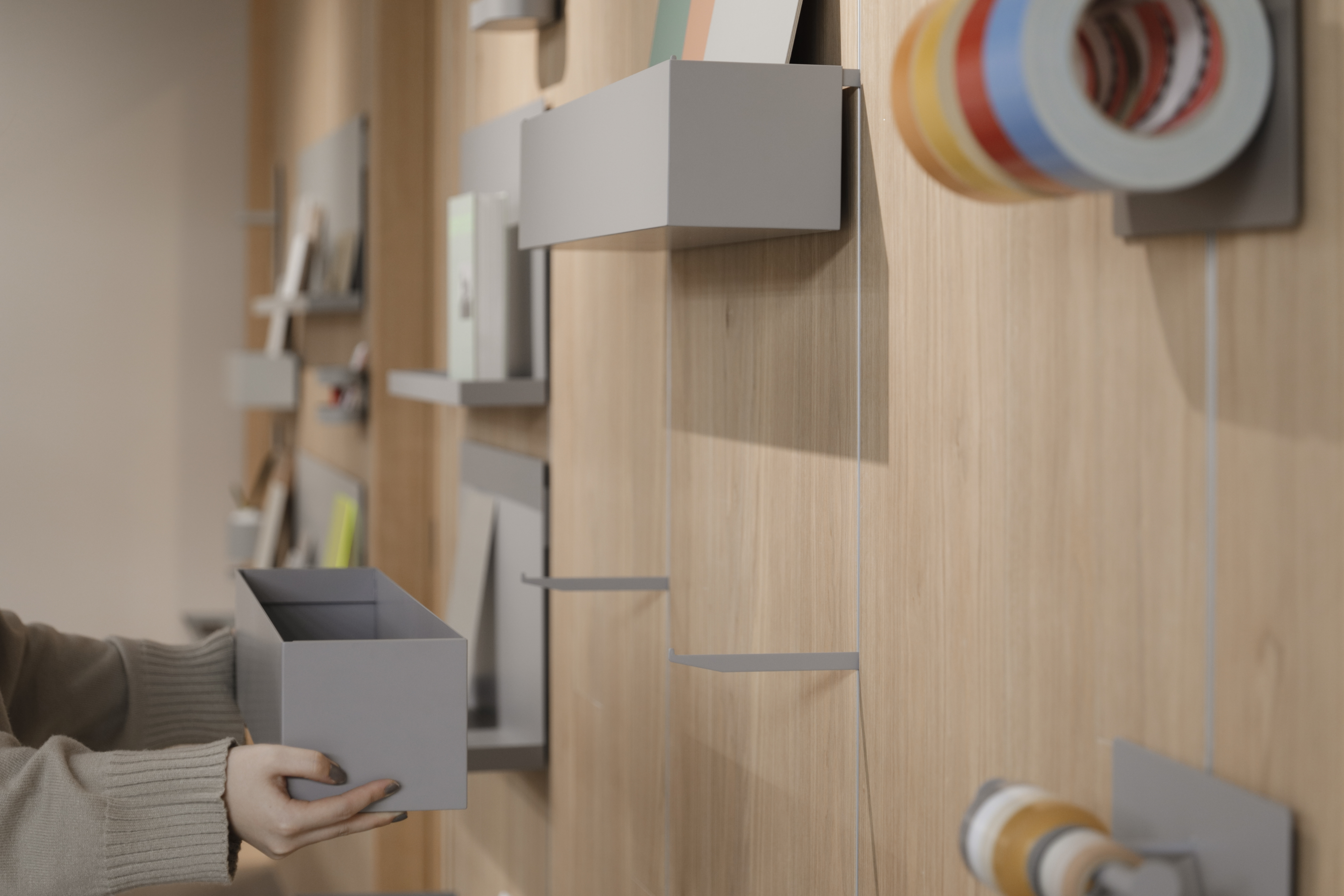
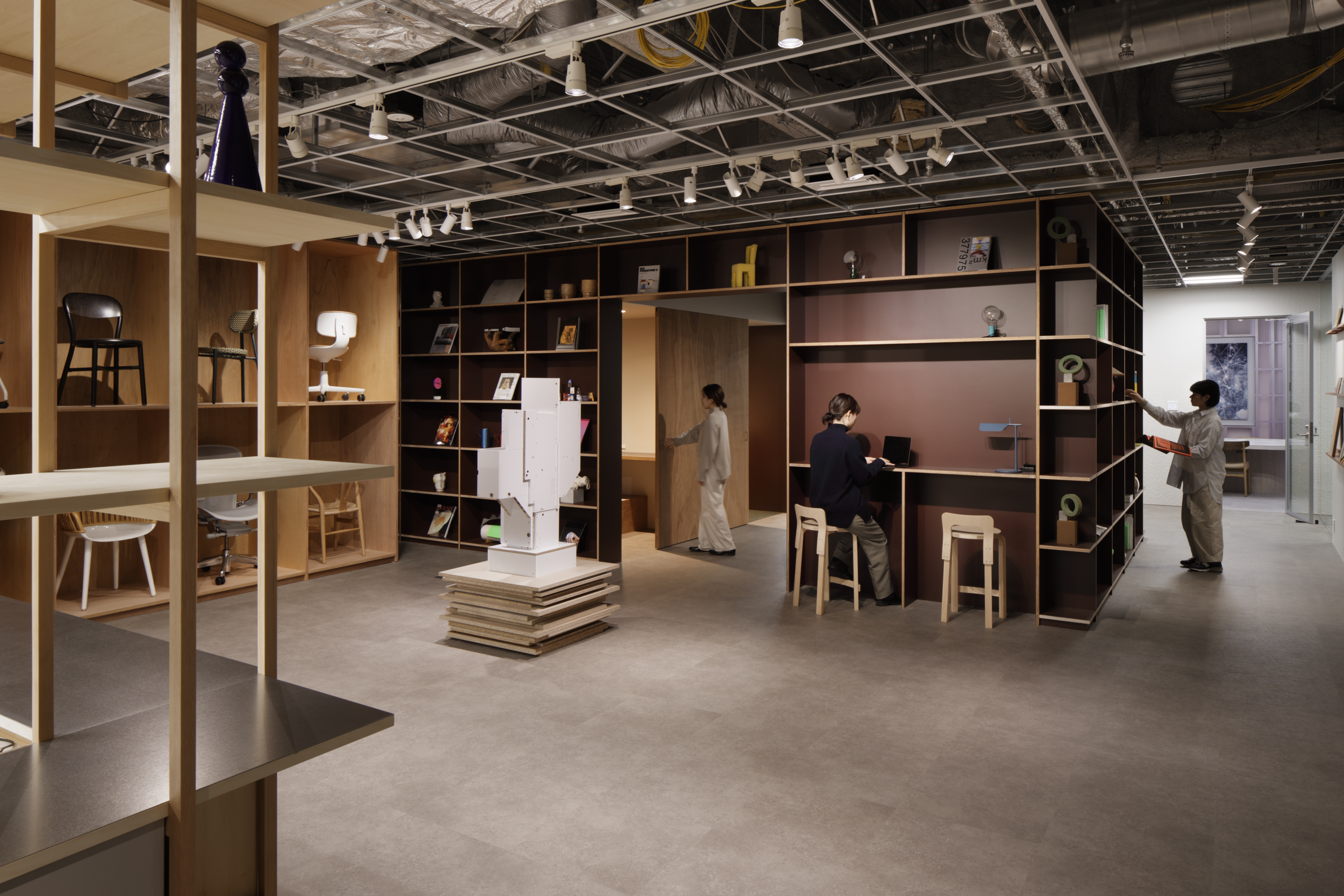
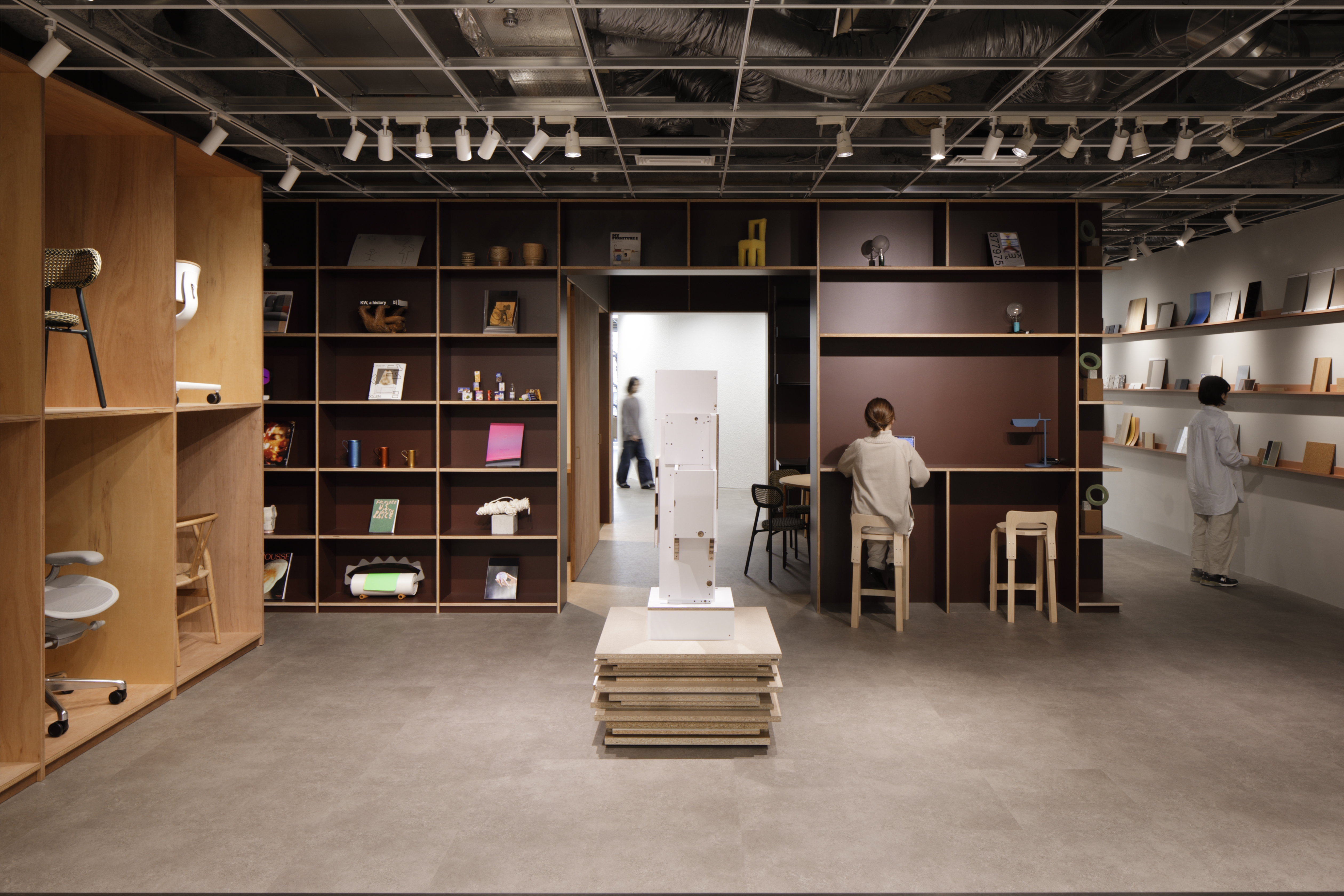
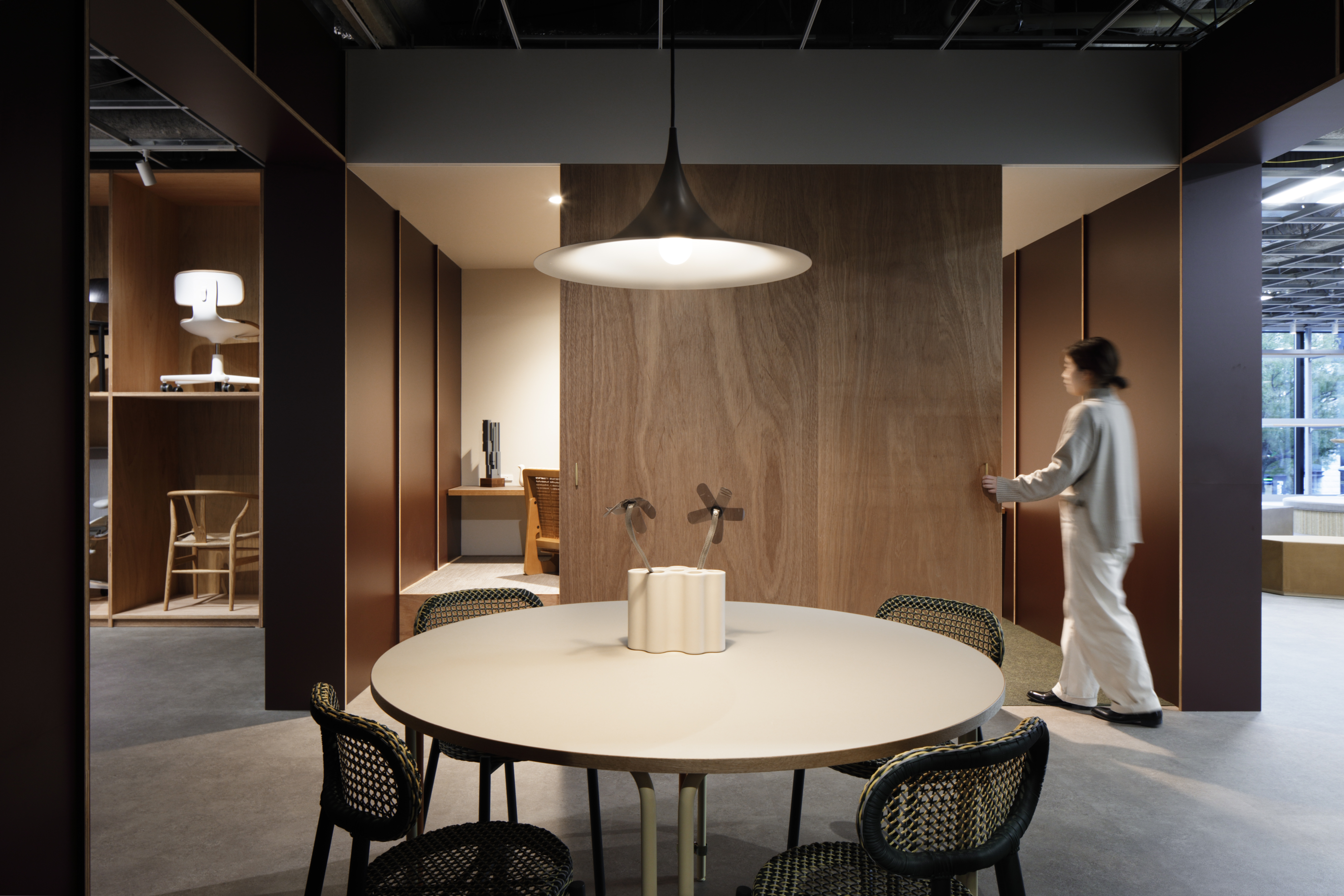
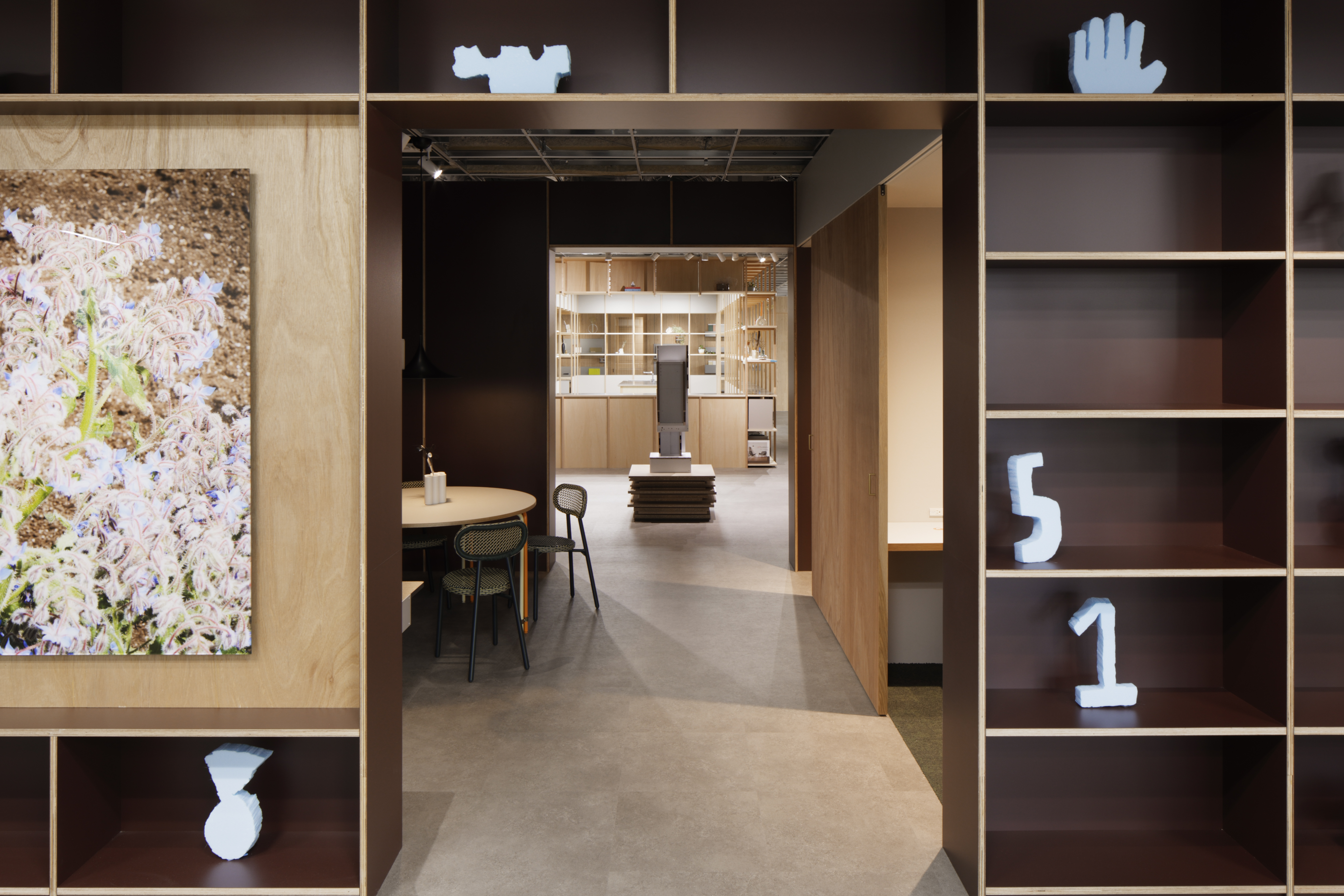
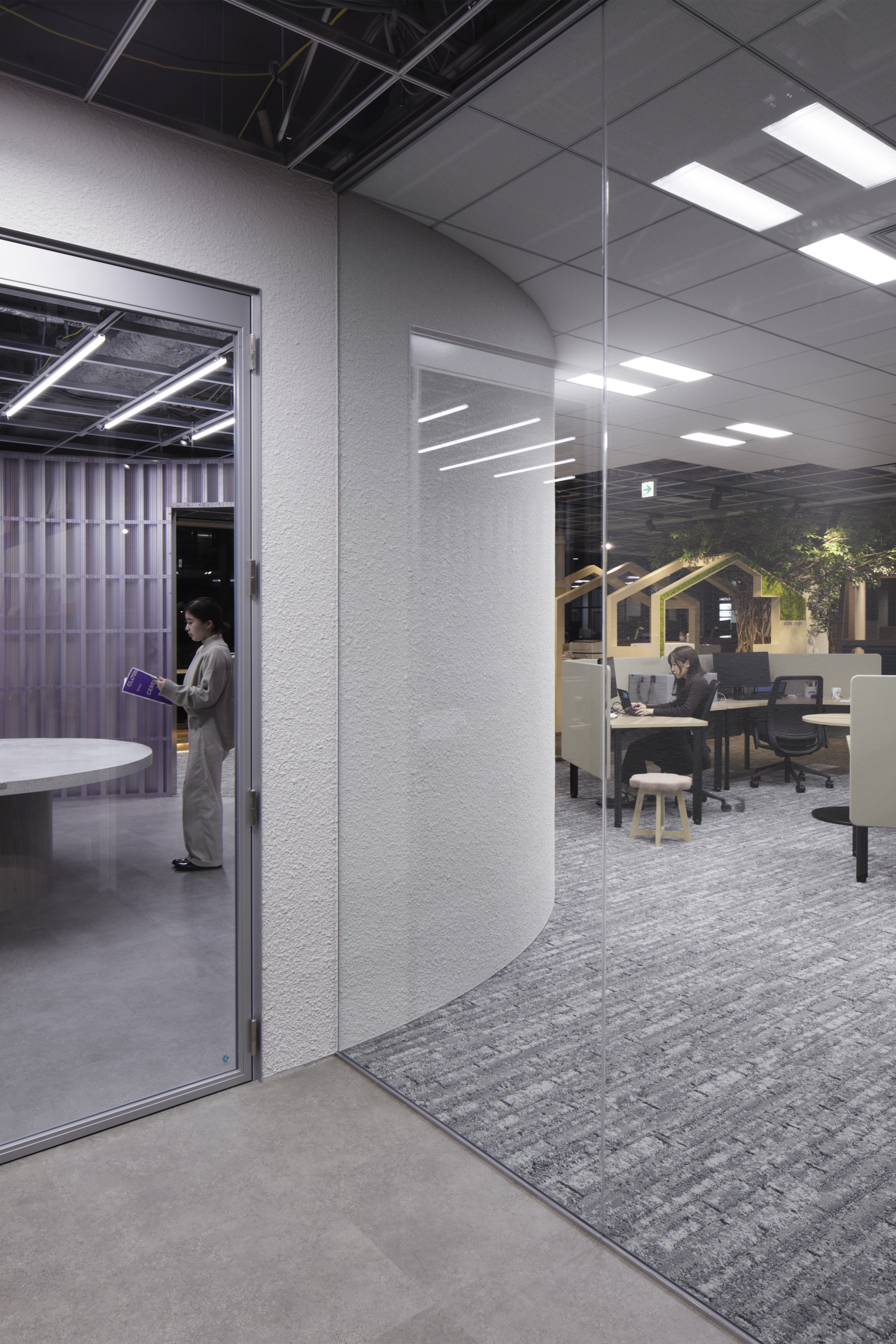
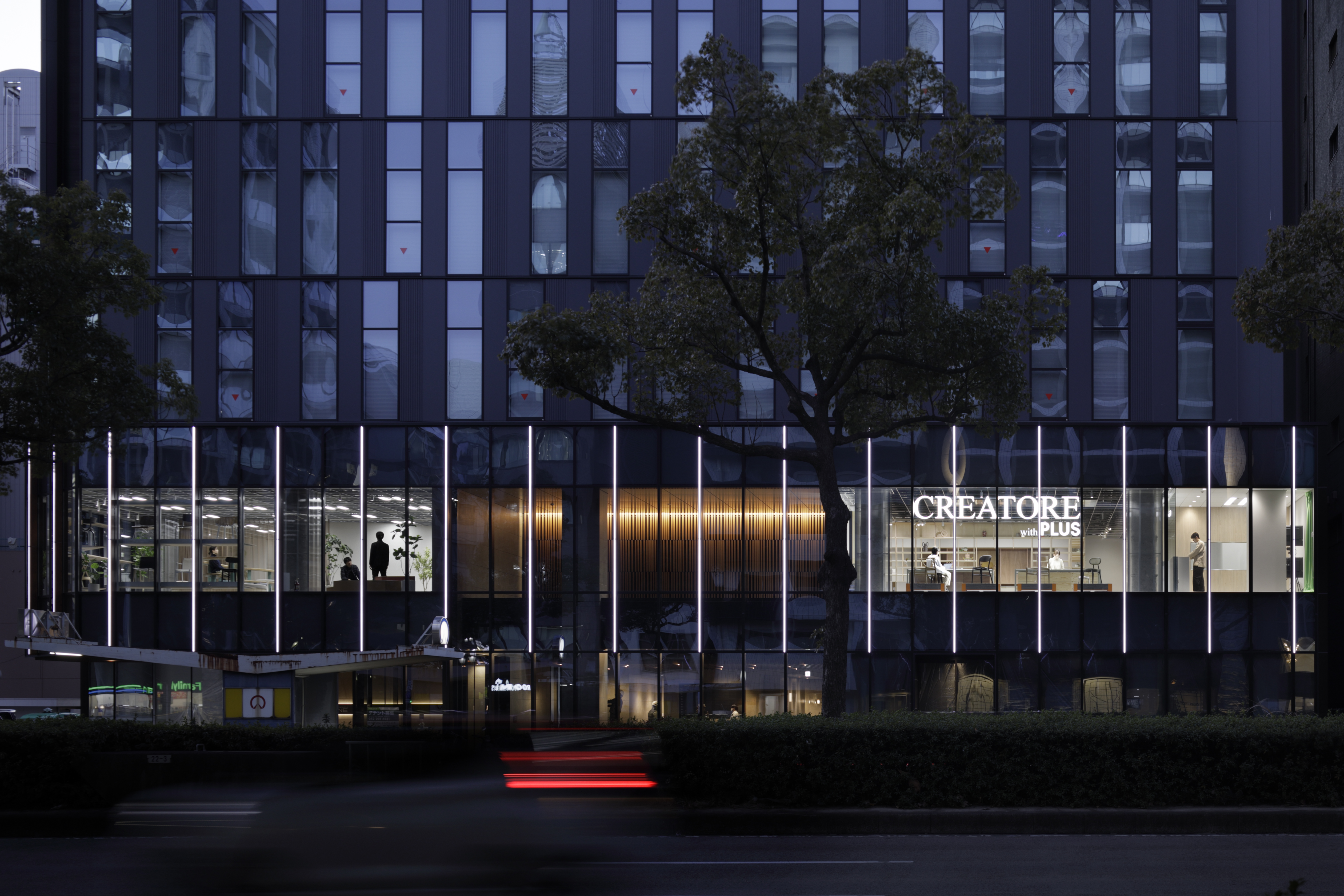
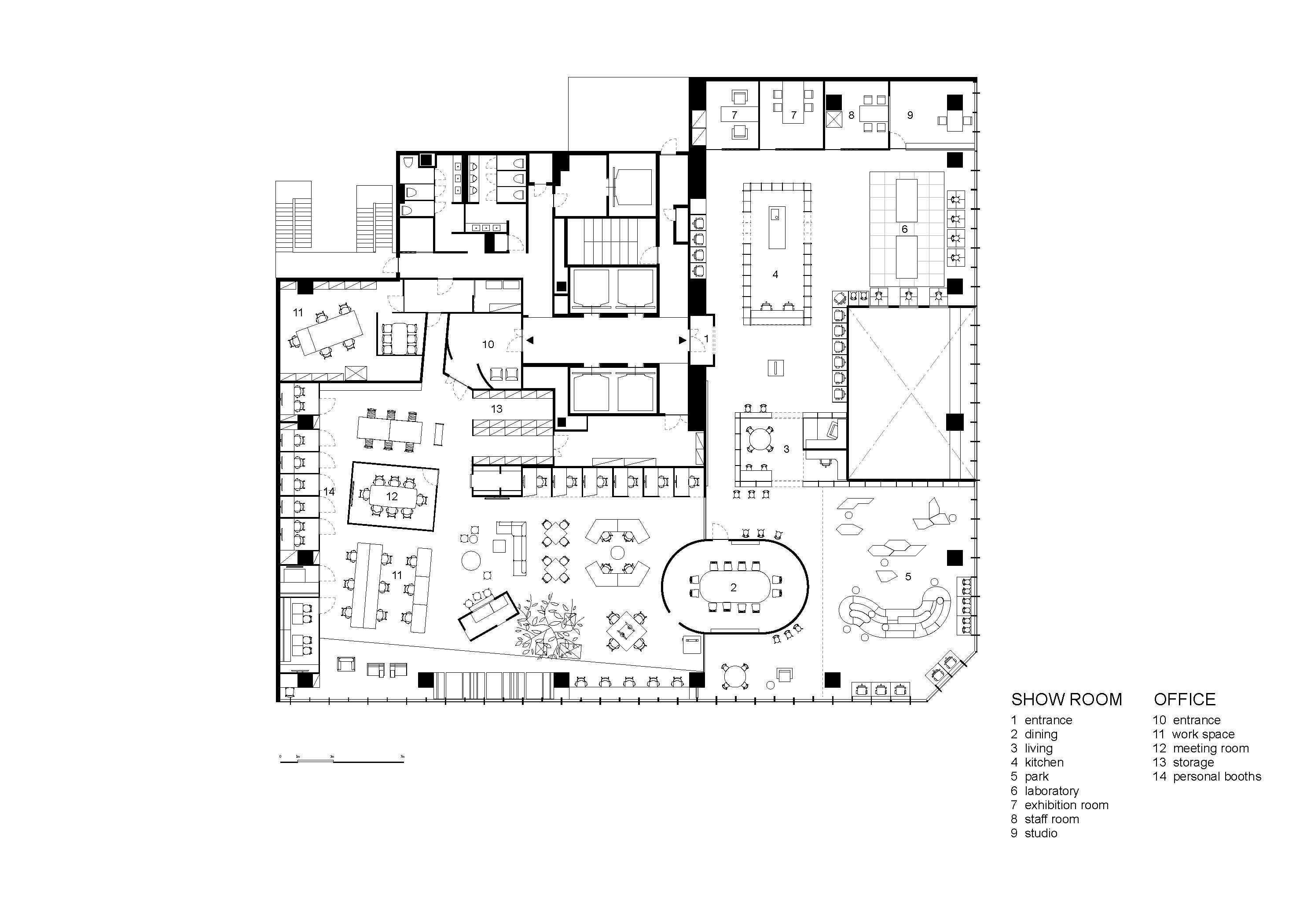
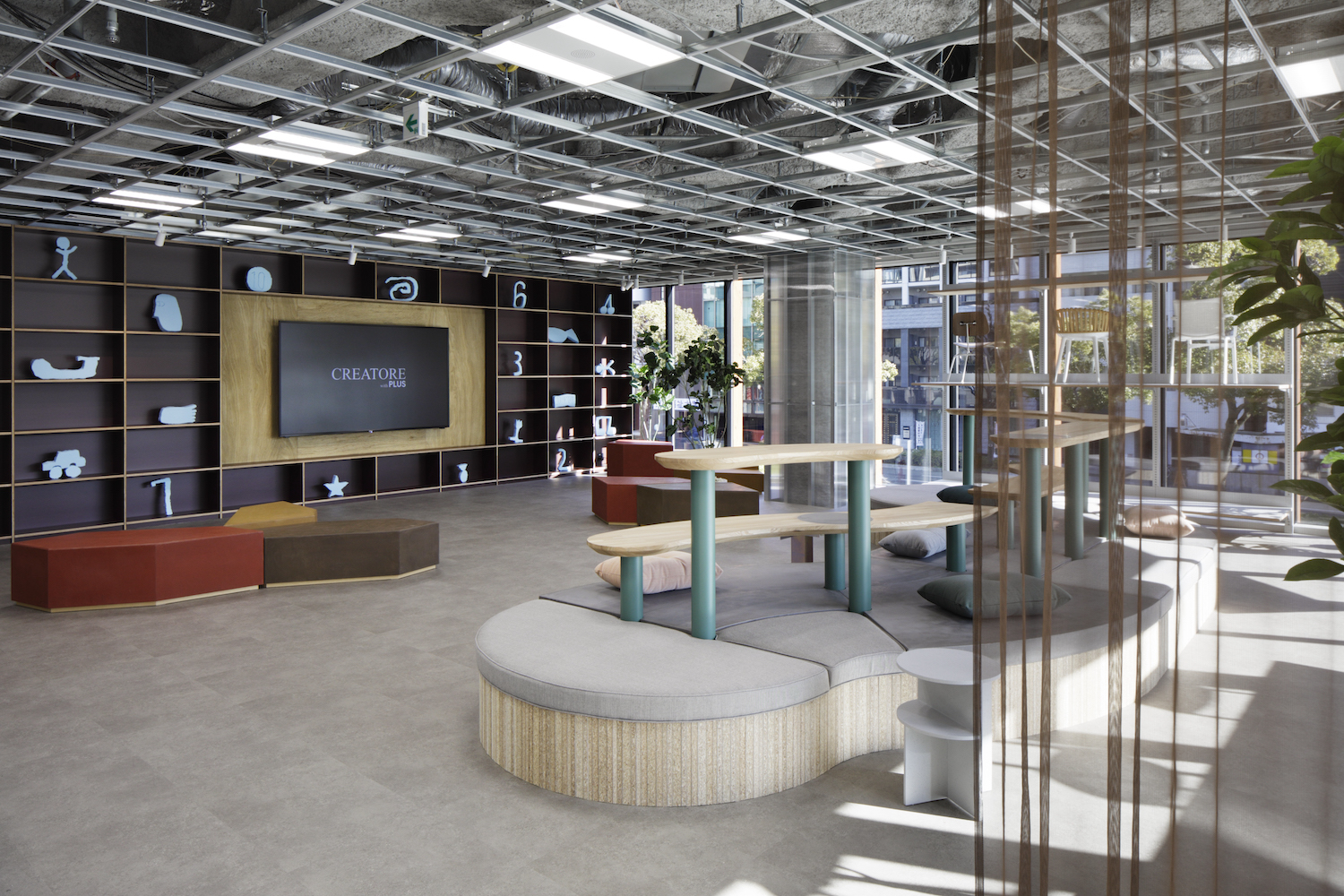
オフィスづくりをサポートする拠点「CREATORE with PLUS」名古屋 ショールームである。オフィスとリモート、必要に応じて場所を選択できる働き方が模索される中、 “Work in life” のコンセプトのもと、計画地であるオフィスビルを多様な生活の場の連続としてとらえて計画を進めた。
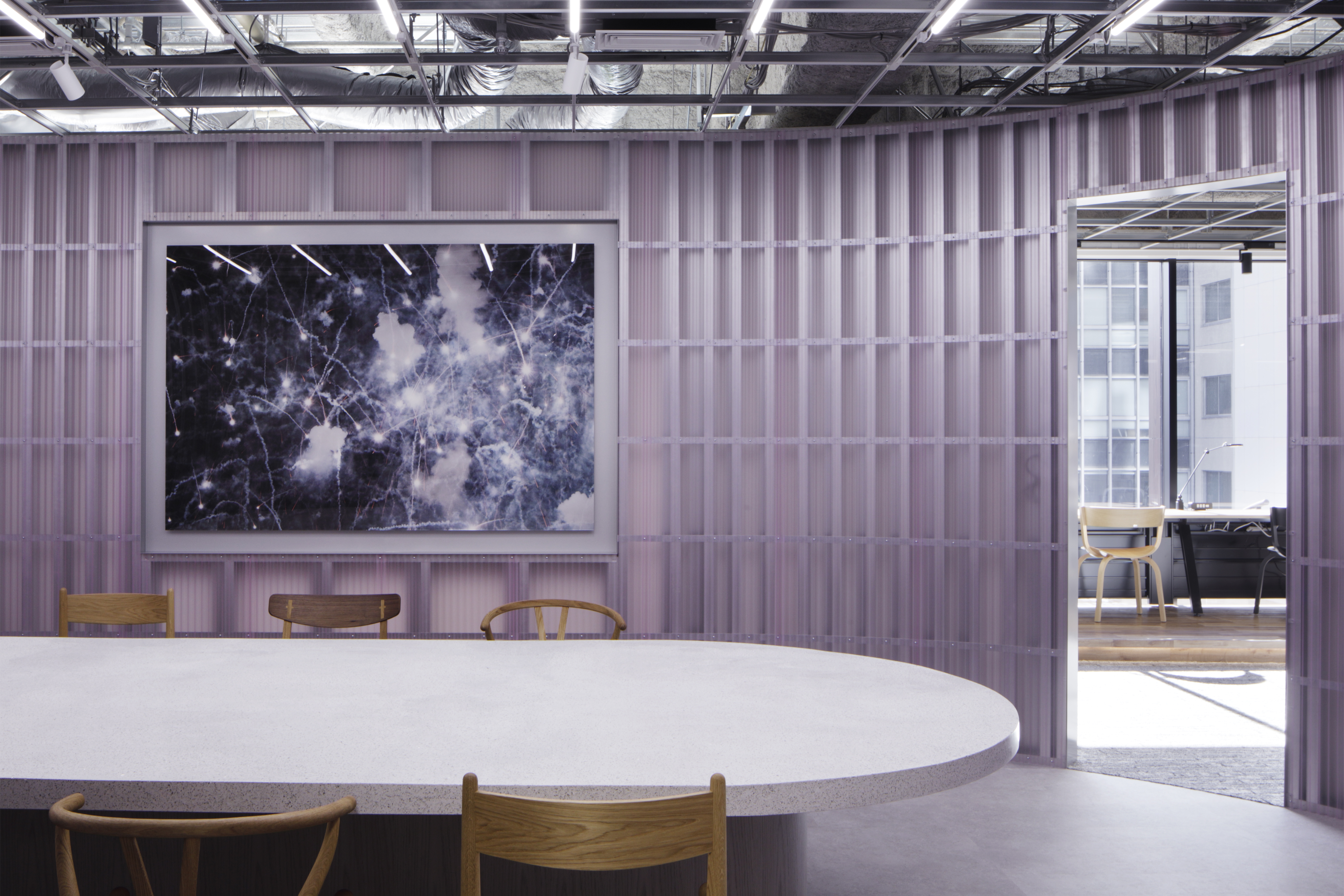
ショールームとしてひとつひとつの商材をみせることも重要だが、昨今の多様な働き方のシーンにおいては可変性のある使い方によって、人それぞれの居場所やシーンの見え方が変化していくような展示空間が重要だと考えた。住空間を意識したスケールや設え、街を意識したスケールや設えにショールーム機能として家具、物、人が集まる。エリアごとにデザインされた大きな開口、通路や窓を抜けて、それらが連なり風景となるような空間構成とした。
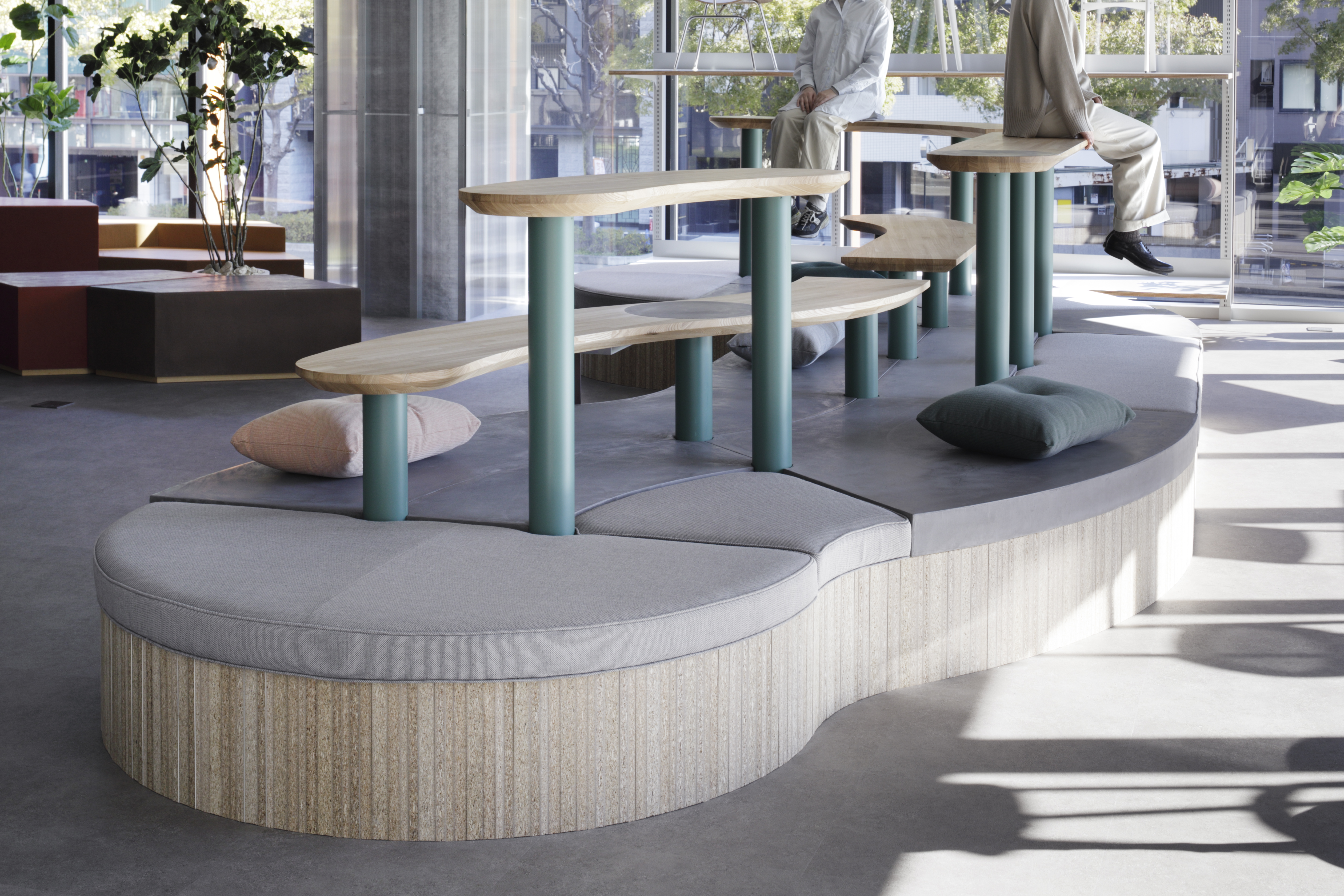
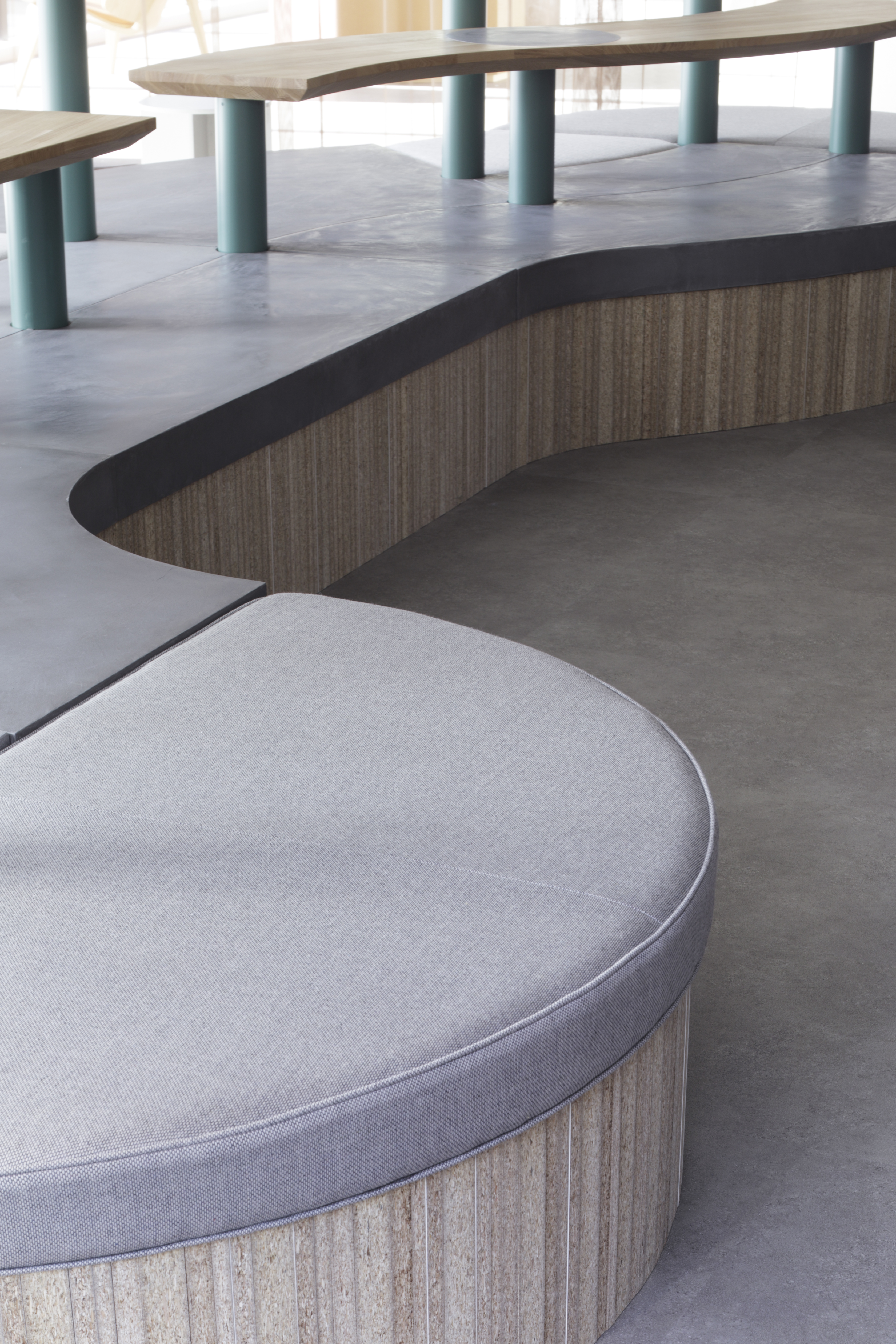
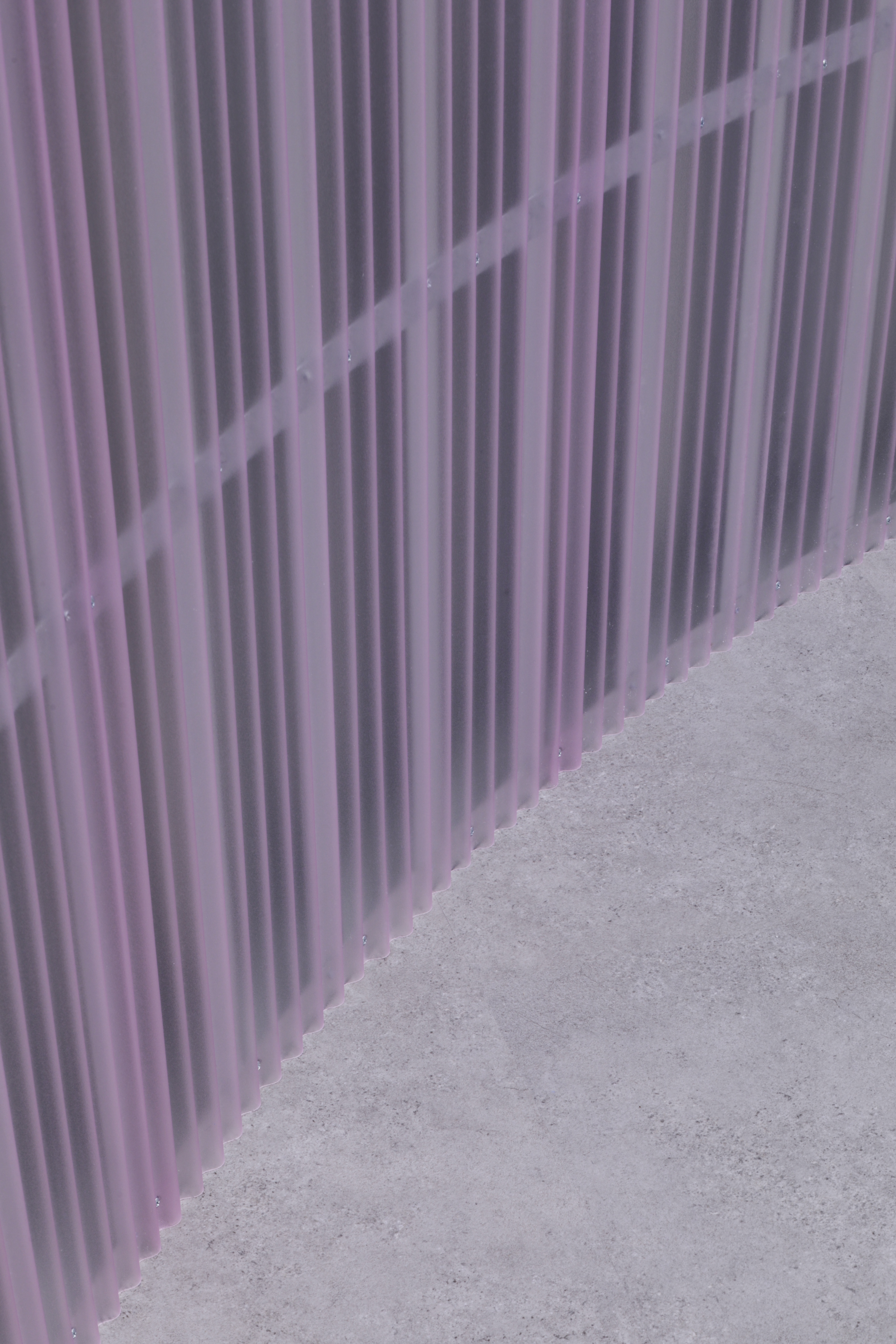
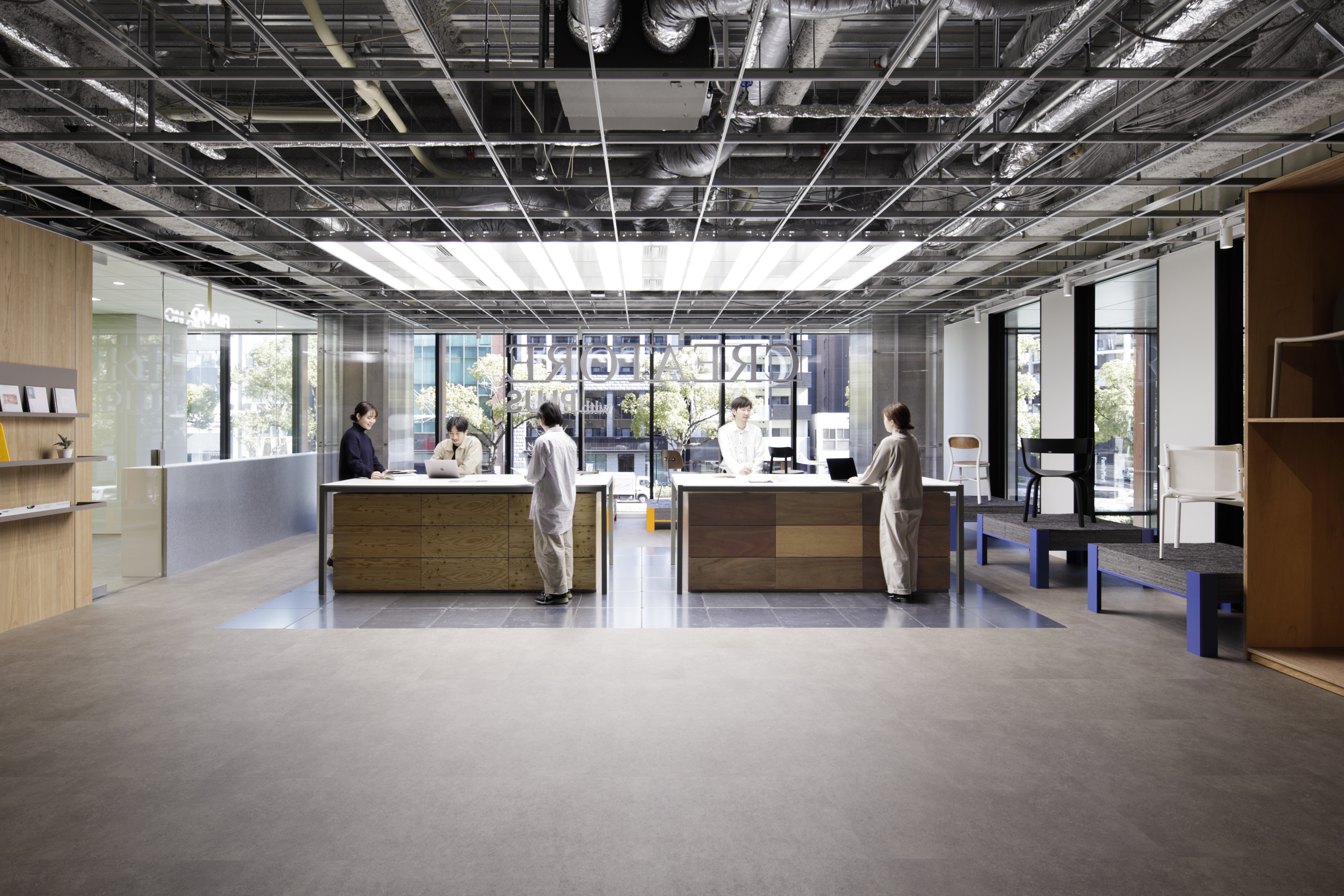
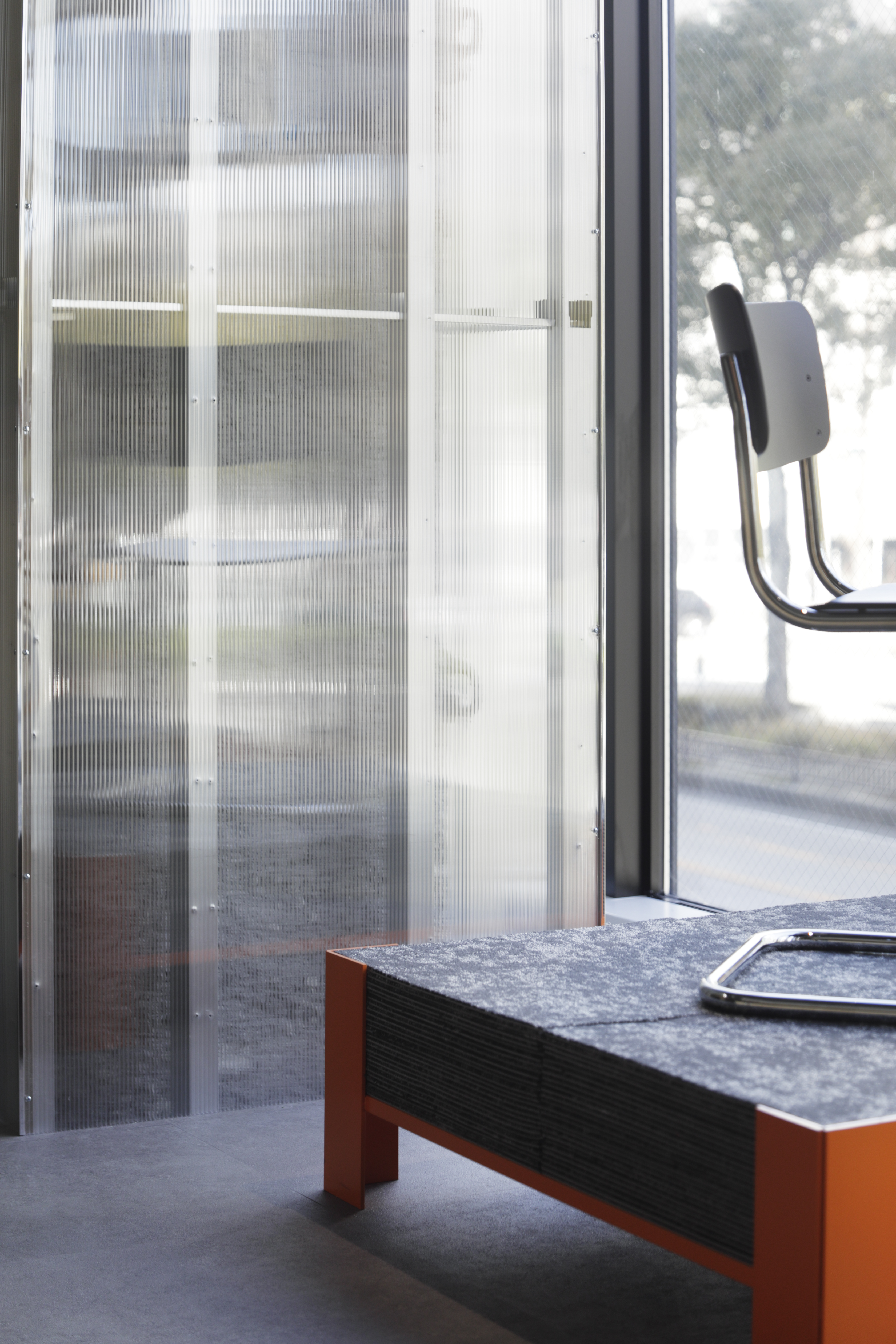
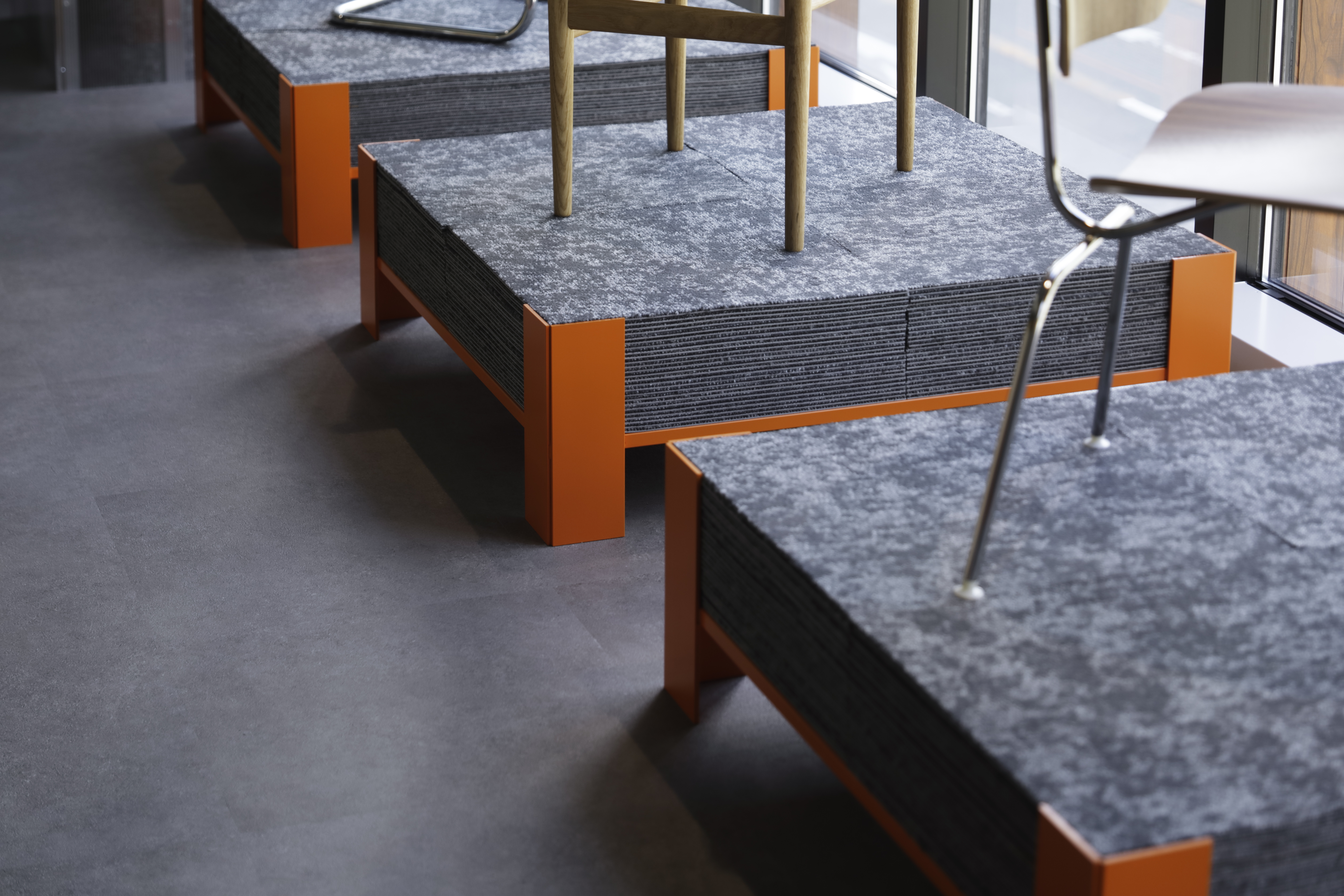
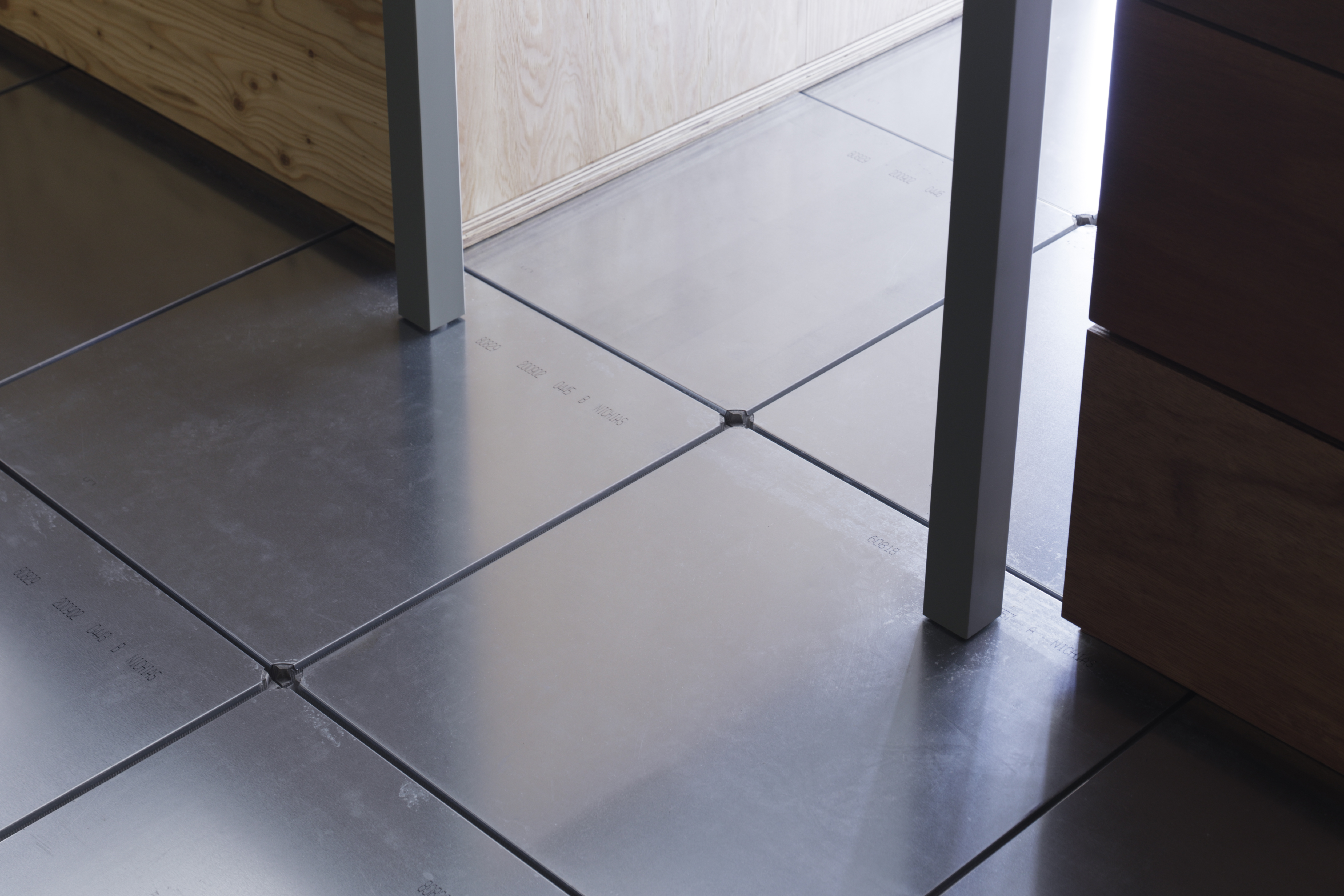
また、循環型社会に向けたプロダクトとして今あるものを適切に使用したデザインを試みた。内装工事の過程で廃棄してしまうテナント標準仕様の内装仕上材や、クライアントが持つ家具工場の廃材をアップサイクルし什器に昇華している。バーティカルブラインドを座面に使用したベンチやタイルカーペットを積層させた展示台など、スクラップ&ビルドのスパンが早いオフィス設計に対してサステナブルを意識した設計とした。
Located in Nagoya, this showroom for CREATORE with PLUS serves as a strategic hub for reimagining modern work environments. As the boundaries between the office and remote work continue to blur, the design adopts the concept of Work in Life, reconfiguring the office building as a continuous sequence of diverse, lived-in environments.
While the primary function is to showcase commercial products, the design prioritizes a versatile exhibition space where shifting viewpoints and reconfigurable layouts mirror the fluidity of contemporary work styles. The spatial composition integrates varying scales—ranging from intimate residential settings to more expansive, urban-inspired zones—where furniture, objects, and people converge. Through a series of large, intentional openings and interconnected pathways, these distinct areas coalesce into a singular, cohesive interior landscape.
A central pillar of the project is its commitment to a circular society, achieved through the thoughtful upcycling of existing materials. Interior finishes typically discarded during tenant renovations and wood scraps from the client’s own furniture factories were elevated into refined fixtures. Notable examples include benches with seating crafted from vertical blinds and display plinths constructed from layered tile carpets. By integrating these sustainable interventions, the project offers a sophisticated counter-narrative to the rapid “scrap-and-build” cycles prevalent in commercial office design.