



Category :
House in Nakauchi
中内町の家
Residence @ Maebashi, Gunma
Architect: Yu Yamada, Tomohiro Okada /SNARK Inc.+ Shin Yokoo, Kakeru Tsuruta /OUVI
Construction: Omnibus inc.
Total area: 102.78㎡ ( 1F/52.48㎡ 2F/50.30㎡ )
Completion: Mar.2018
Photo: Ippei Shinzawa

透明な納屋
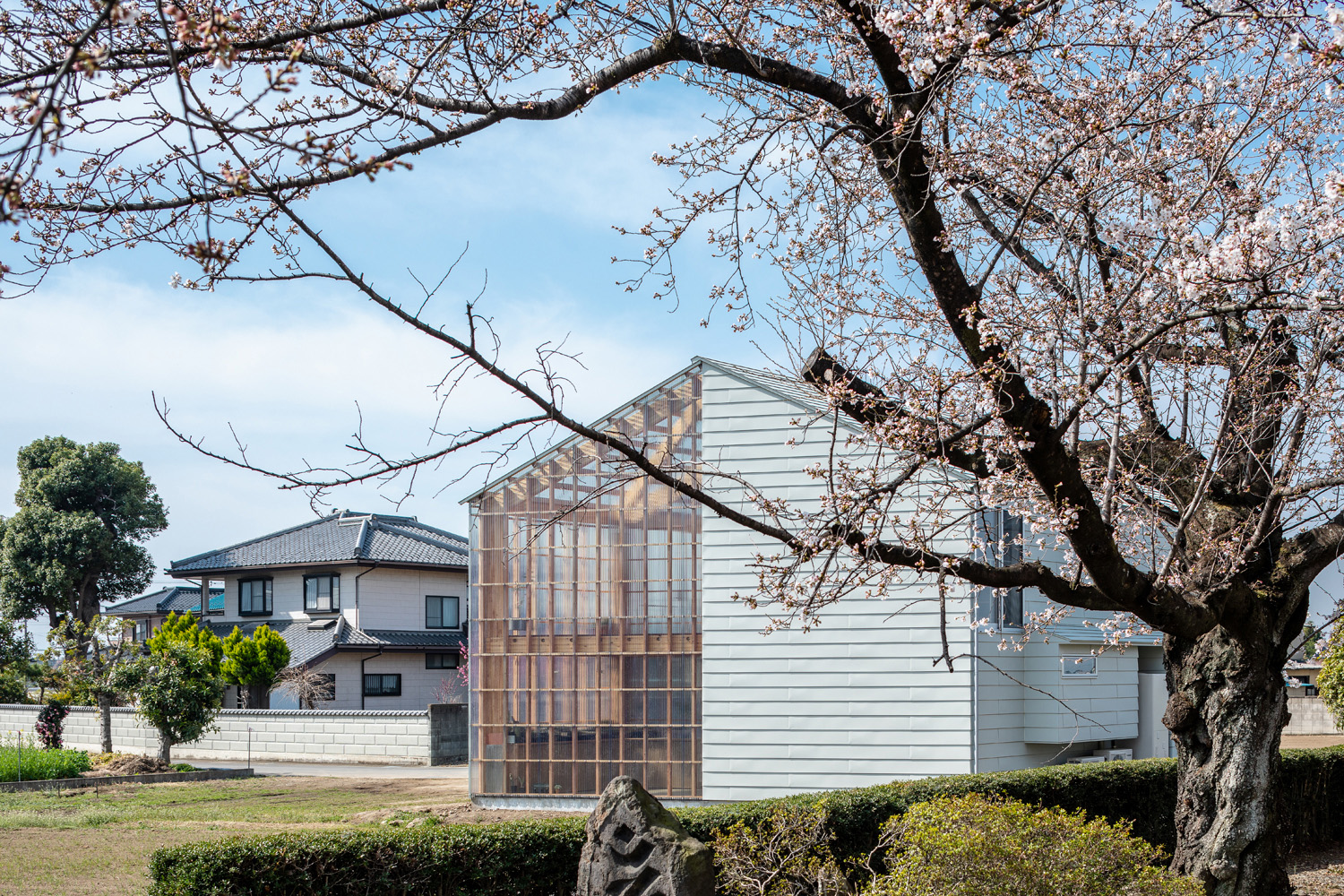
群馬県前橋市の郊外、最寄り駅から車で10分程度の宅地と農地が入り交じる地域の端っこに敷地はある。周辺には自給の為の畑を持っている家が多いため、隣家との間に挿入された小さな畑と小さな納屋により家同士の距離が保たれ、農作業をする人々が外にちらほら見受けらる牧歌的な風景が広がる地域である。本敷地も自給用の畑と納屋を確保できるぐらい広く、施主は趣味の多肉植物の栽培を楽しむ為にこの広い土地を選定した。この地域に多く見られる庭付き一戸建てならぬ、畑・納屋付き一戸建ての形式を踏襲しながらその可能性を引き出す事を考えながら設計を進めた。
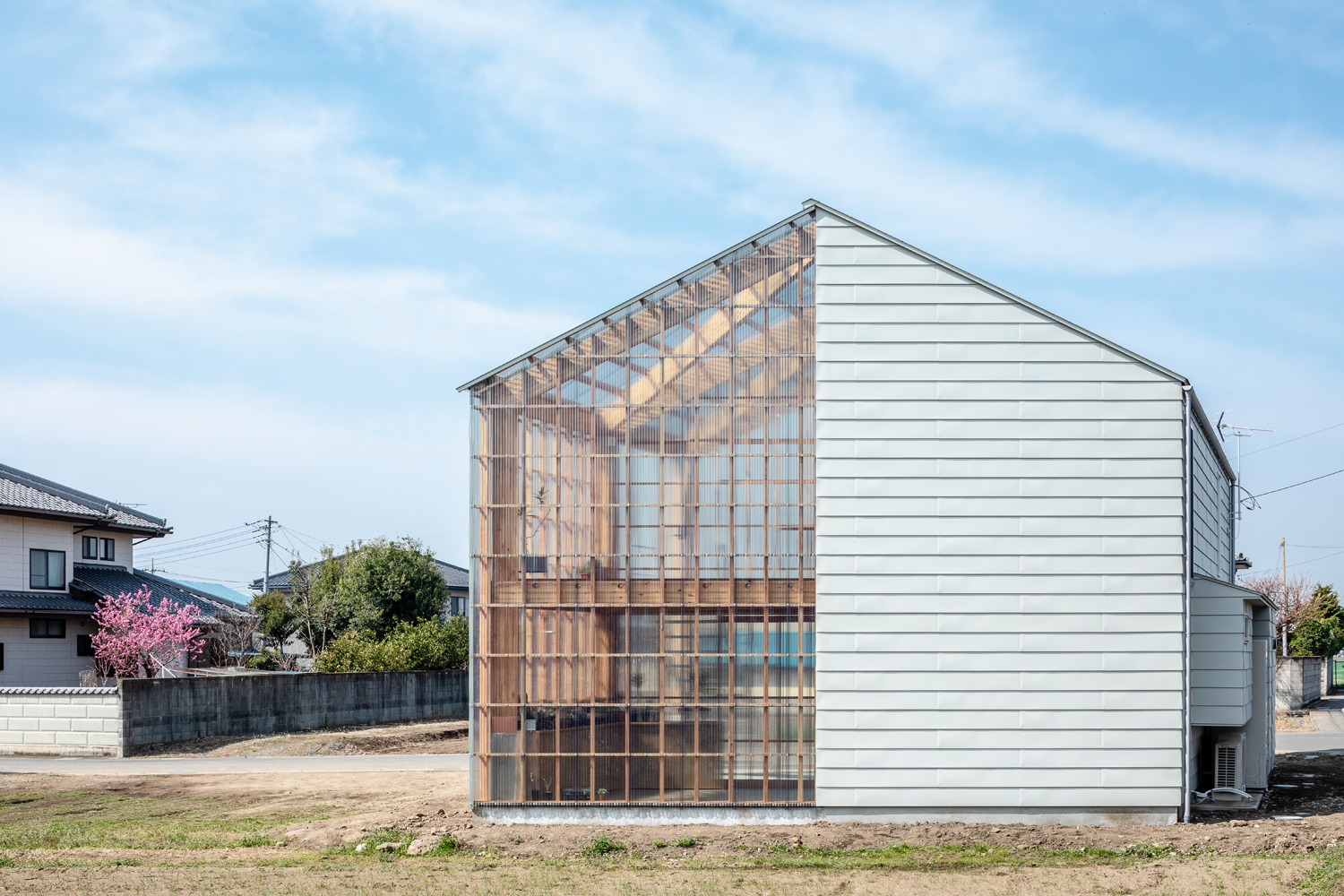
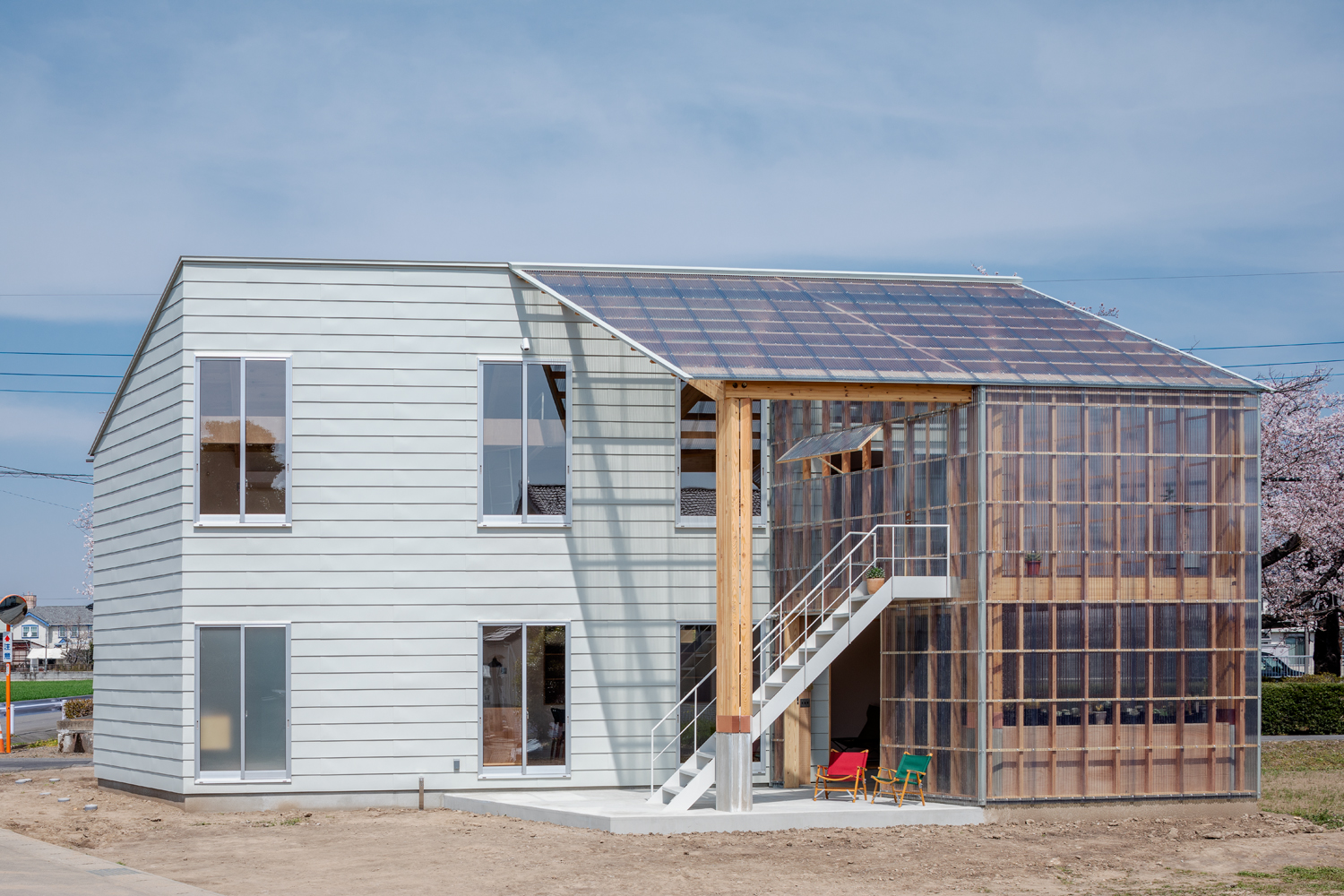
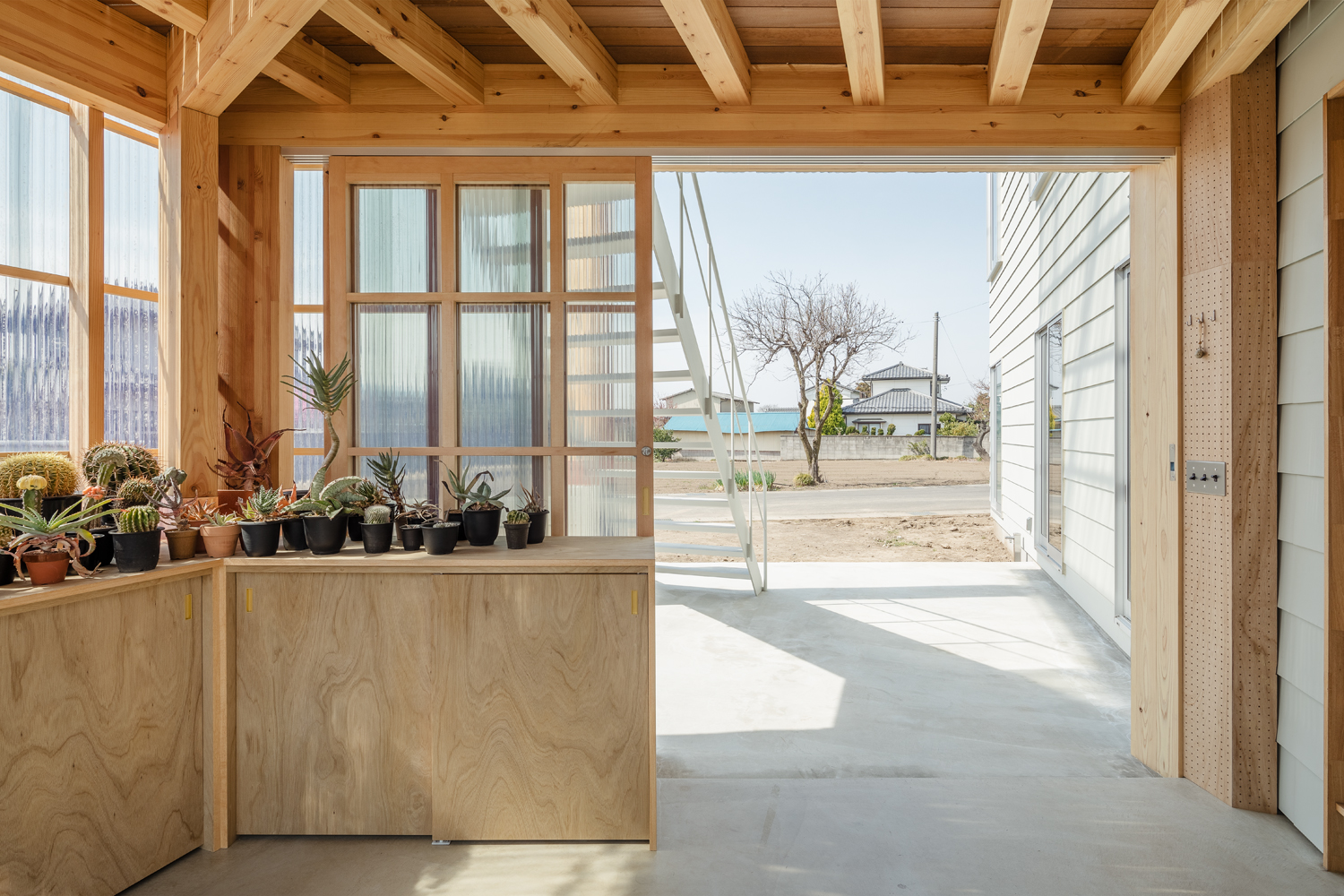
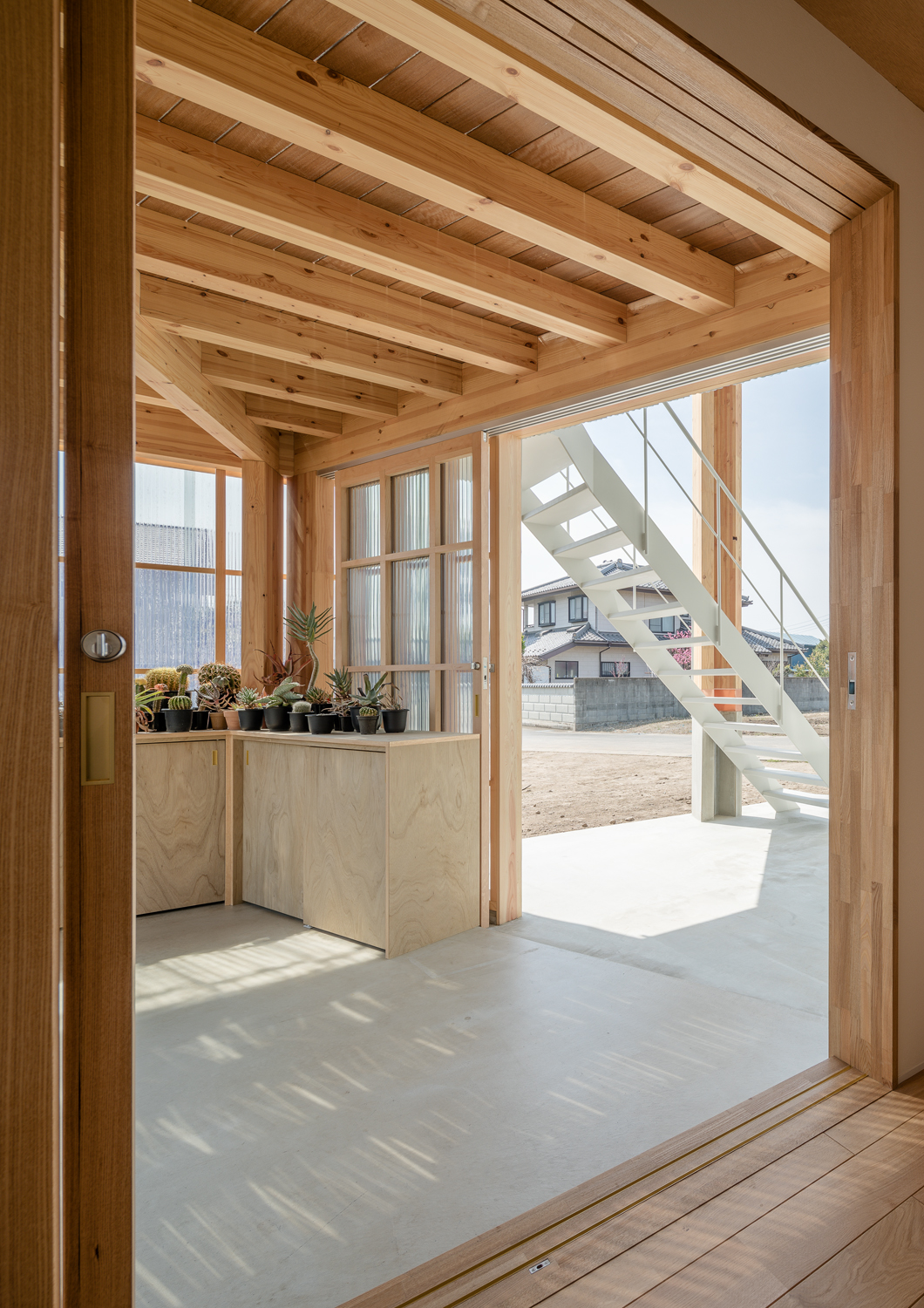
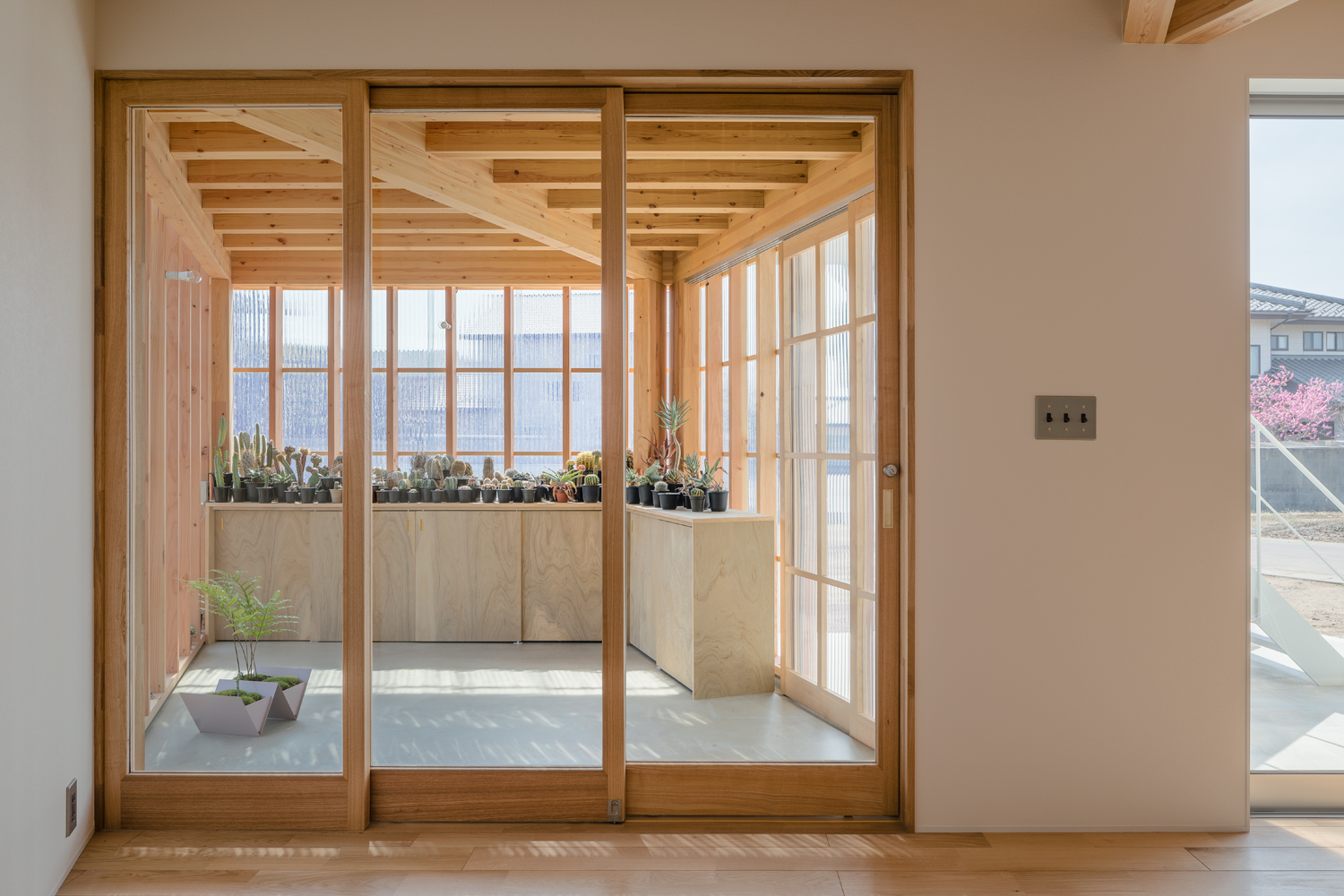
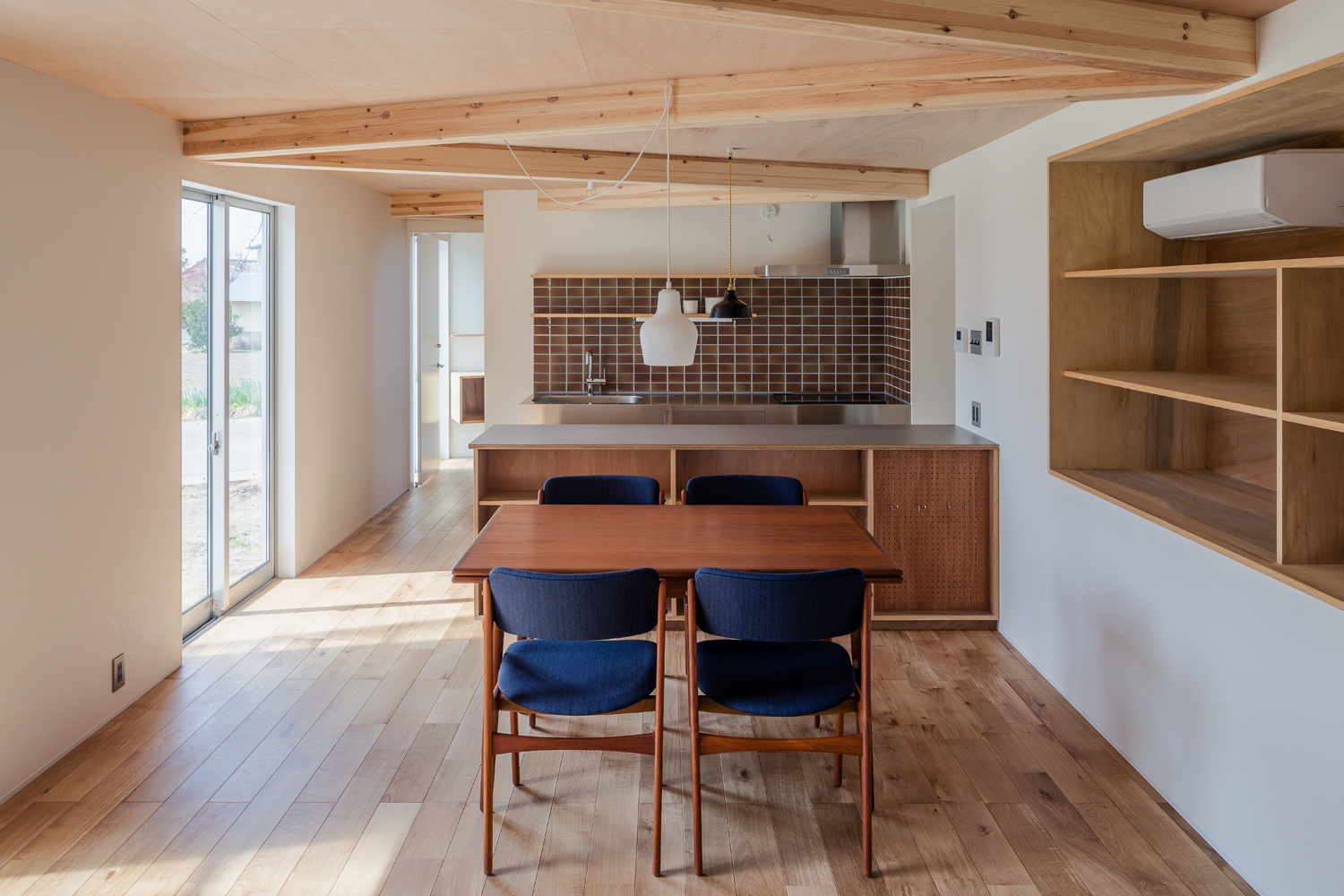
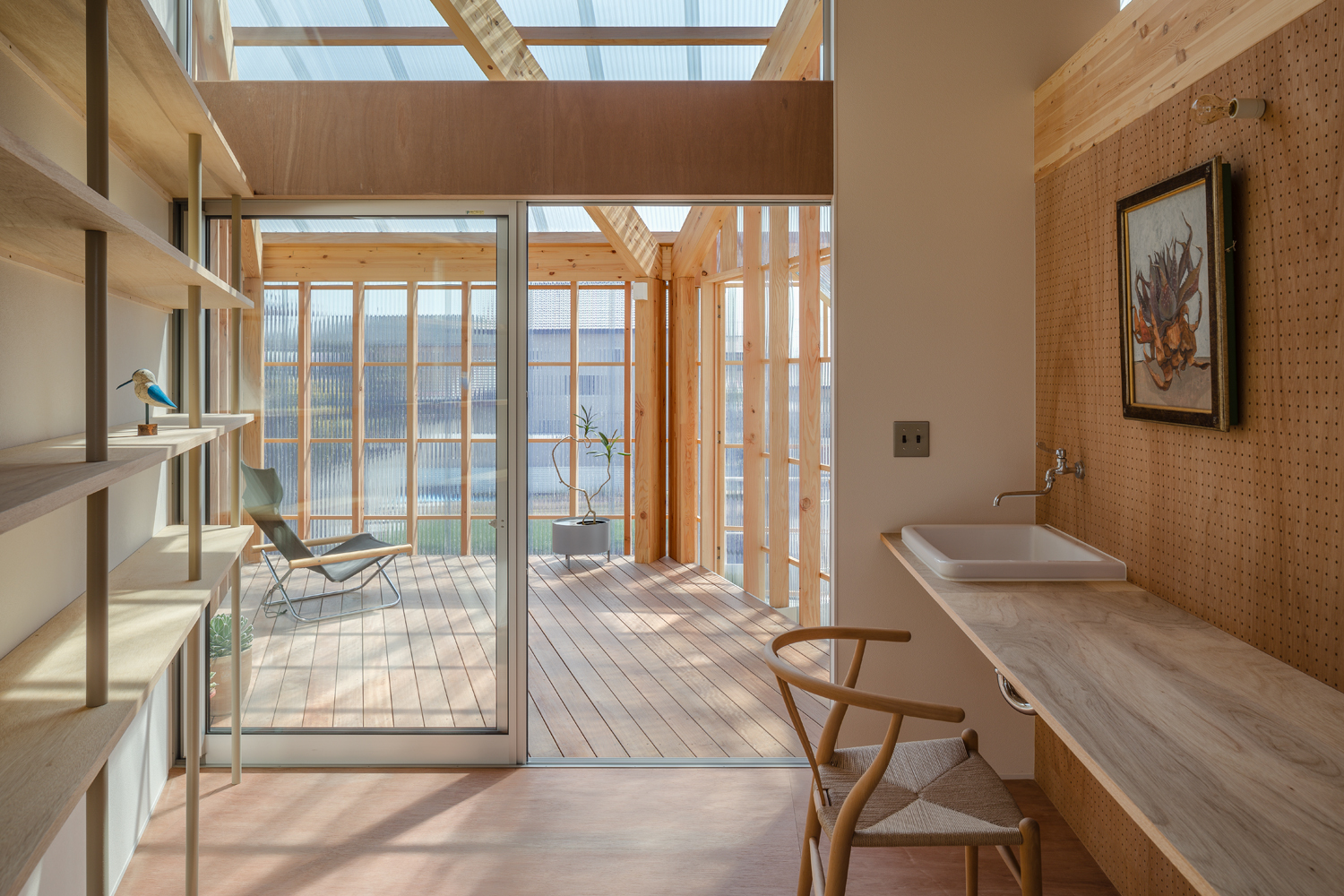
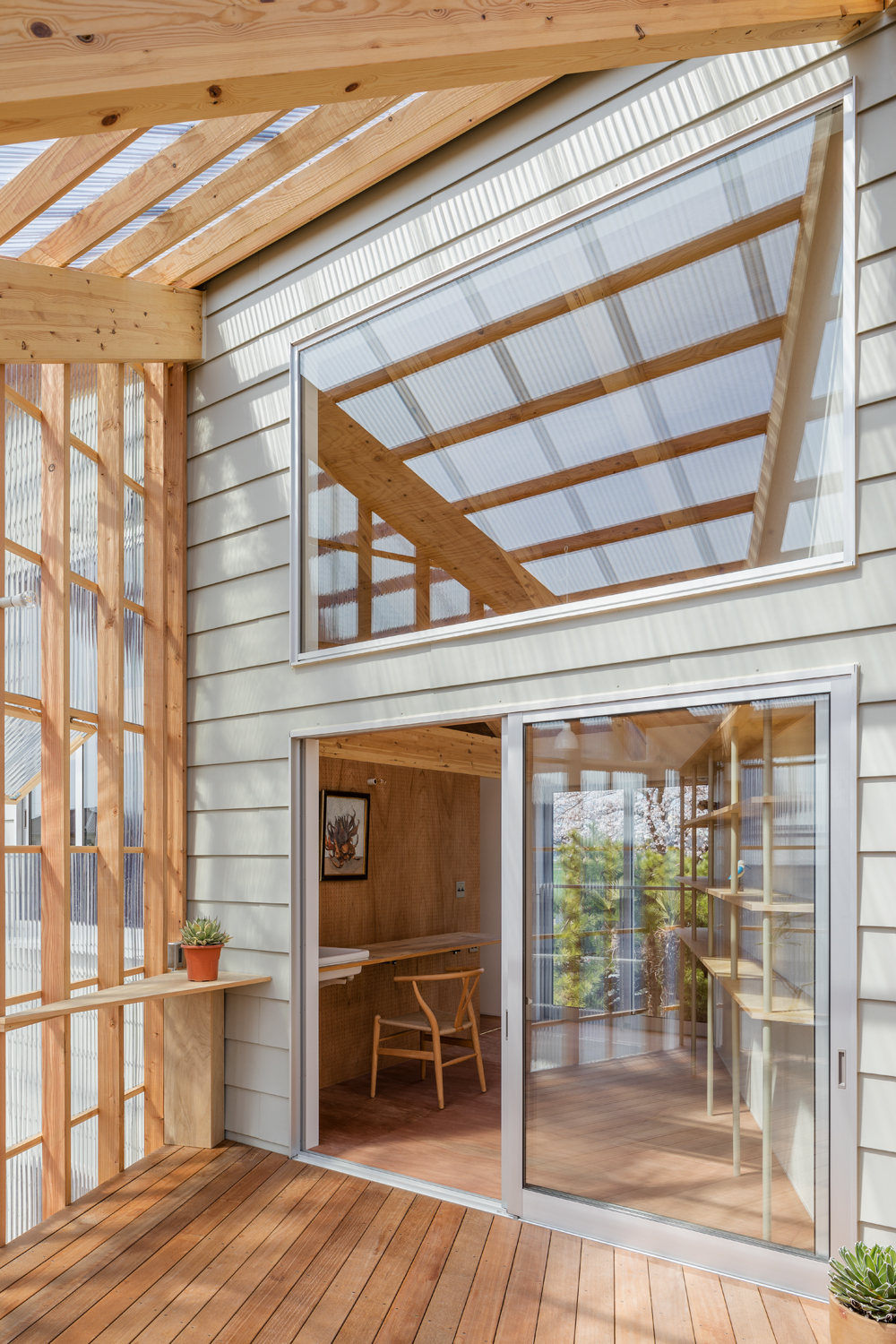
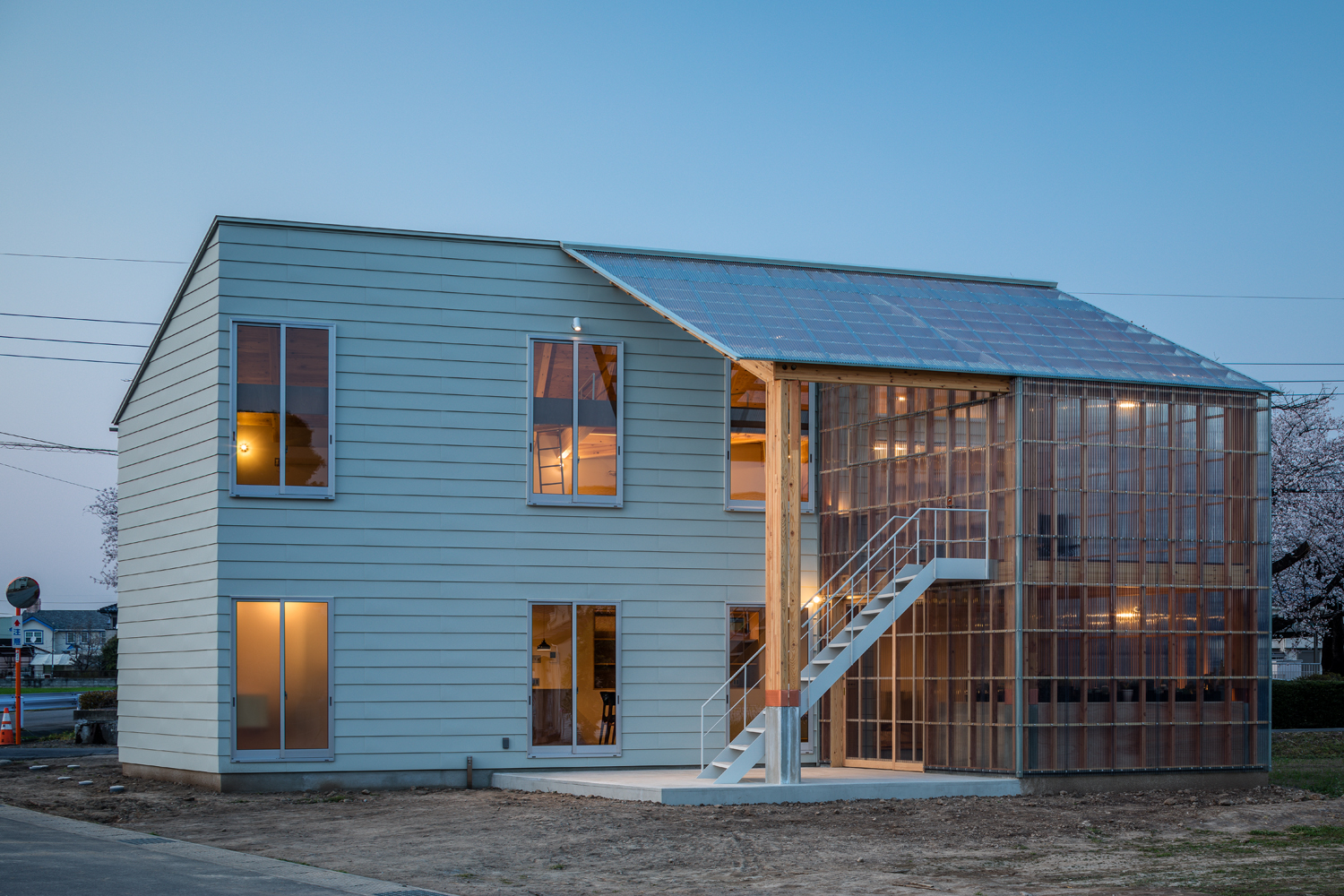
平行四辺形の敷地形状に沿いコンパクトにまとめた平面を敷地北側に2層+ロフトで積み上げ、日当たりの良い南側の余白を多く確保した。周辺に見られる納屋は住宅とは独立している閉じた倉庫や作業場である場合が多いが、ここでは気積の大きい透明な納屋として住宅のヴォリュームに寄り添わせた。これらは大きな引違い戸で繋がっており住宅内では補完しきれない施主要望や住宅の機能を補っている。
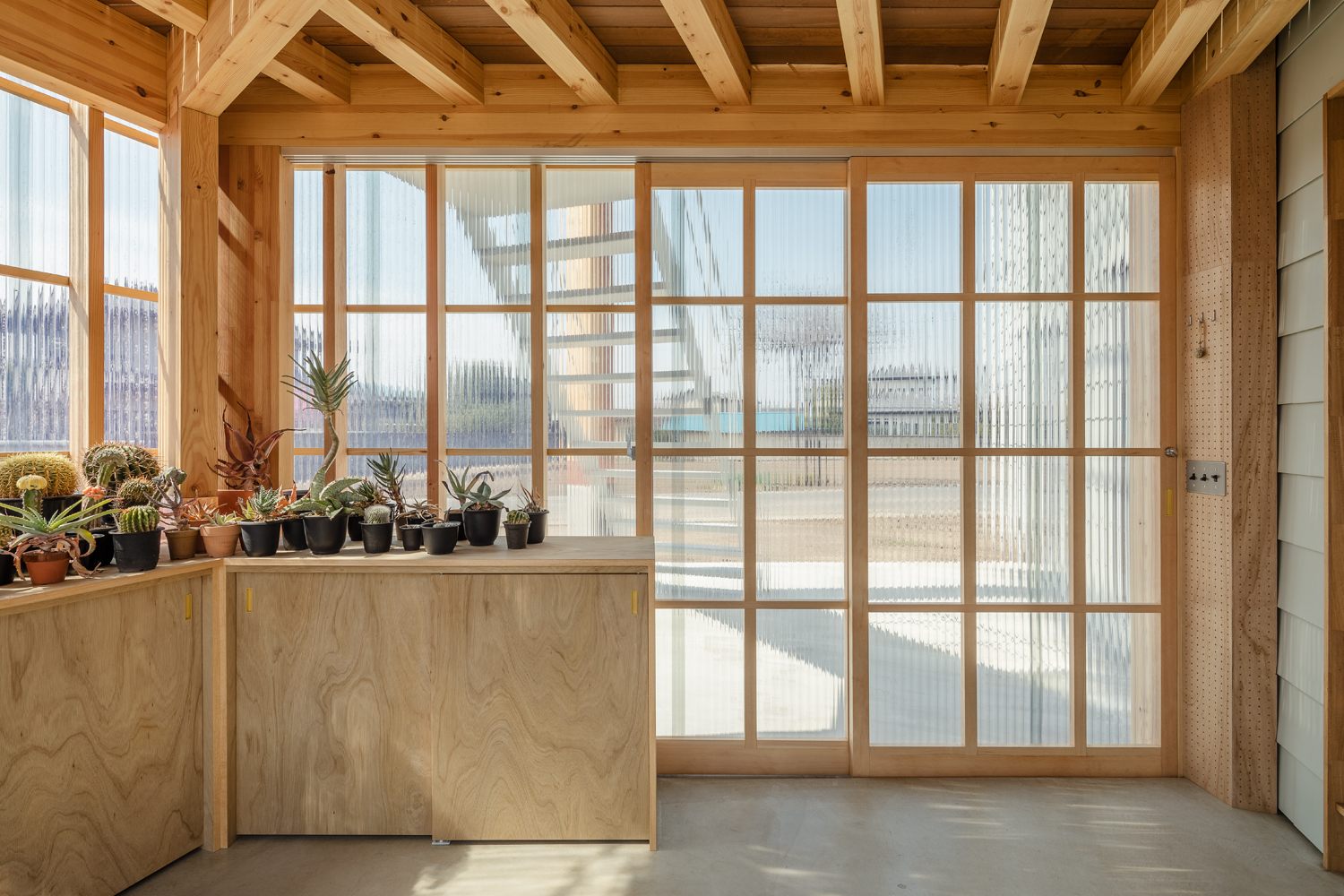
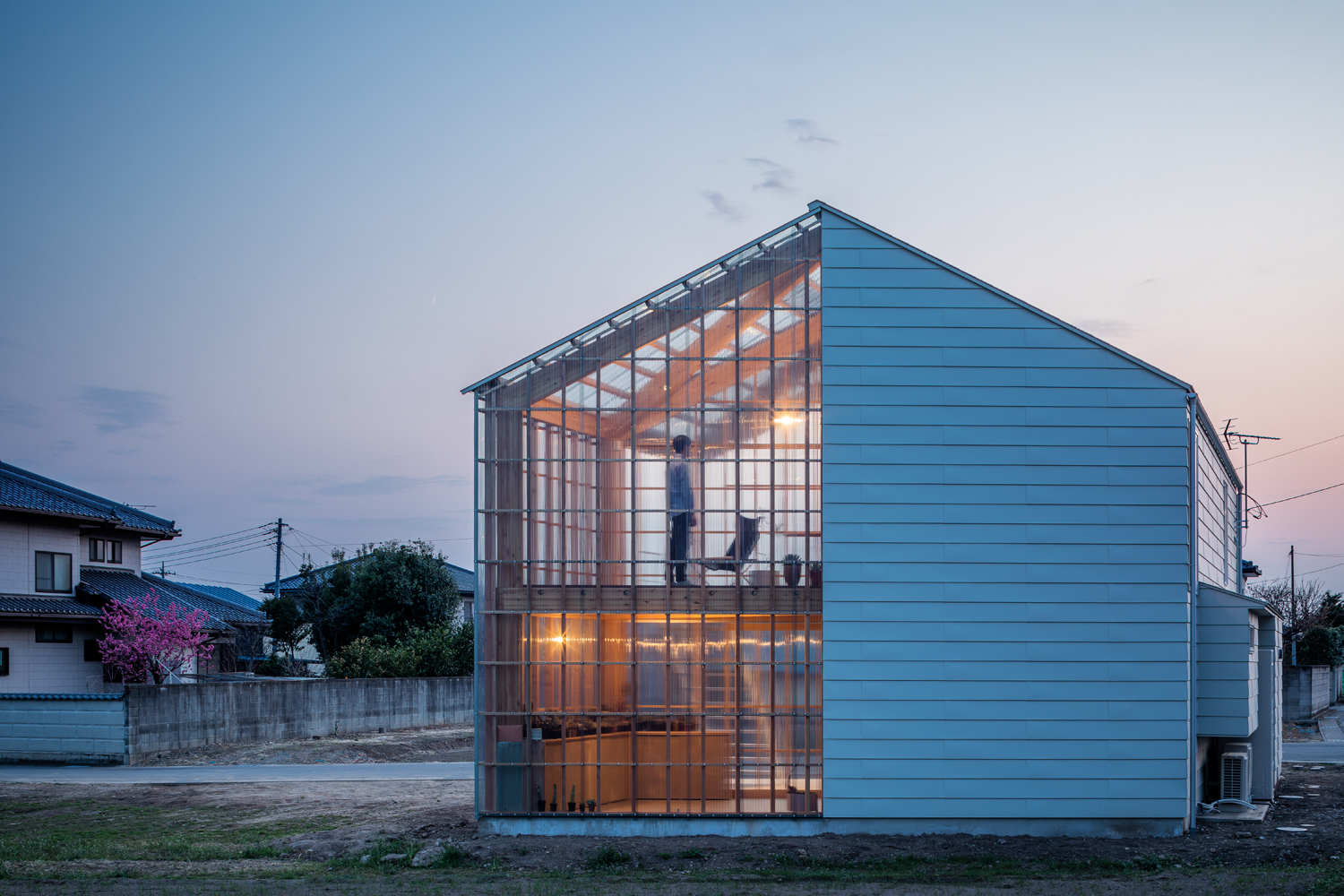
増築や減築など生活に合わせた更新を容易にする為に外壁の作りは小断面の木材と透明ポリカーボネートの波板の簡素なものとし、それを支える構造は住宅部分と独立している。1階部分では広い玄関と収納、2階部分では物干しスペースやアトリエの延長として住宅の機能を拡張しながら、多肉植物の栽培・鑑賞の為の温室にもなっている。1階入口の引き戸開けきると透明な屋根が架かる土間と一体になりその先の庭や畑へと繋がり、閉じた状態でも波板でぼやかされた風景を住宅の内部に取り込む事で周囲に視界を遮るものがないこの敷地に於いてプライバシーを保ったまま外部との関係を取り持つインターフェイスとして機能している。
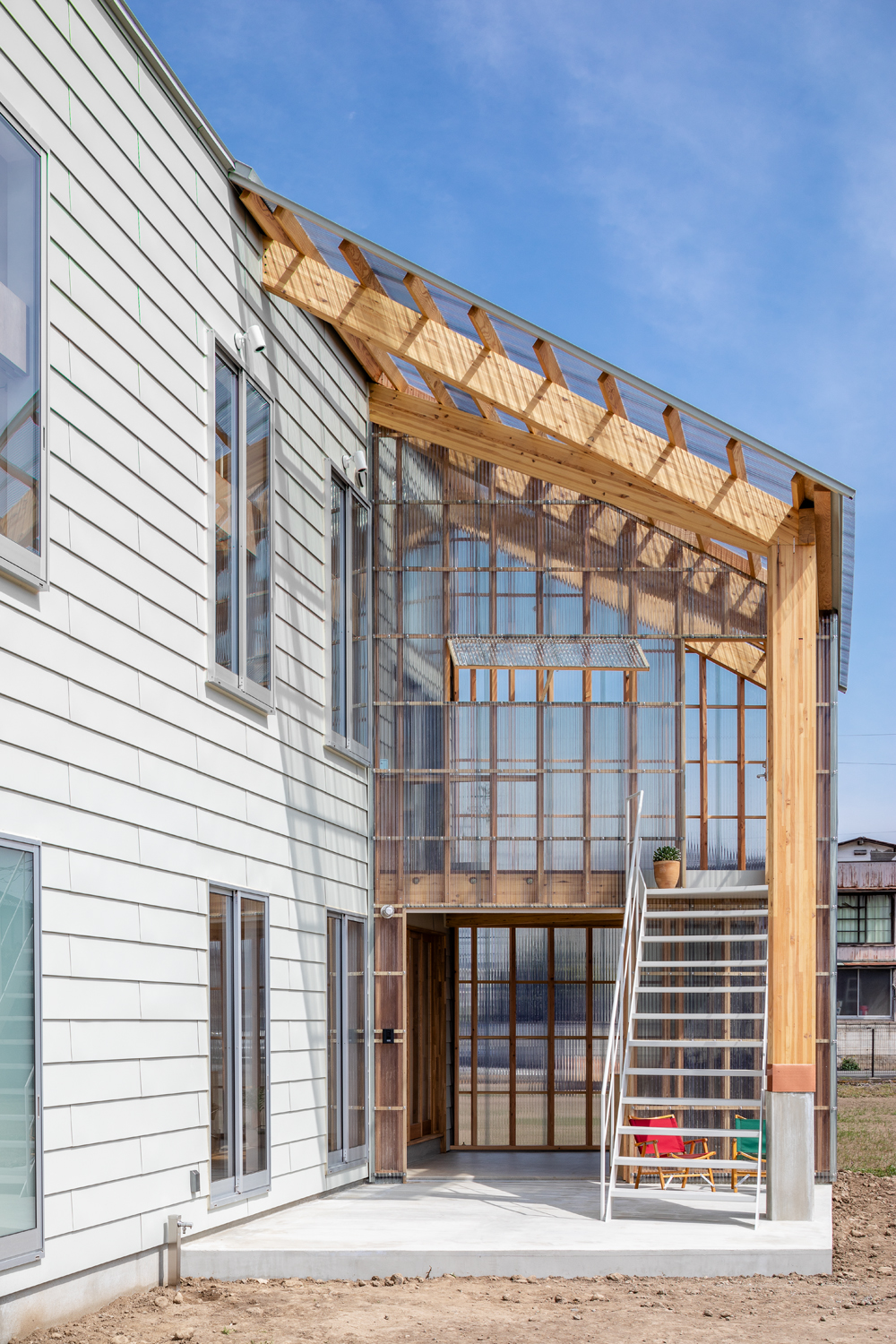
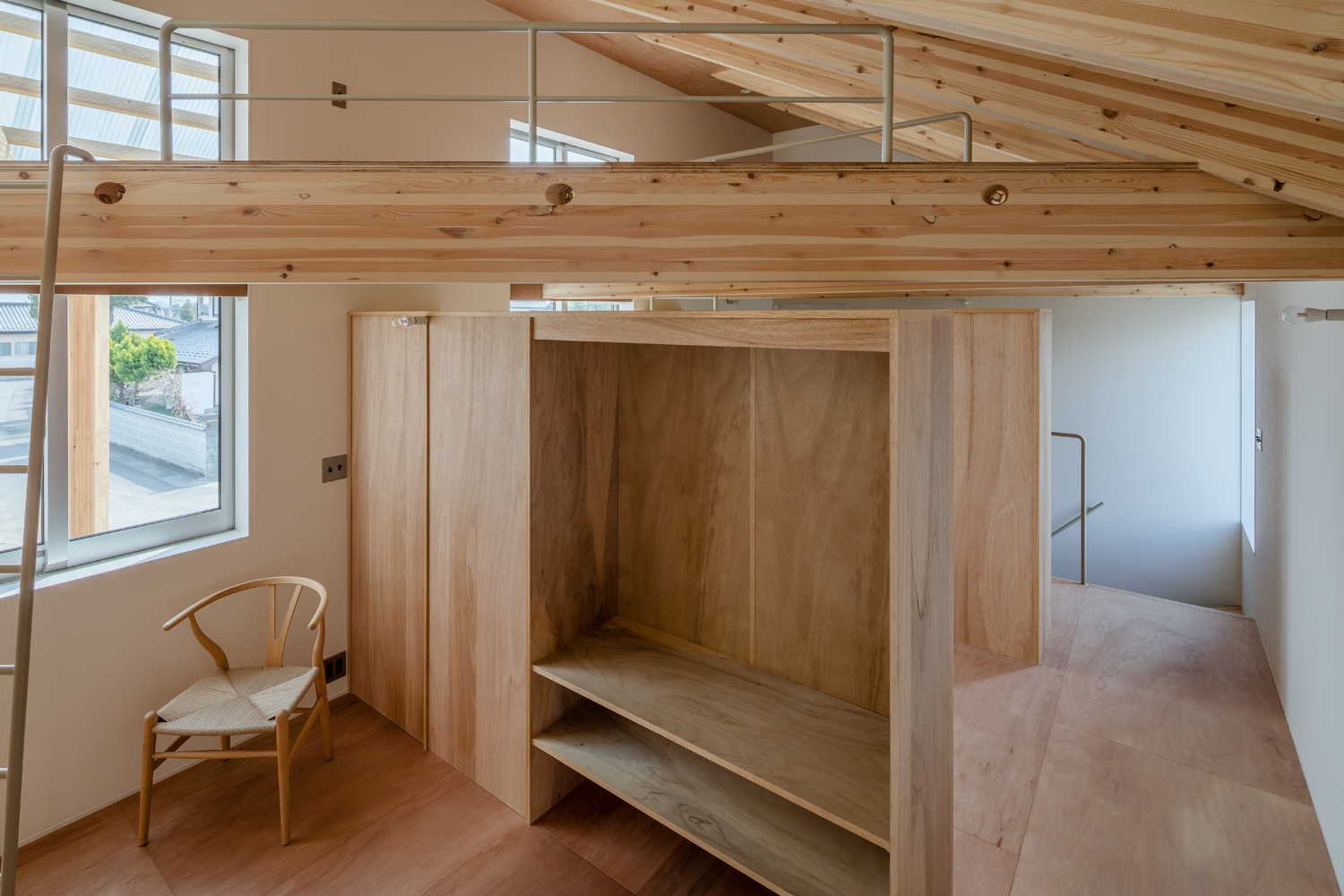
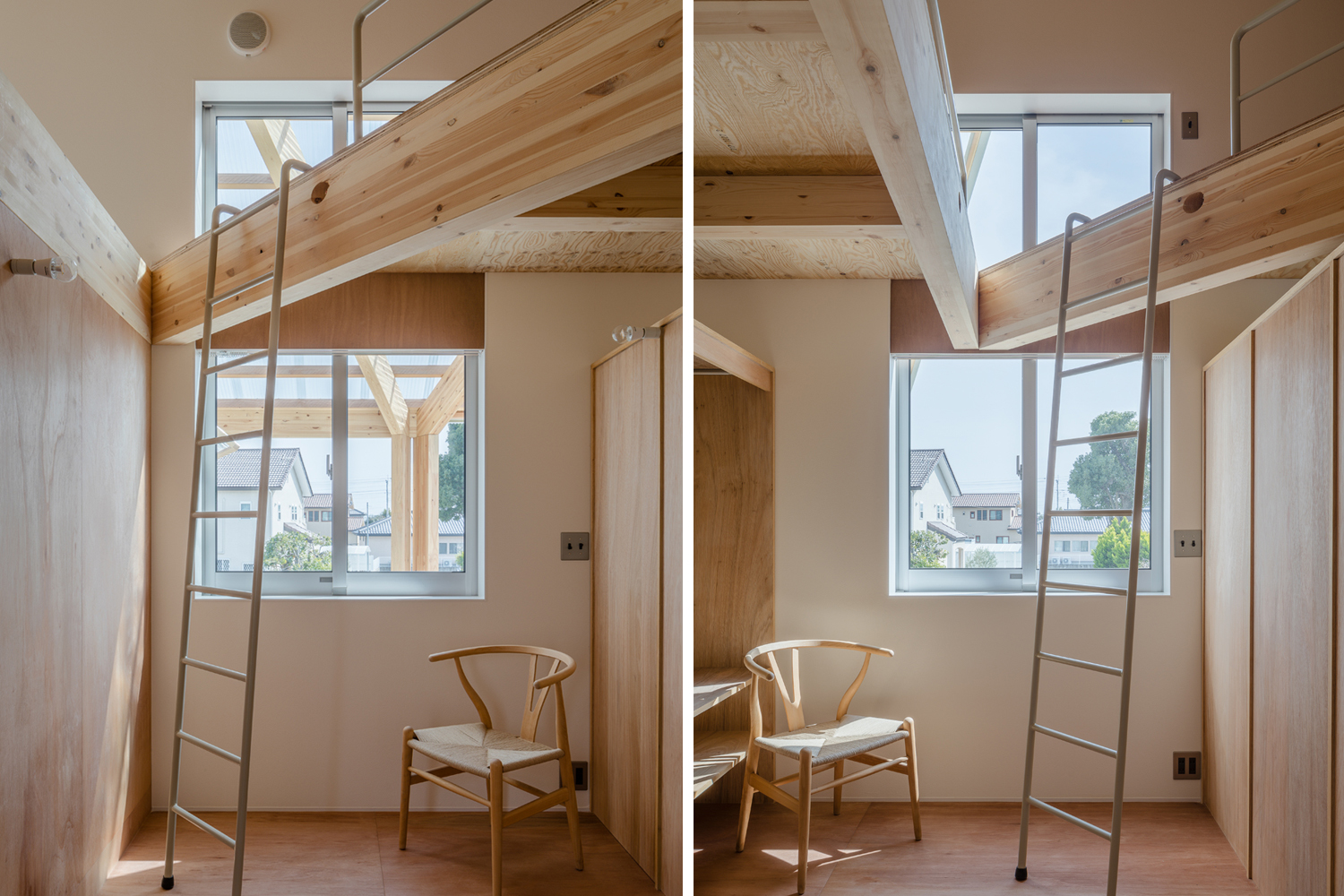
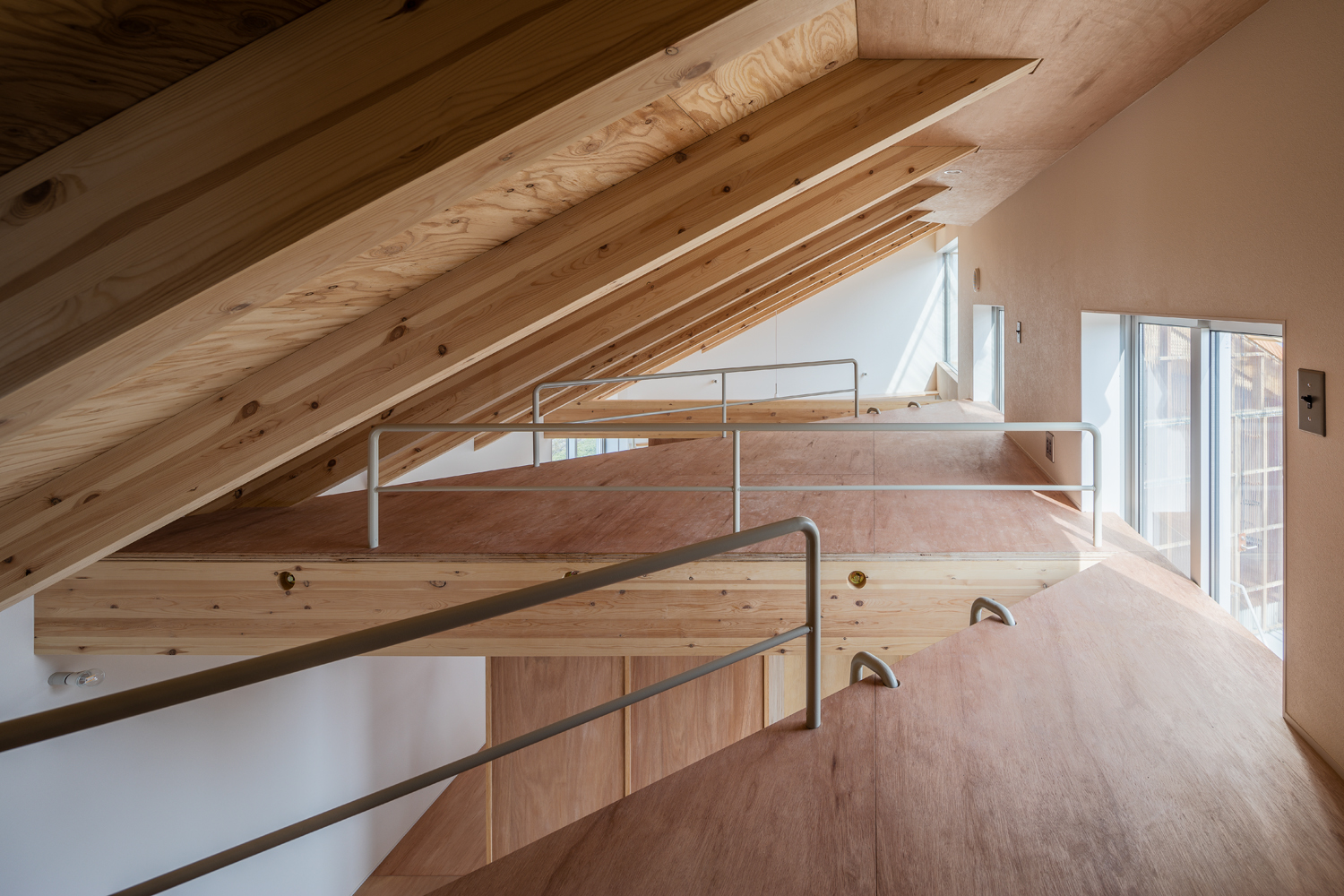
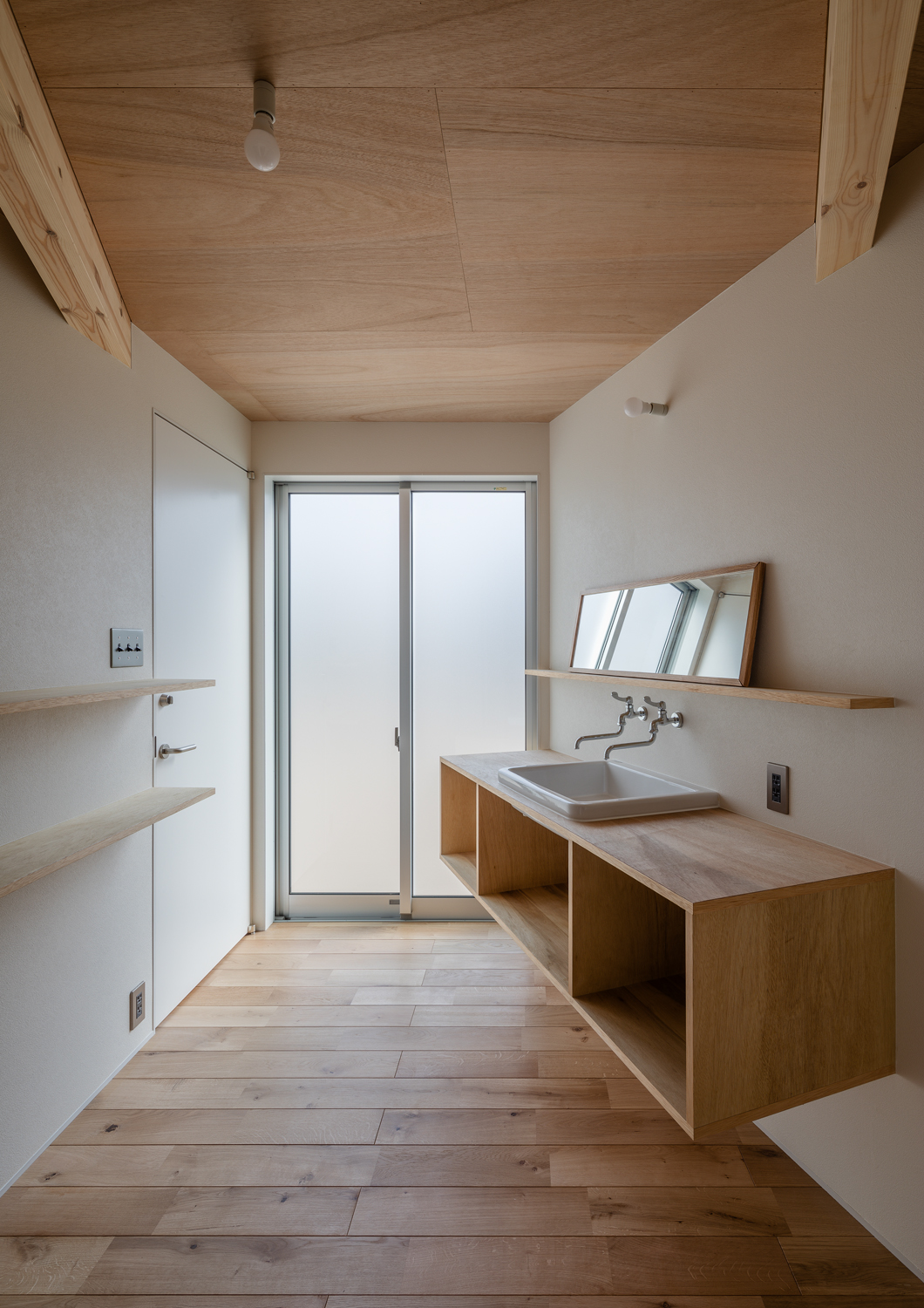
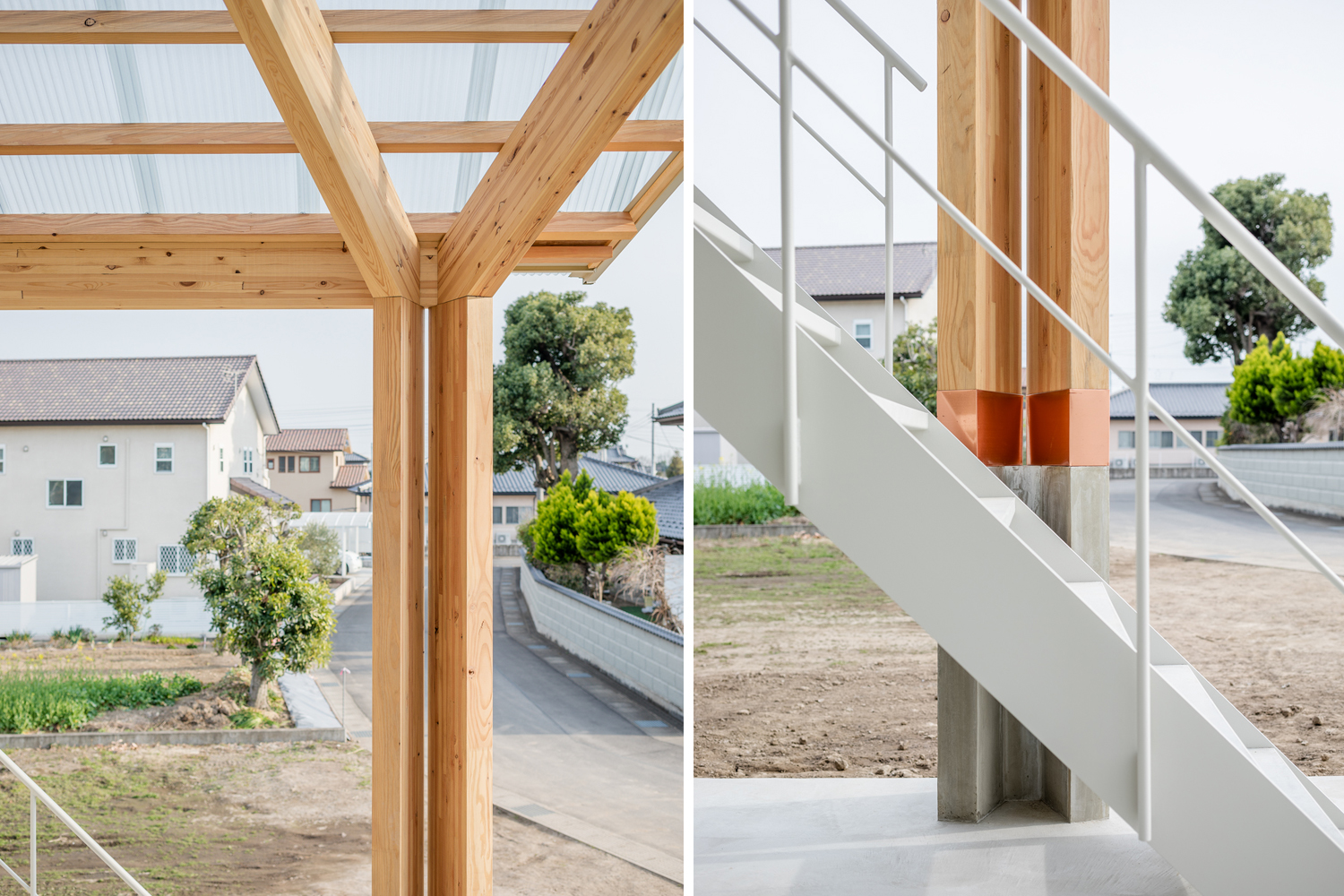
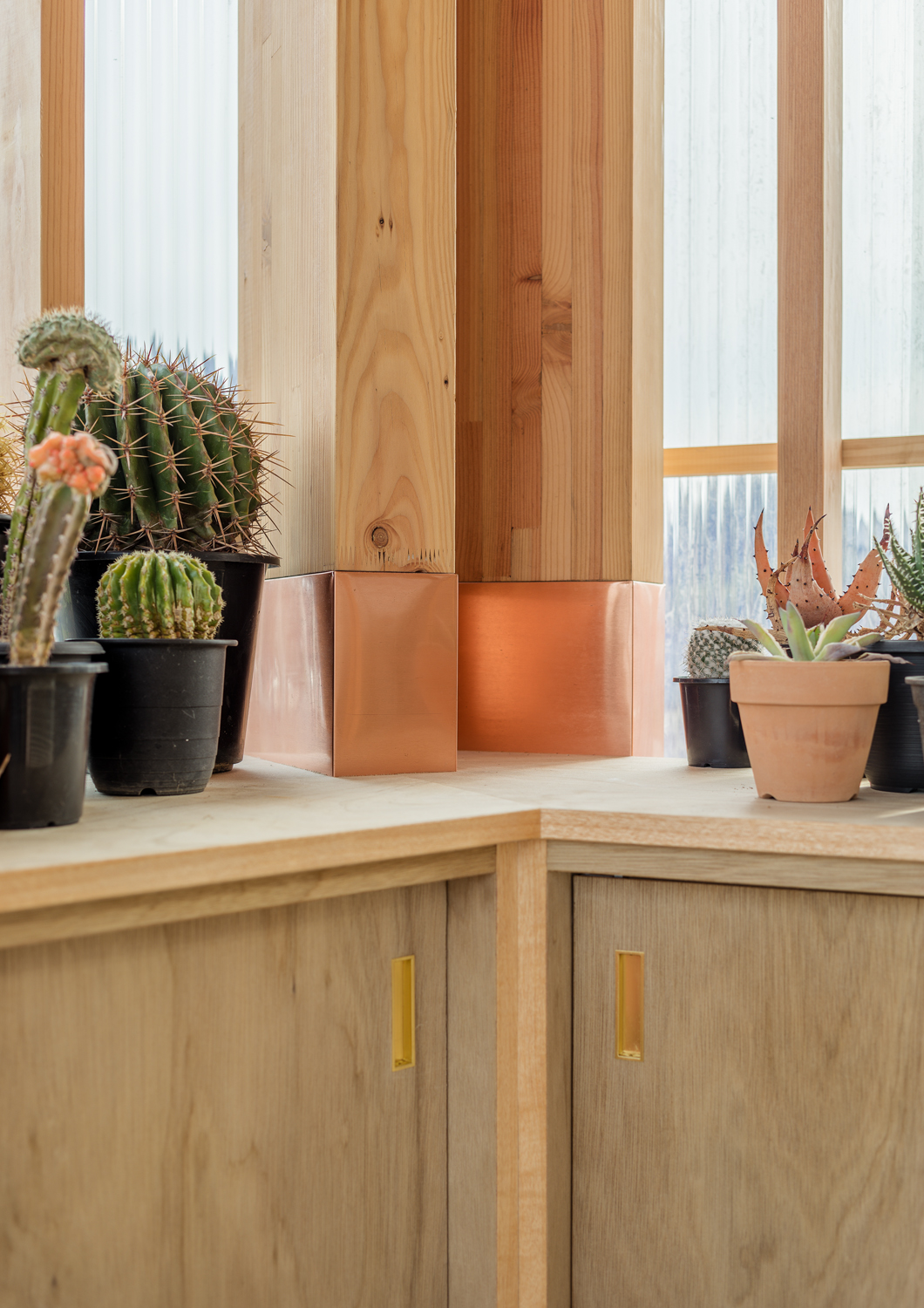
床梁は施主が自由に照明や植物をぶら下げられるよう現しとした。2階の床梁は大梁のみを表すことで平面的に斜めに振られた梁の方向性を強調し意識を外部へと導いている。外部の屋根を支える柱は雨がかりによる柱の劣化を防ぐ為に同形状の基礎で持ち上げた上で柱脚を銅板で巻いているが、コンクリート・銅・木の素材の連携がどこか家具的な印象を与えている。構造材を部分的に表したり覆ったりすることで構造が建築の一部分としてではなく、それ自体が独立している家具のような見え方を模索している。メンテナンスをしながら長く使いこみたくなる家具のような部分があれば、愛着が湧く家になるだろう。
この場所では畑や庭の手入れをするように建物や外構にも施主自らが手を加えながら生活を豊かにしていければいい。生活というのは自らつくりあげるものであり建築はそのきっかけでいいと思っている。
Transparent Barn
Located on the fringe of suburban Maebashi, where residential plots and agricultural fields interweave, the site is part of a pastoral landscape characterized by small barns and gardens that mediate the distance between neighbors. Following this local vernacular of a “house with a field and barn,” the design explores new possibilities for a lifestyle centered on the client’s passion for cultivating succulents.
The residence is a compact, two-story volume with a loft, positioned on the northern end of the parallelogram-shaped site to secure a sun-drenched southern void. While traditional barns in the area are typically closed, independent sheds, we conceived this annex as a large-volume “transparent barn” that pairs with the main house. Linked by large sliding doors, it serves as a flexible extension that accommodates functions beyond the scope of the primary living quarters.
To facilitate future modifications, the annex is constructed from small-section timber and translucent corrugated polycarbonate, with a structure independent of the main house. It functions as a versatile interface—serving as a greenhouse, atelier, and expanded entryway—that blurs the surrounding views to ensure privacy while maintaining a luminous connection to the outdoors. Even when closed, the translucent skin invites the softened landscape into the interior.
Throughout the space, exposed floor beams allow for the free suspension of plants and lighting, with the diagonal orientation of the second-floor beams directing one’s gaze toward the horizon. Outside, the column bases are elevated on foundations and wrapped in copper to prevent decay, creating a material dialogue between concrete, copper, and wood that evokes the precision of furniture. By treating structural elements with this level of refinement, we sought to foster a sense of long-term attachment.
We envision the residents actively shaping their environment, much like tending to a garden. Rather than a finished vessel, the architecture serves as a catalyst for a lifestyle that is continuously crafted and enriched by those who inhabit it.