


Category :
House in Aonashi
青梨子の家
Residence @ Maebashi, Gunma
Design: Sunao Koase,Ryota Yamagishi /SNARK Inc. + Shin Yokoo,Kakeru Tsuruta /OUVI
Construction: +KRM
Planting: ayanas
Completion: Jul.2017
Photo: Ippei Shinzawa
Dronephoto: Yuki Takahashi
Total area: 102㎡ ( 1F/72㎡ 2F/23㎡ 物置/7㎡ )
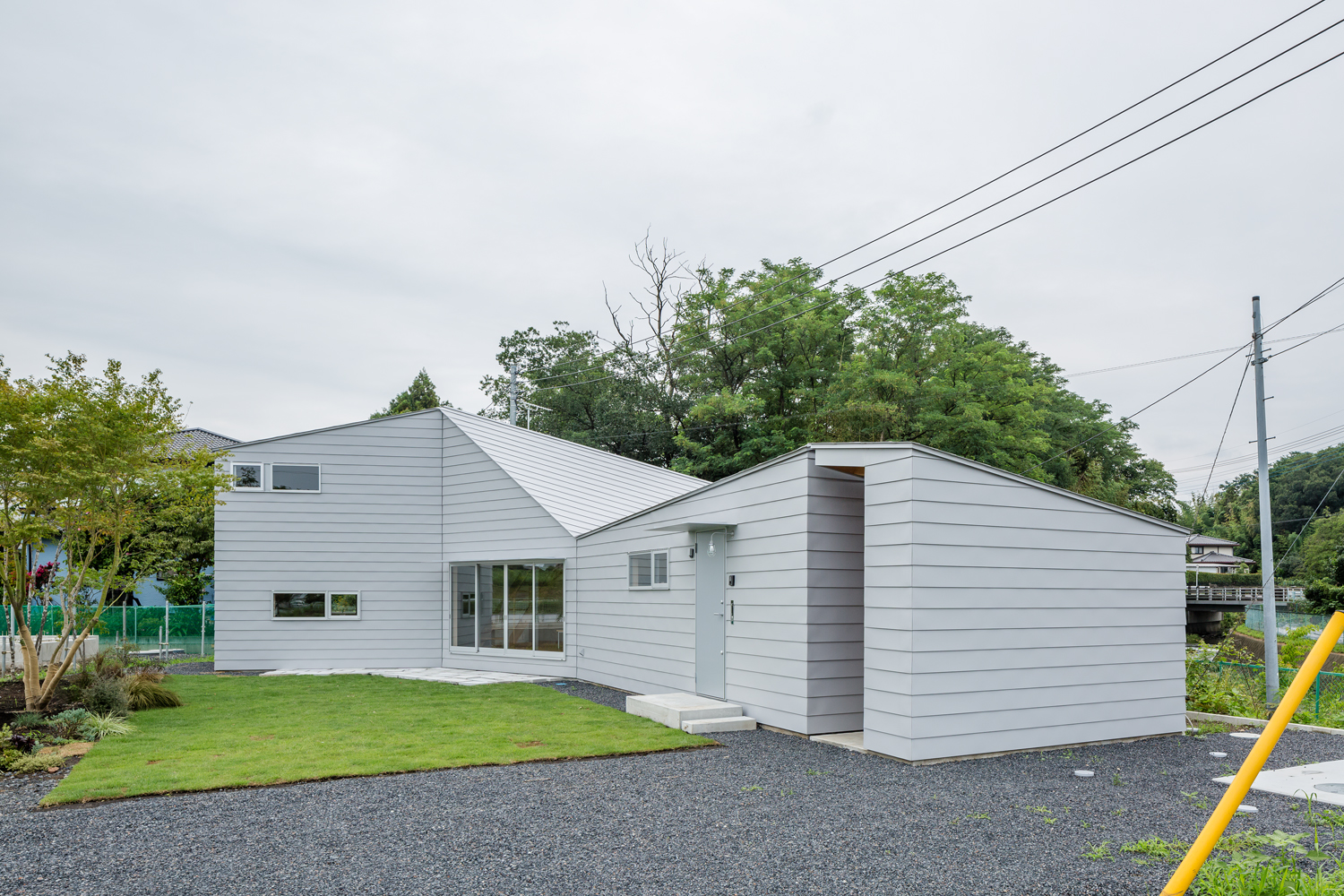
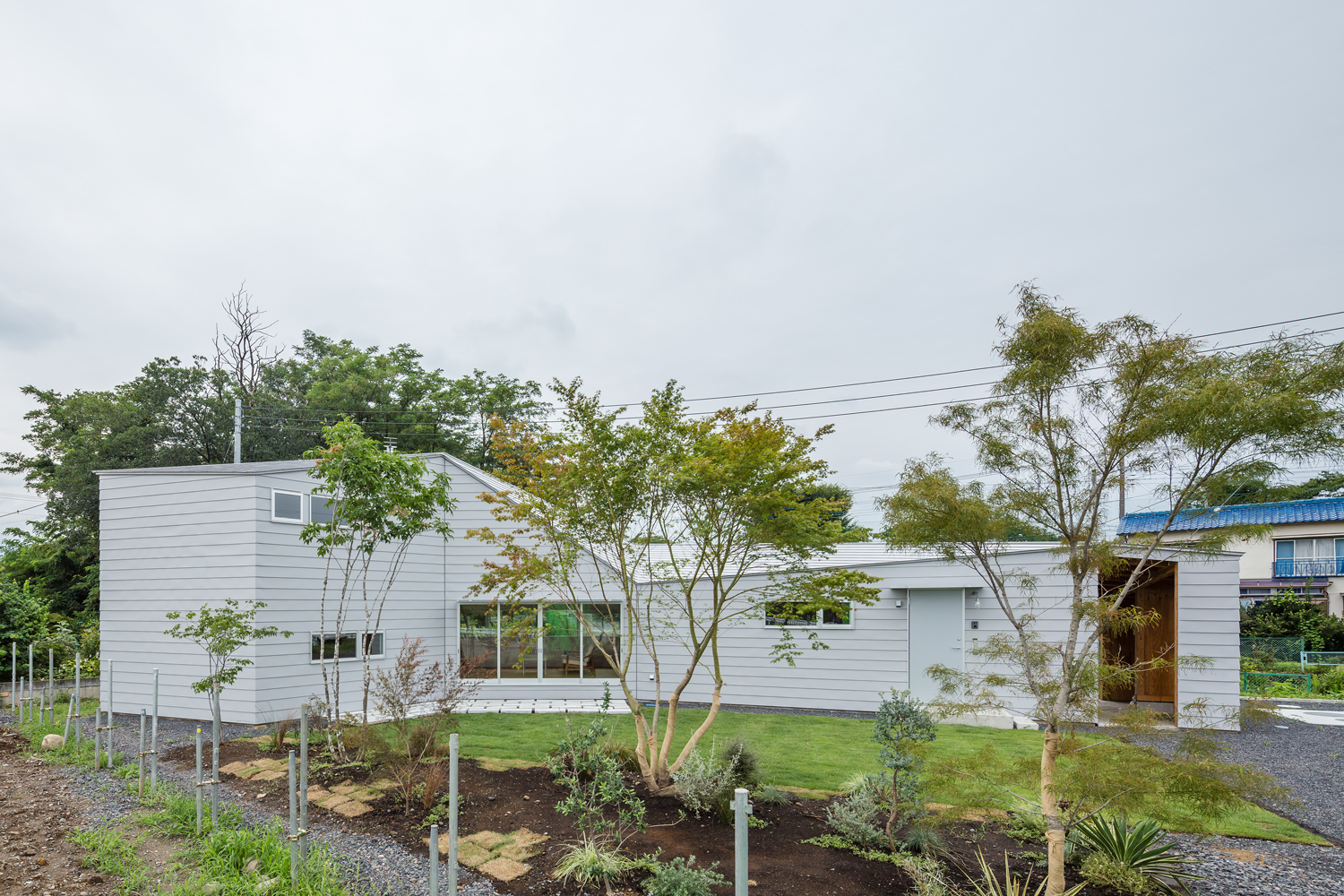
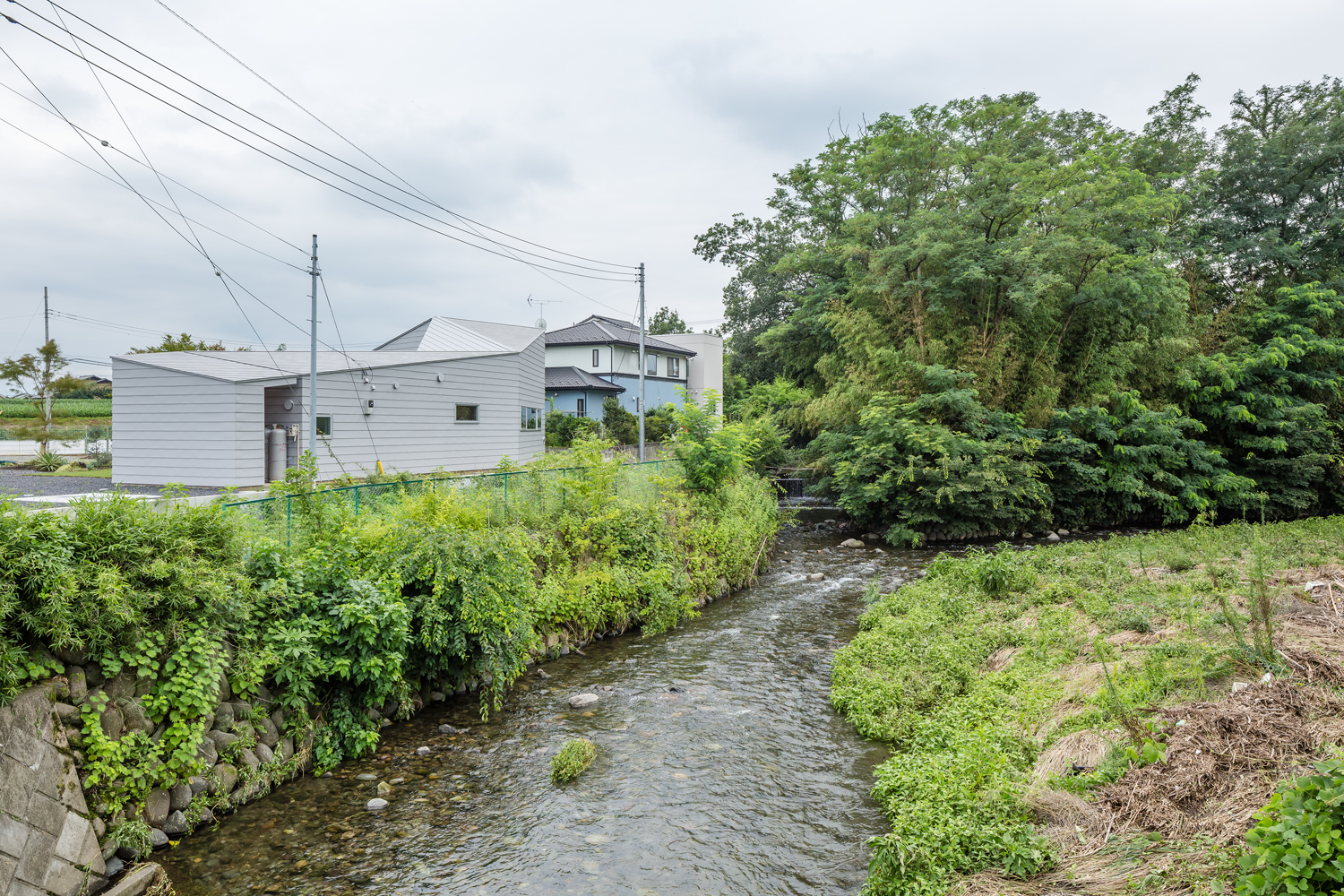
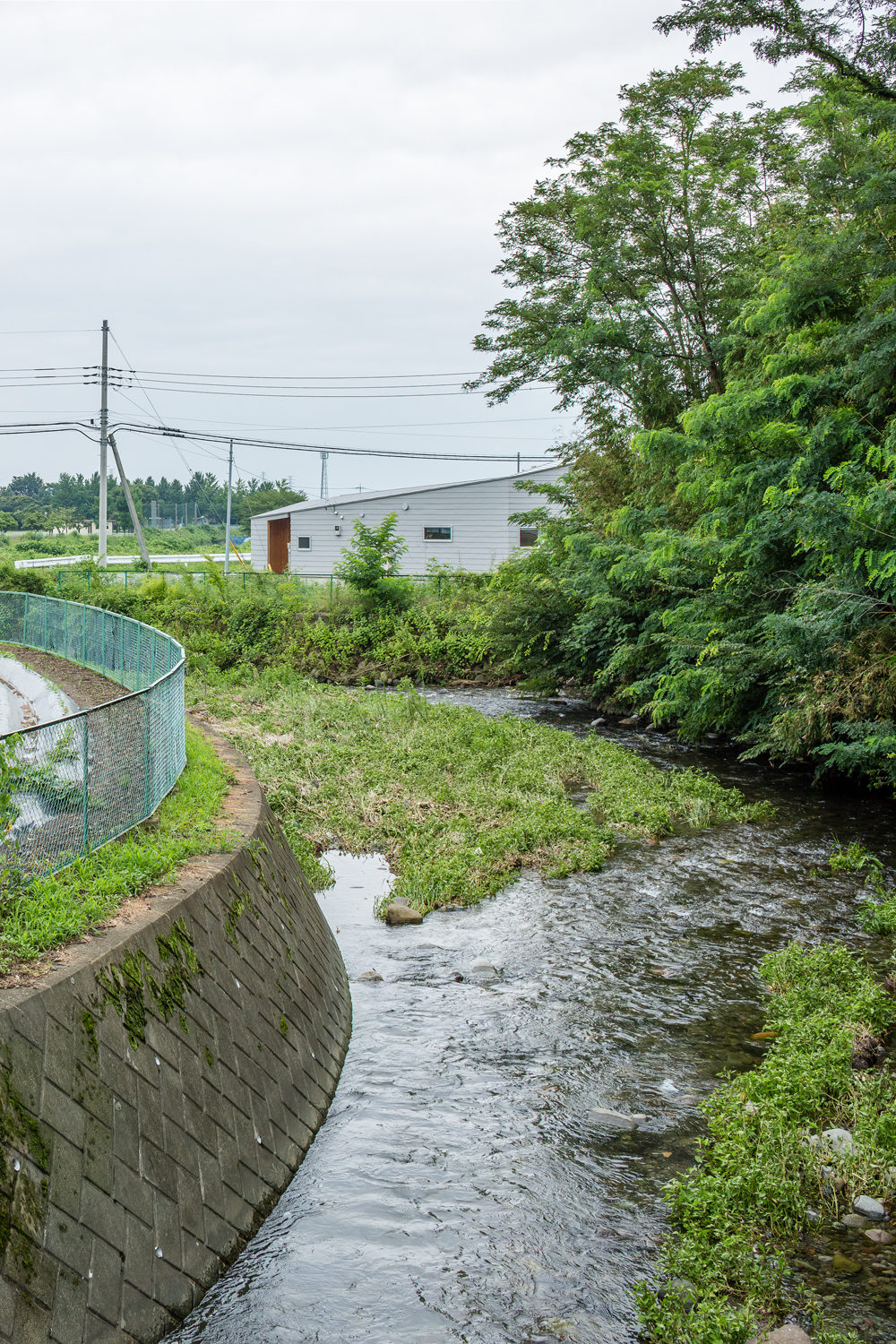
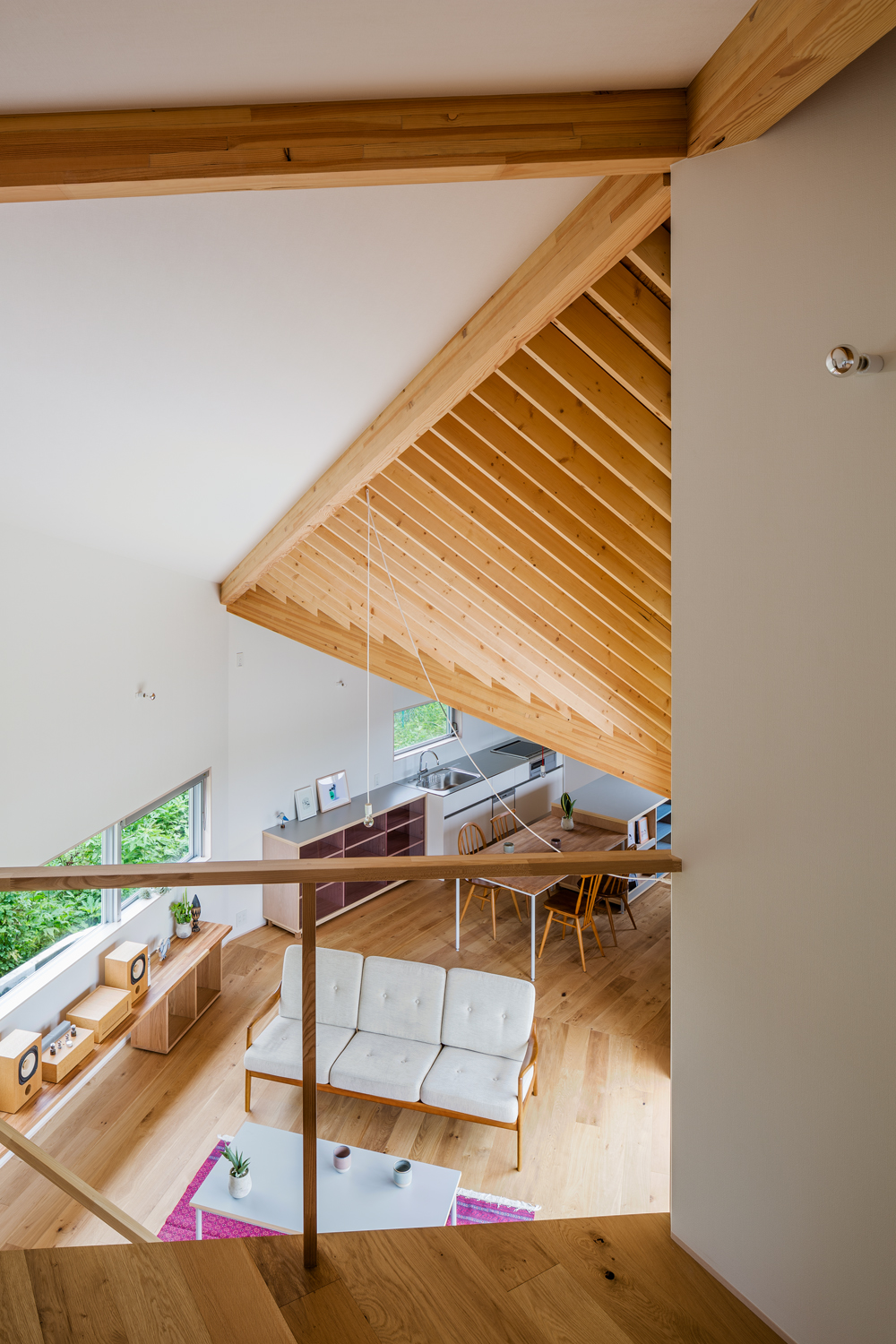
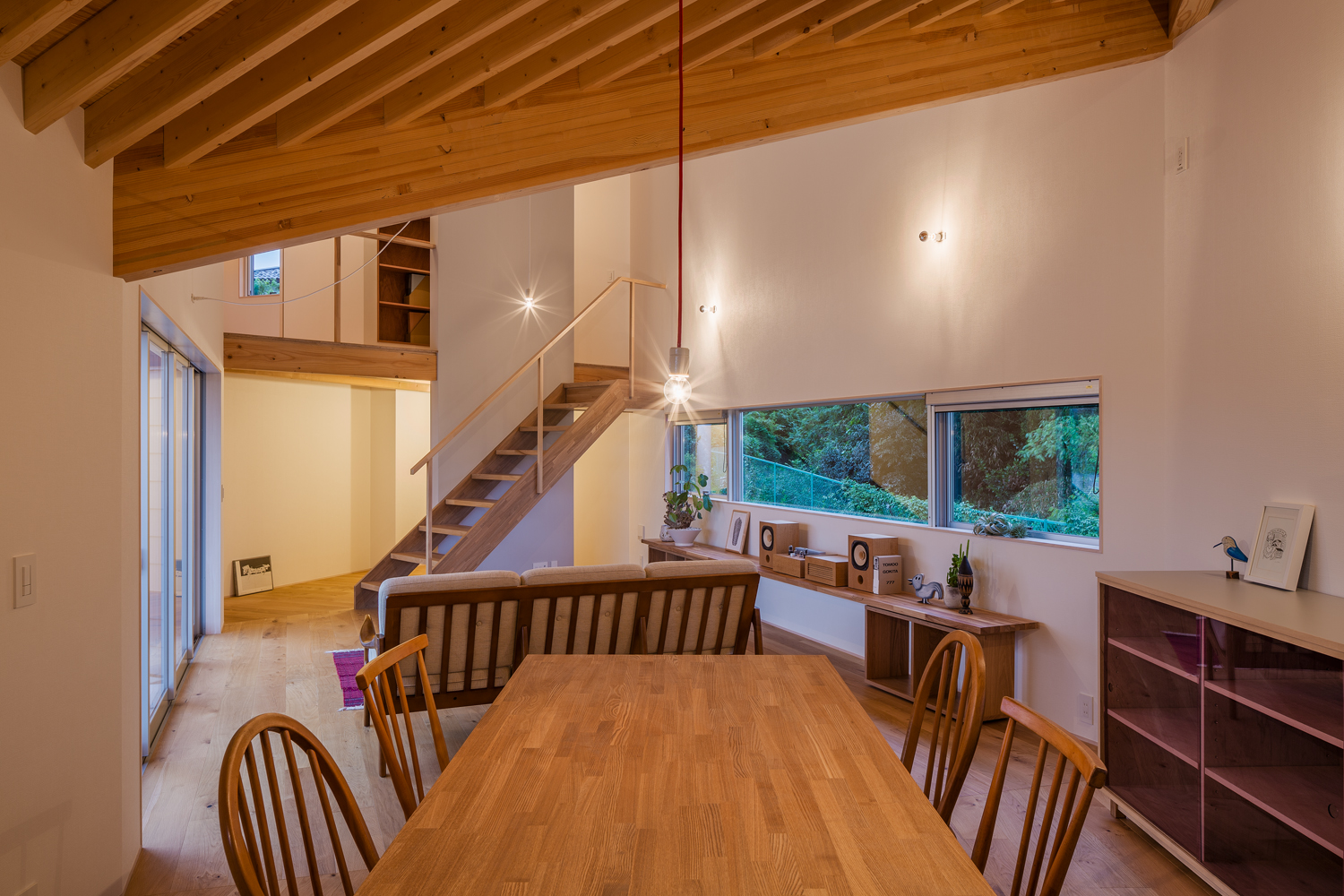
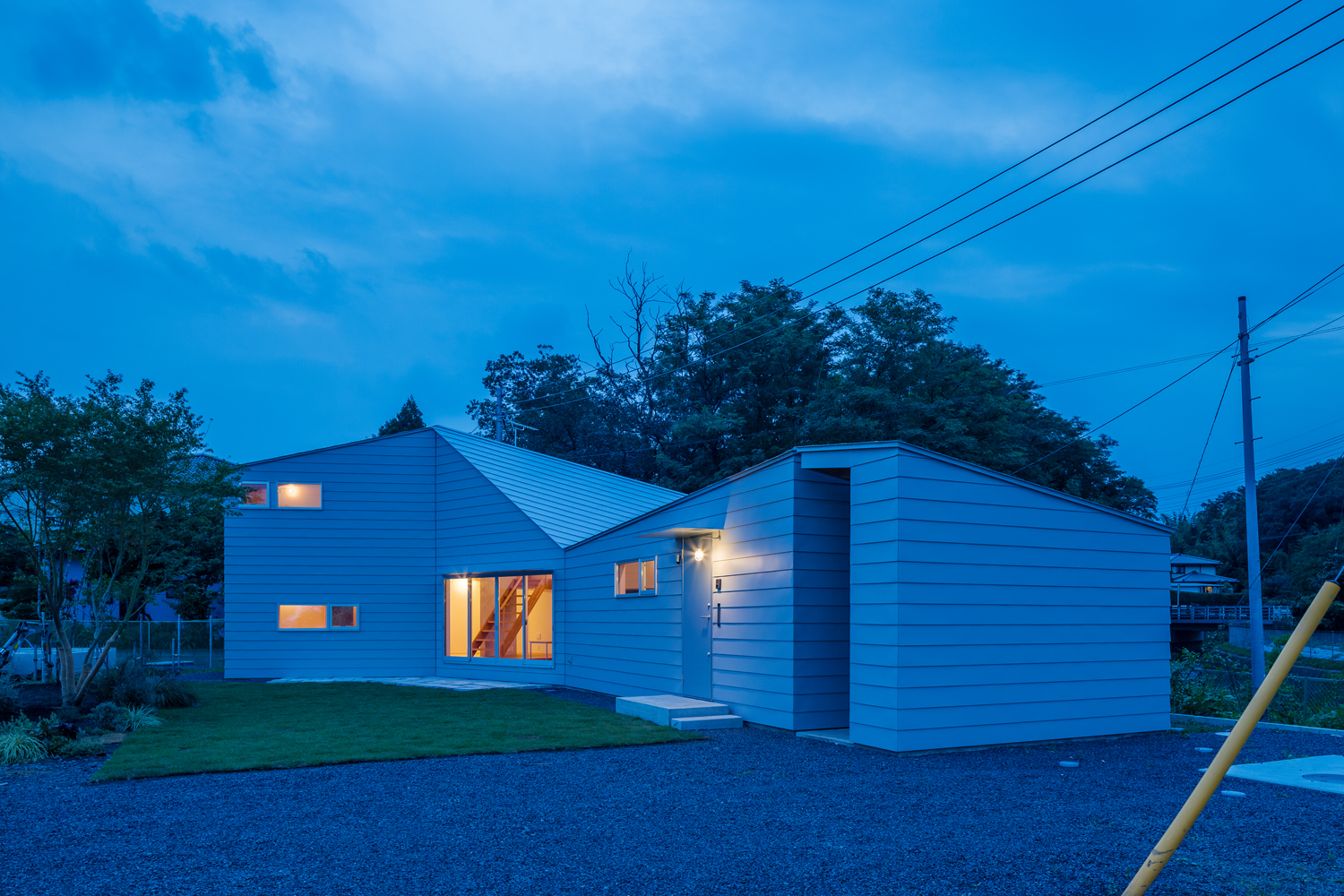
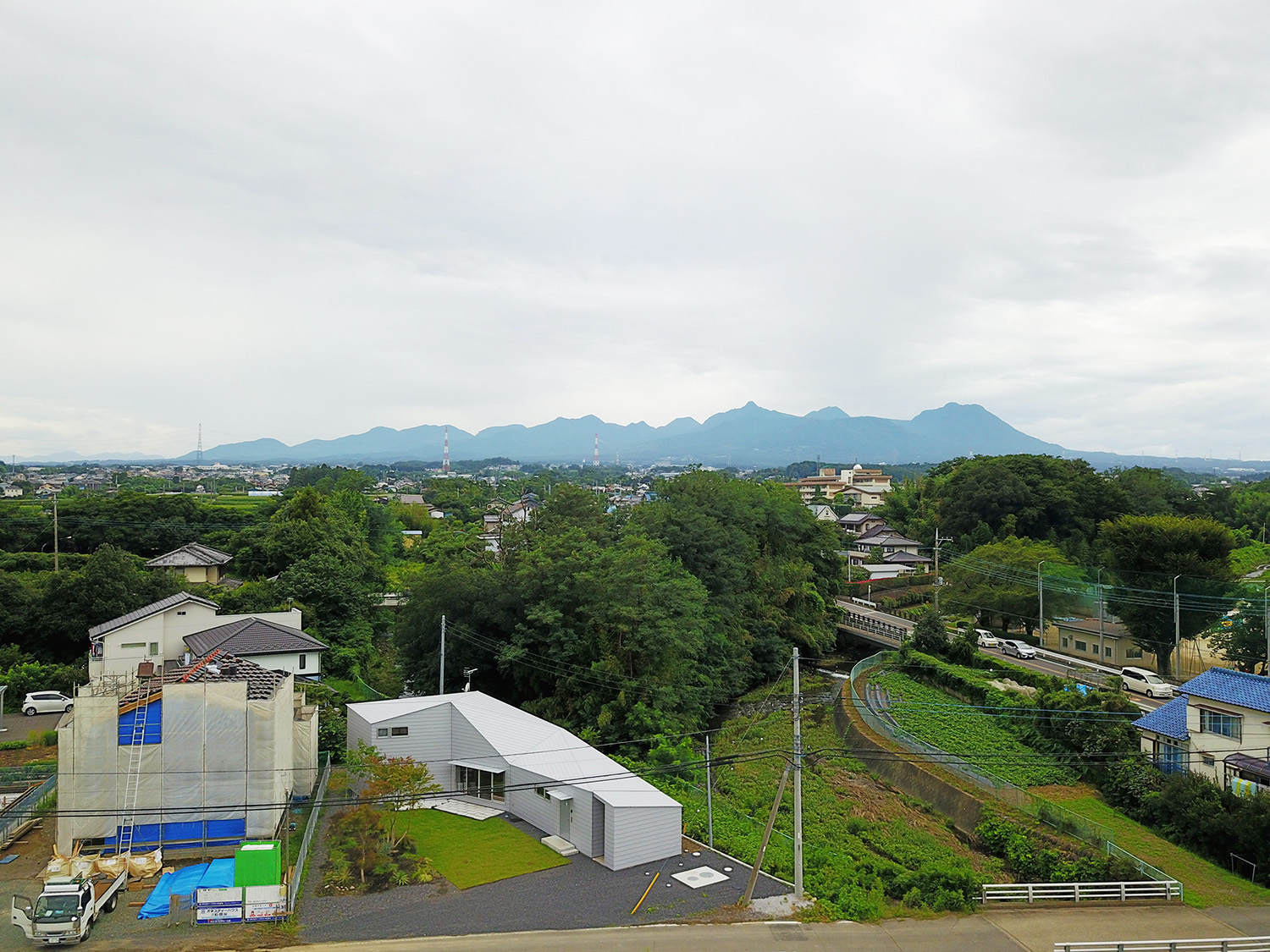
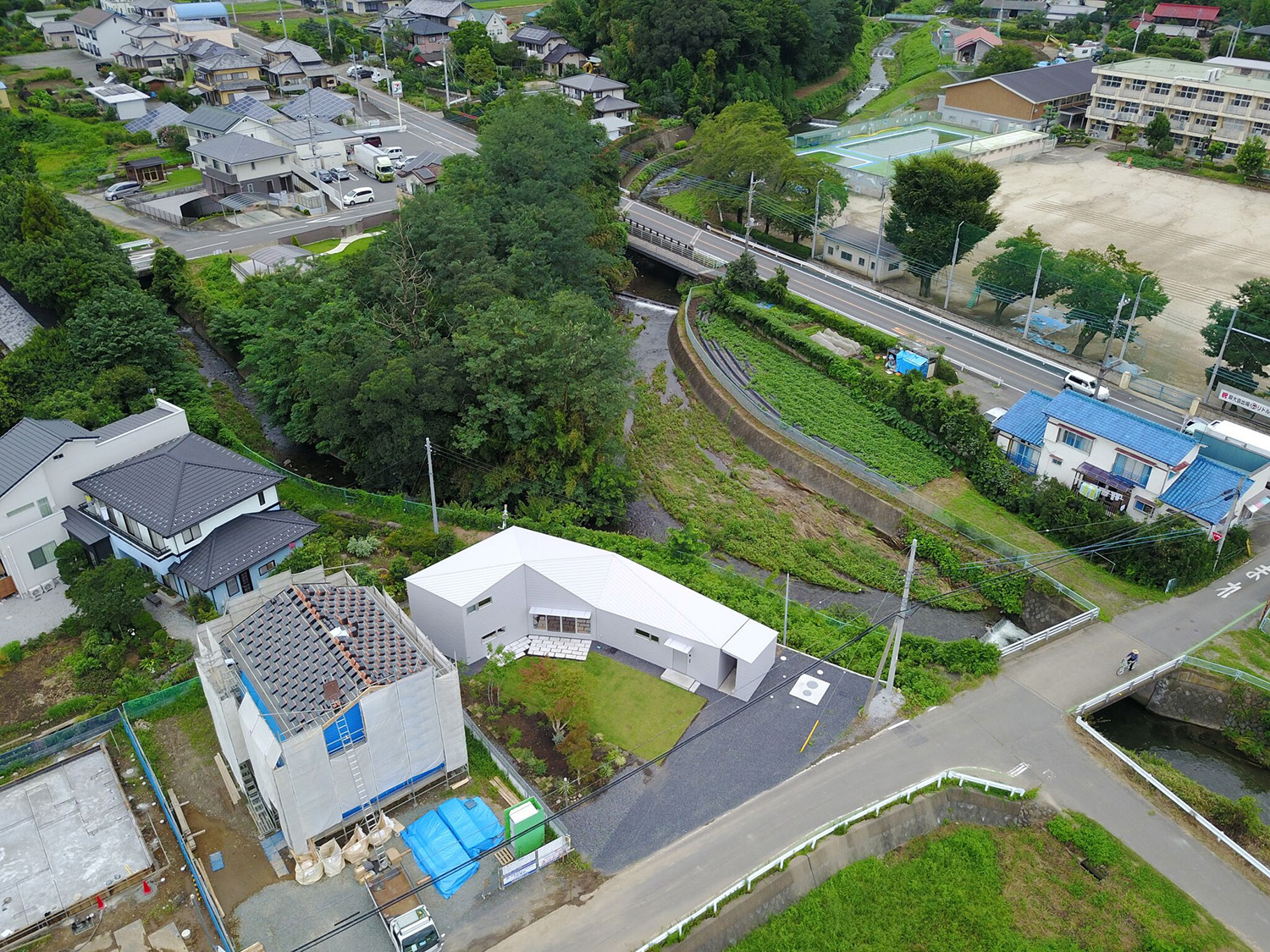
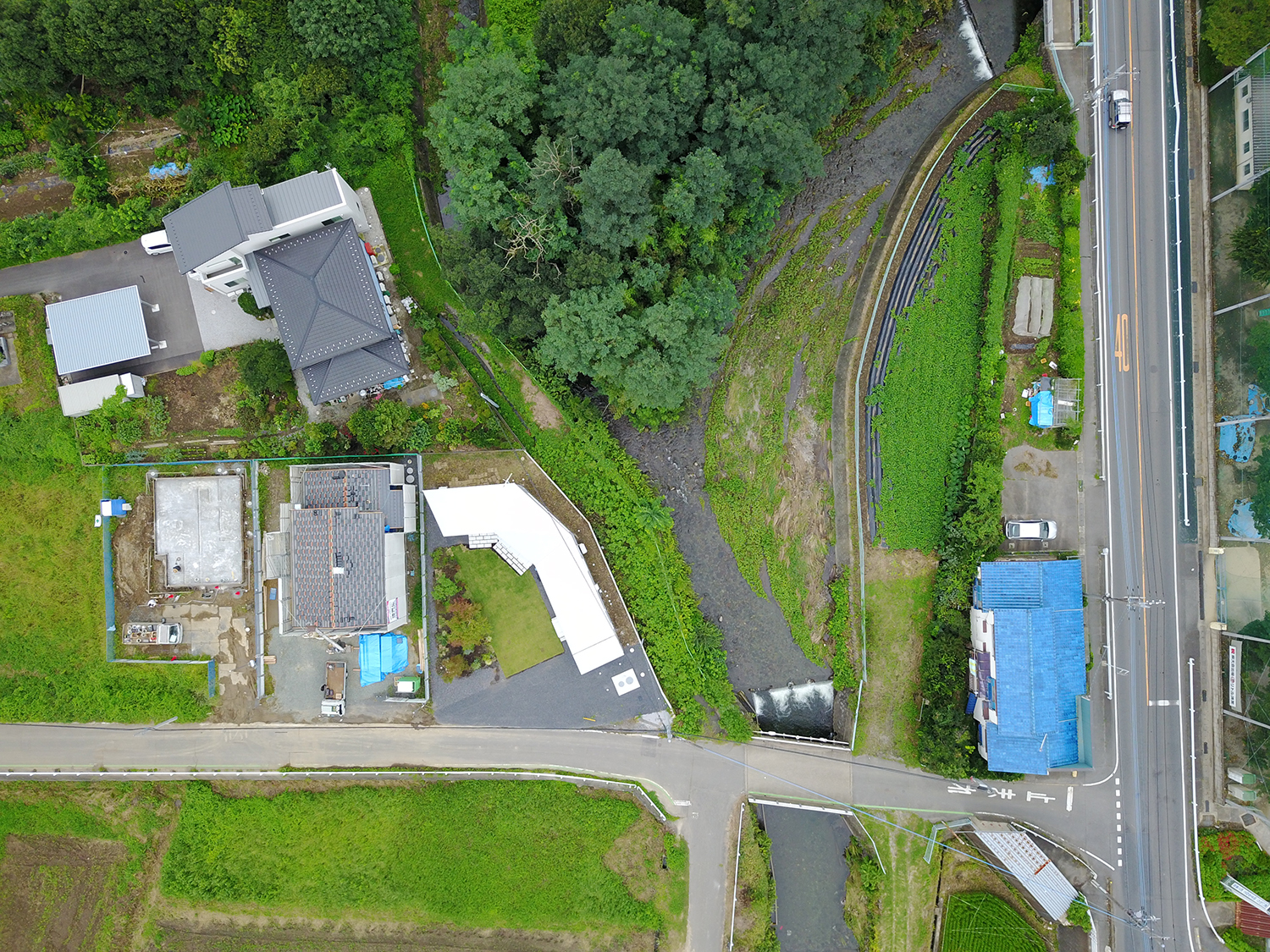
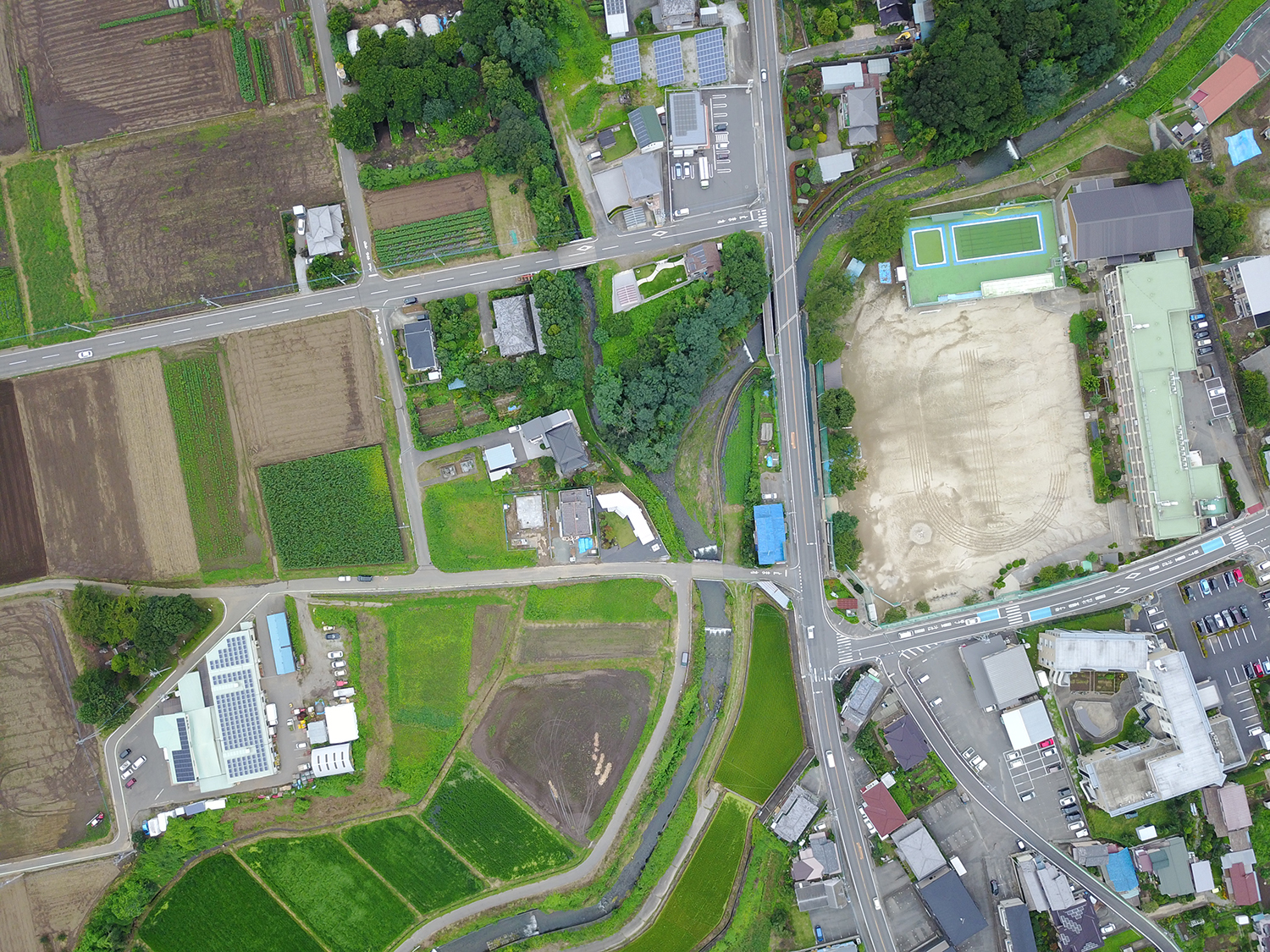
前橋市の郊外に建つ、夫婦と2人の子どものための木造2階建ての住宅。設計は敷地の選定からはじまった。榛名山の麓である青梨子町には無数の細い川が 流れている。川に沿うように住宅群が点在しており、川が田畑や住宅の間をおおらかにすり抜ける風景がある。現在は農地が広がっ ているが、徐々に宅地化が 進んでいくことが予想される地域であった。敷地として選んだのは、2本の川の合流する場所である。合流地点には多種多様な野草が自生しており、都市部では望めない豊かさがあった。クライアントか らは、生活が土地と切り離されず、土地に根ざした暮らしを要求された。
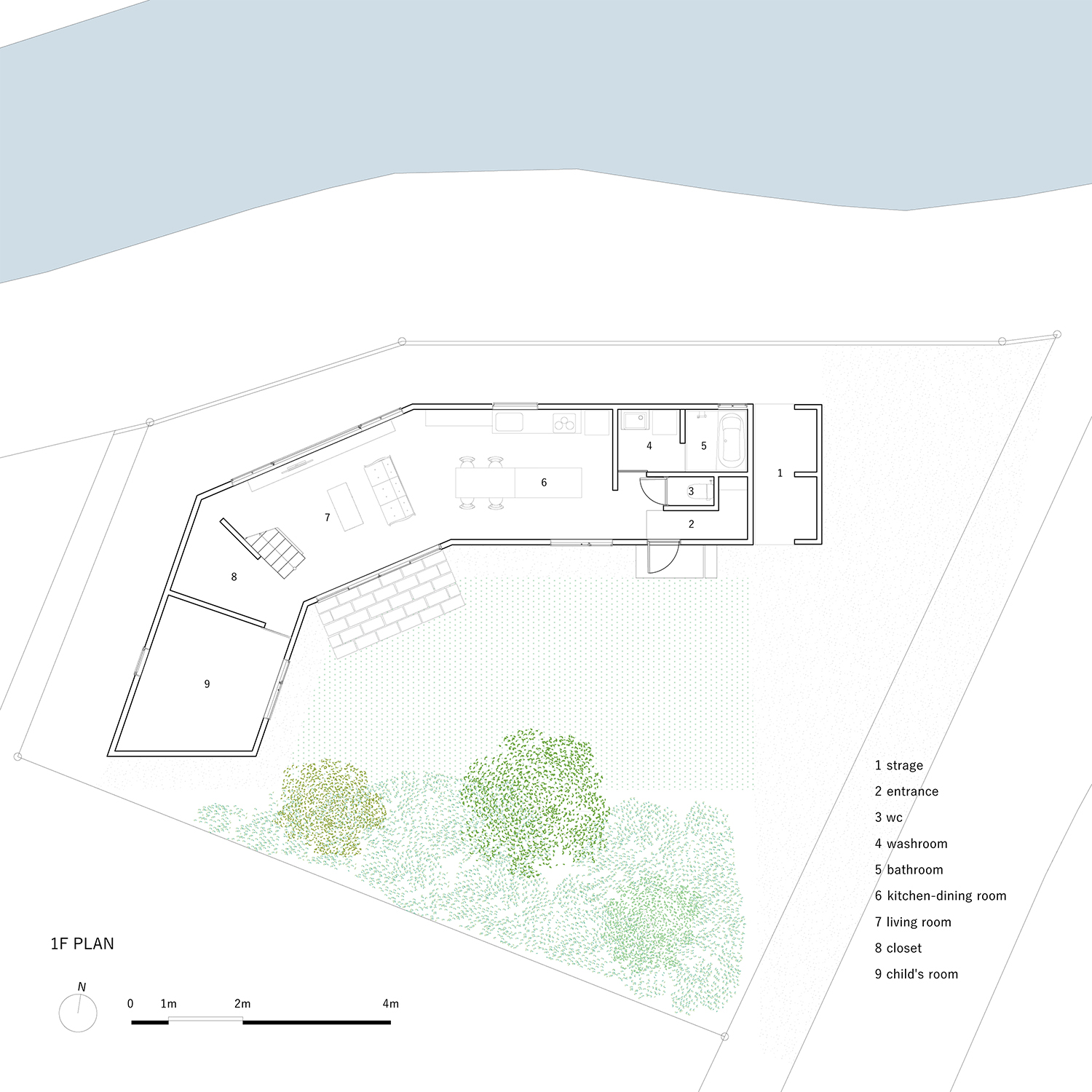
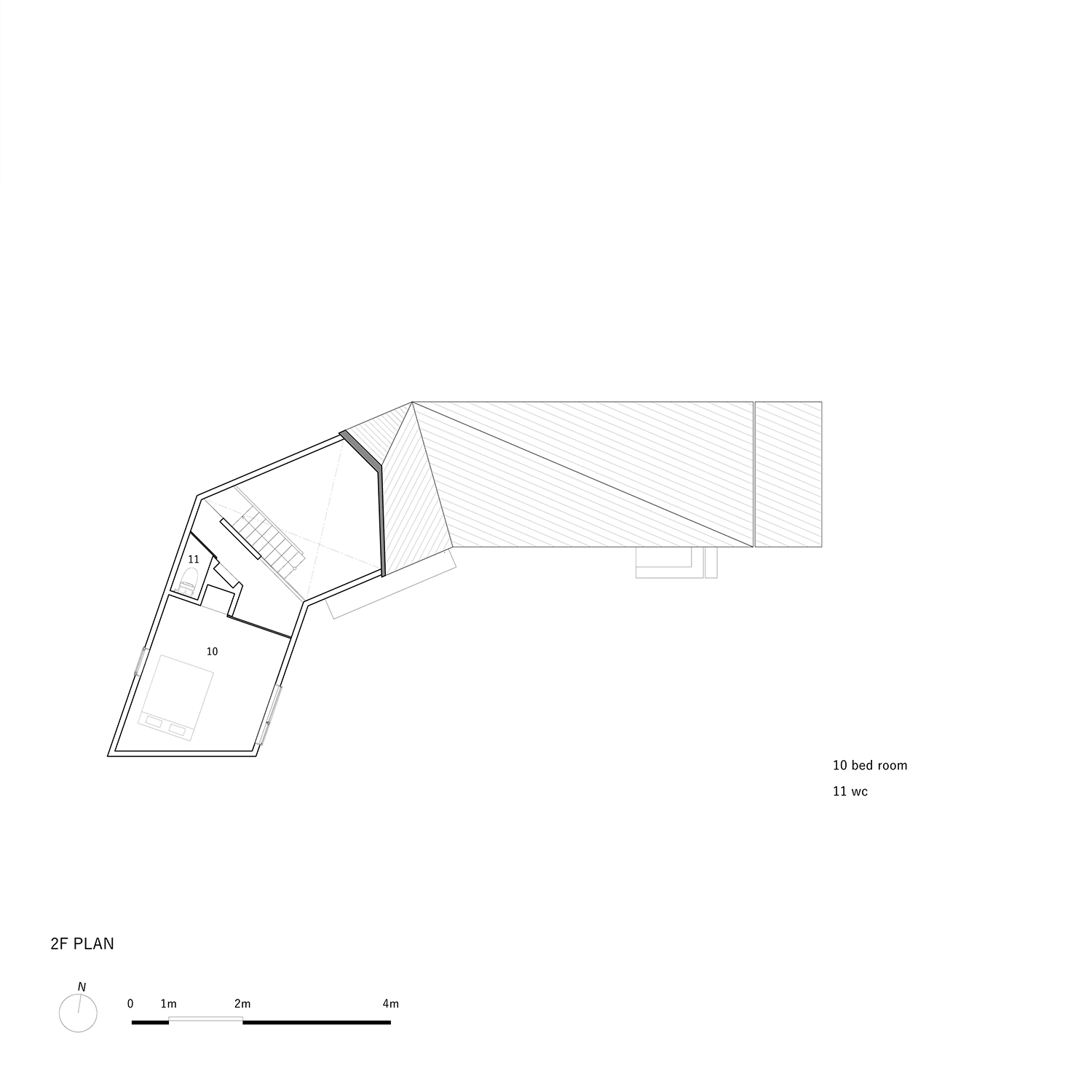
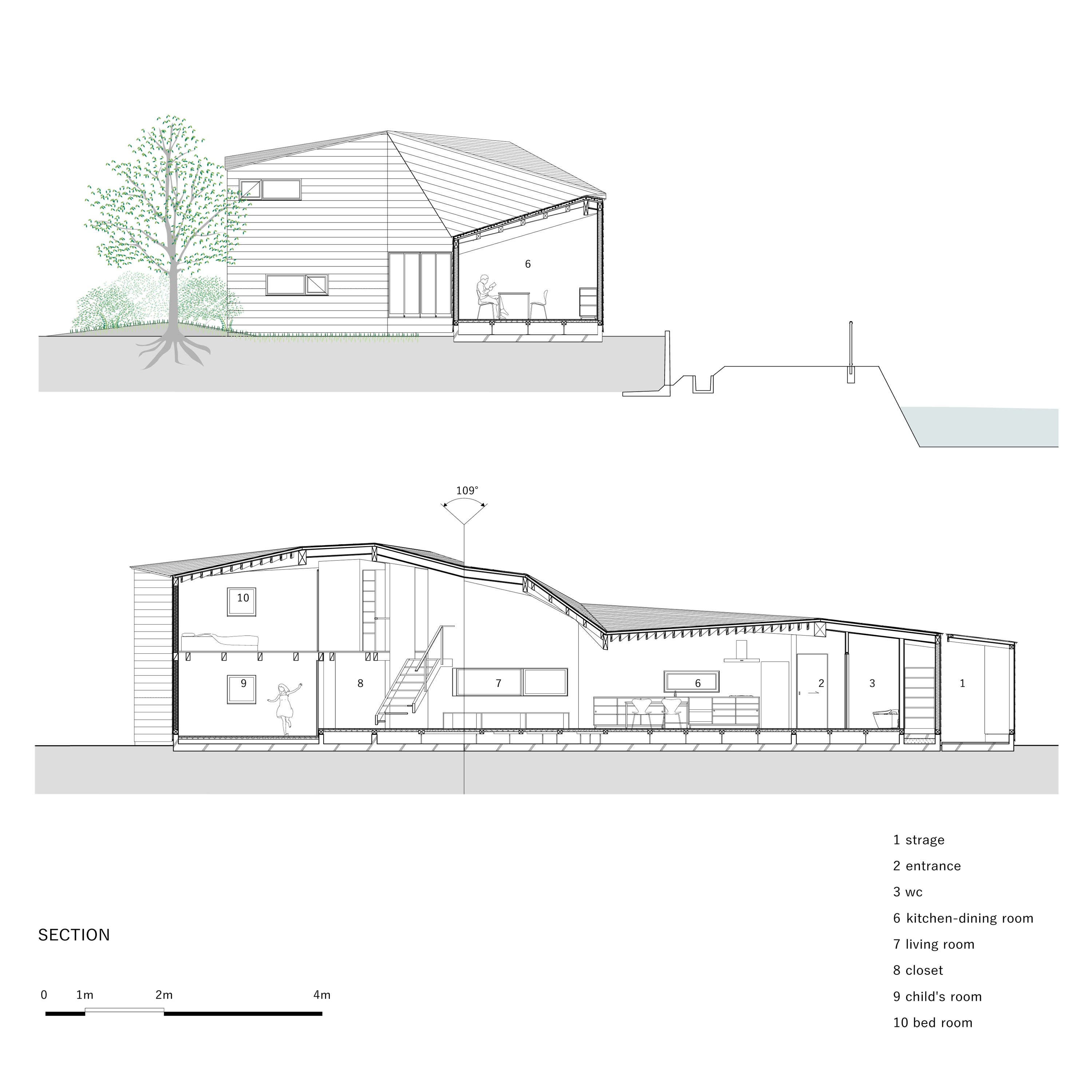
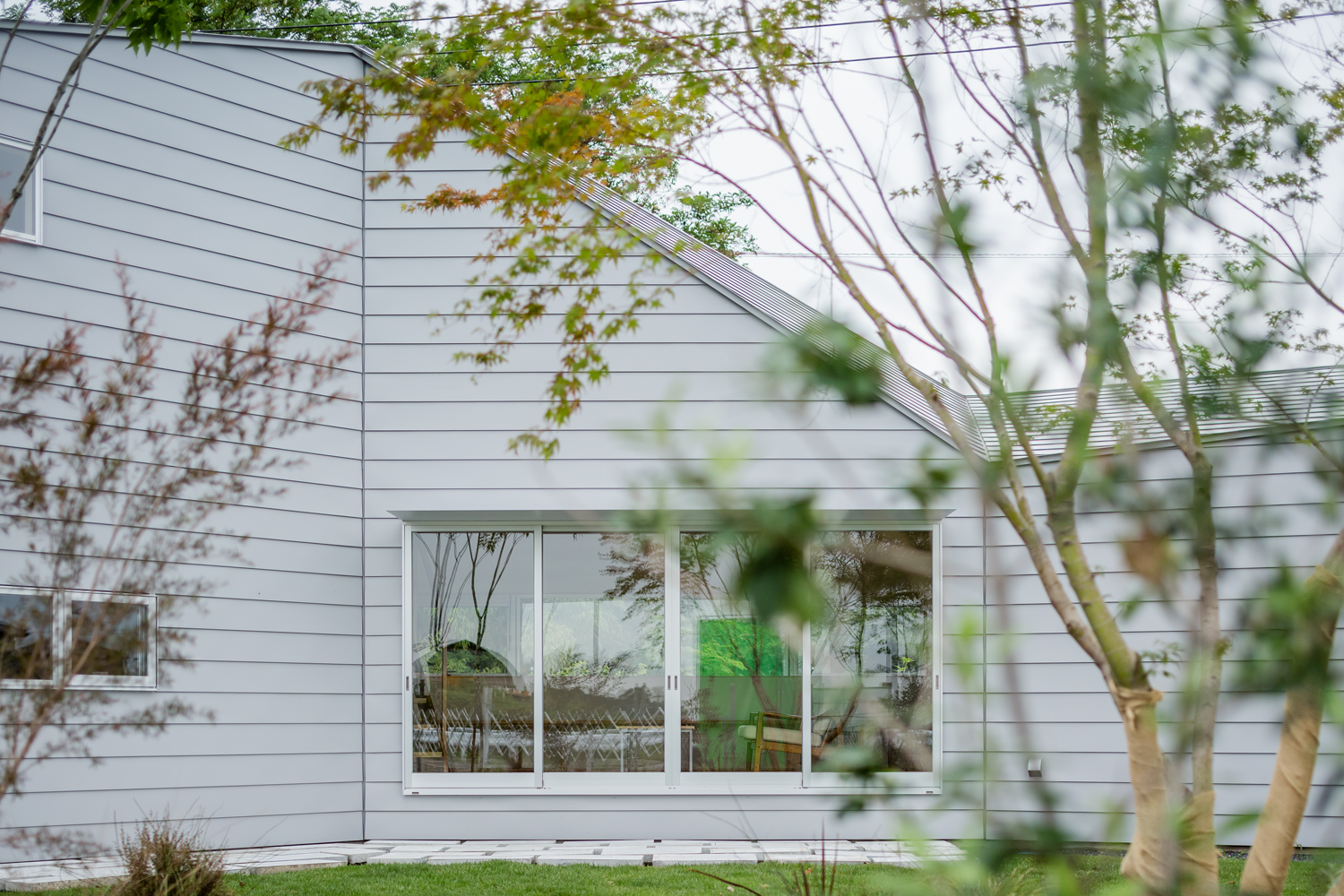
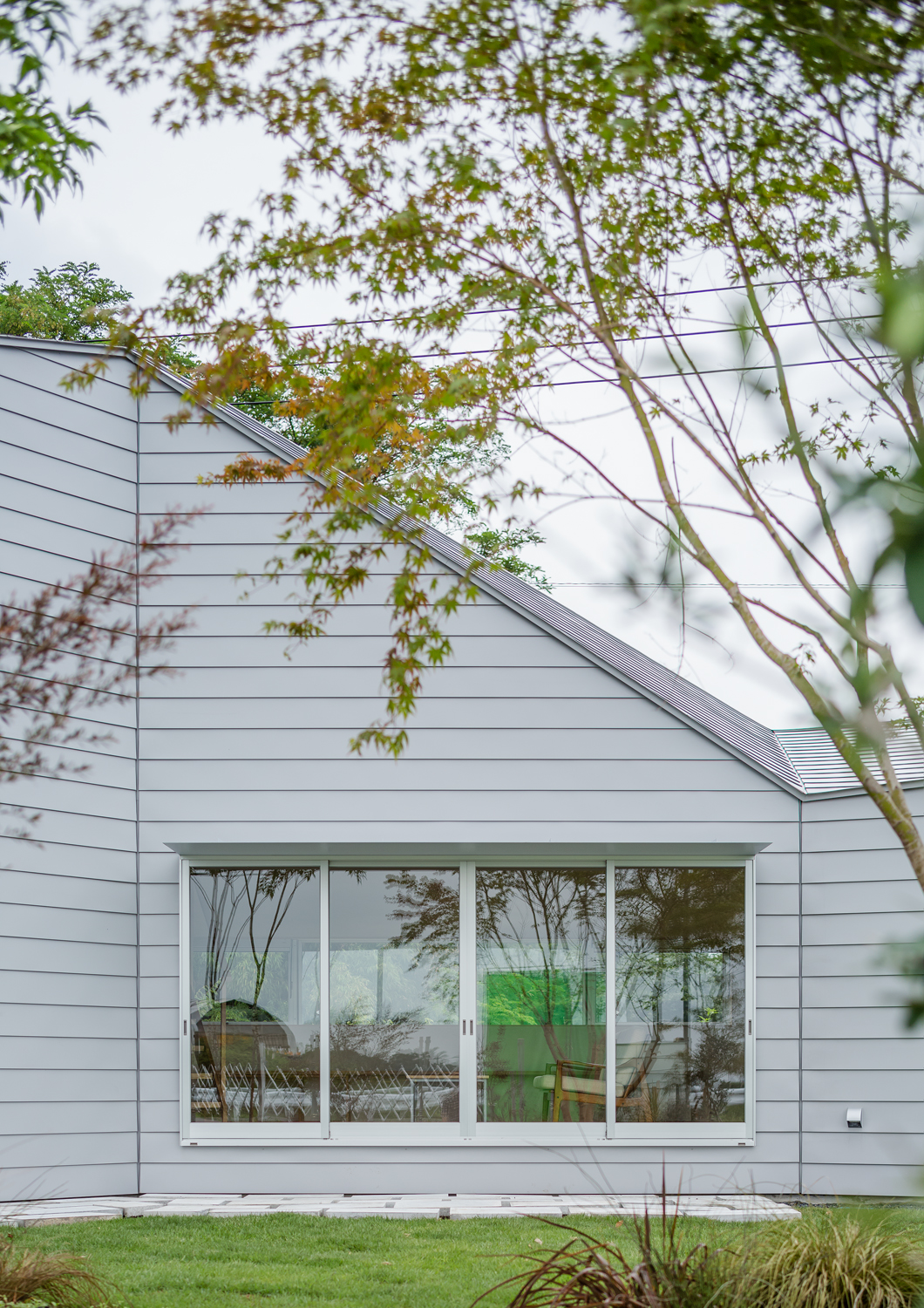
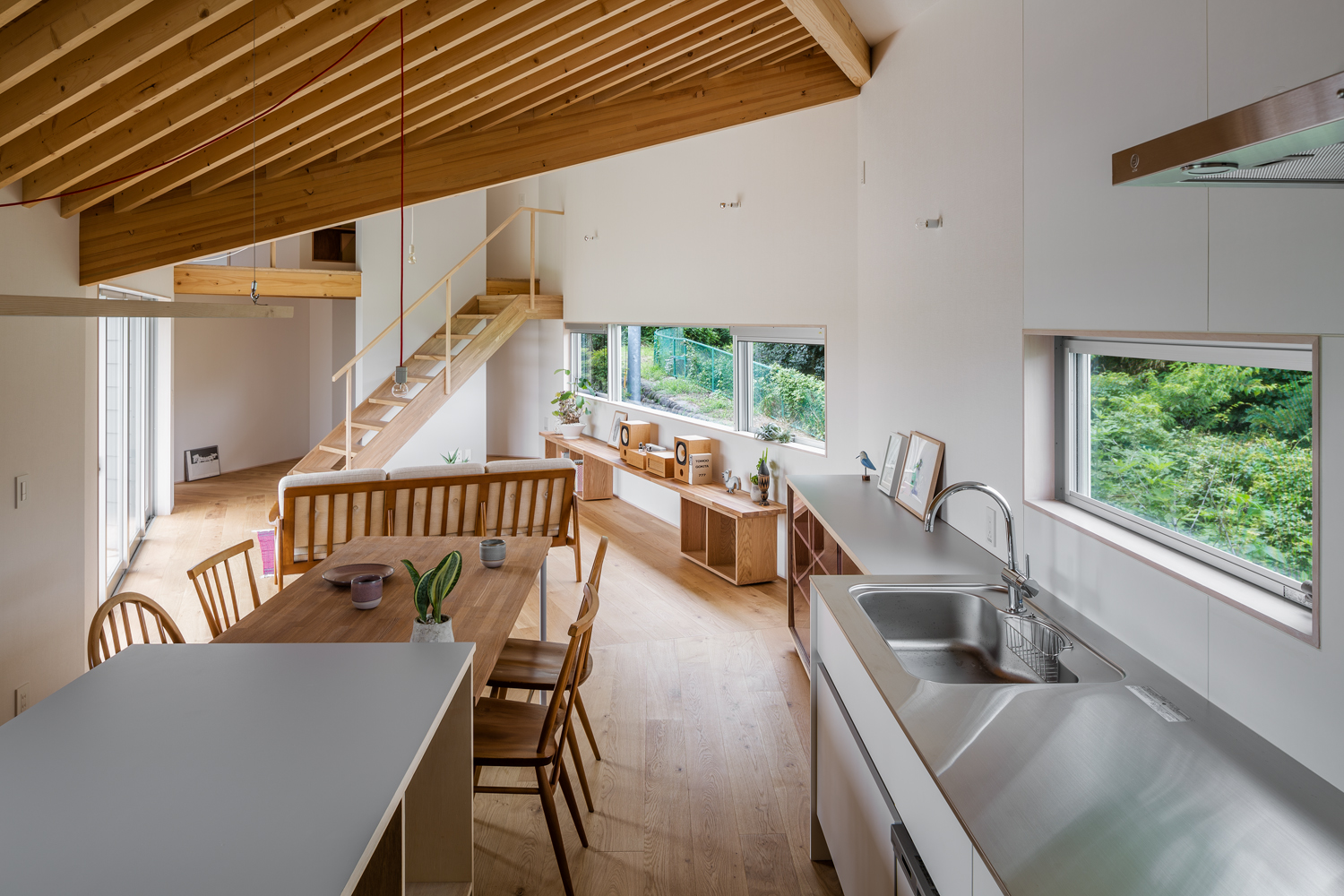
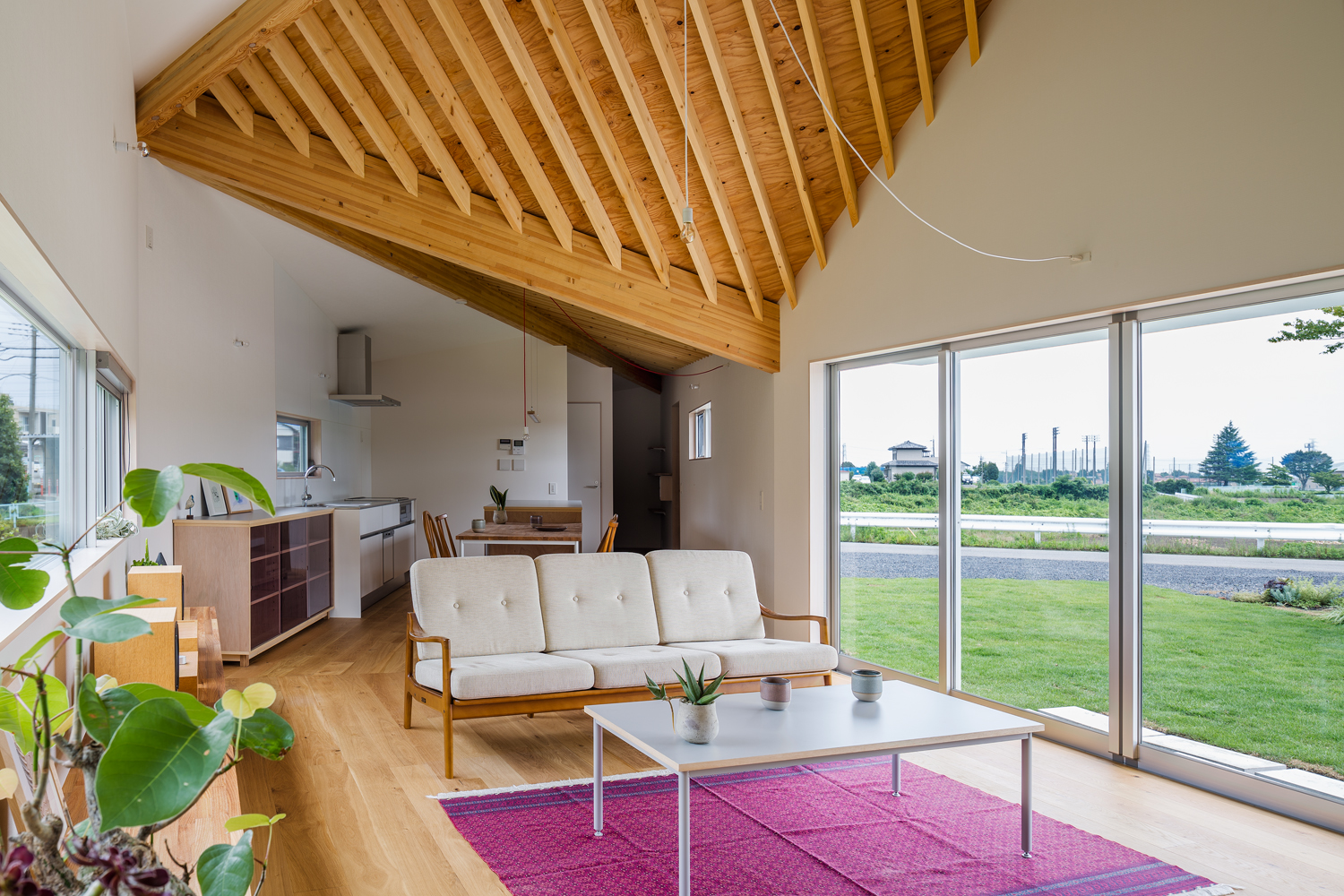
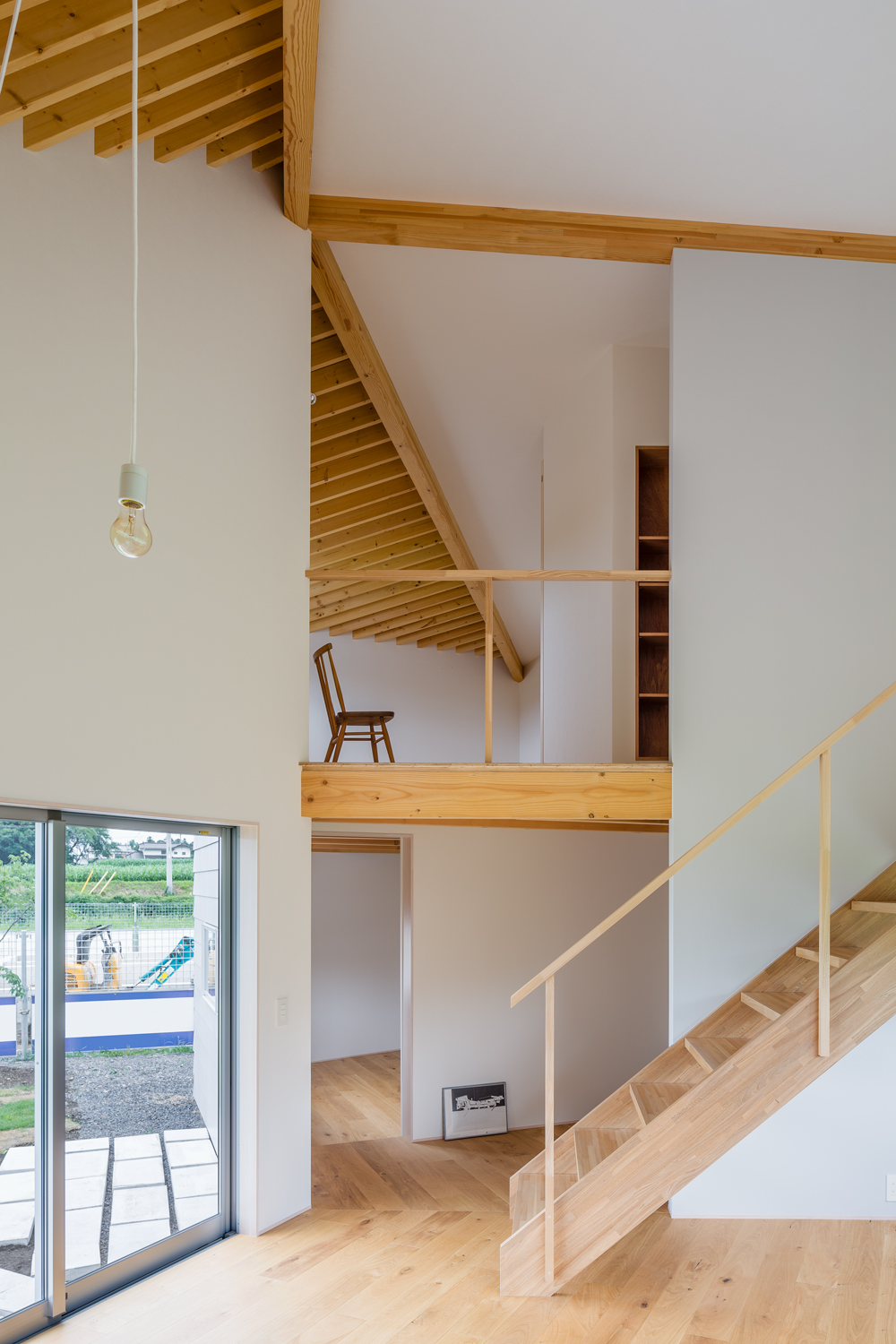
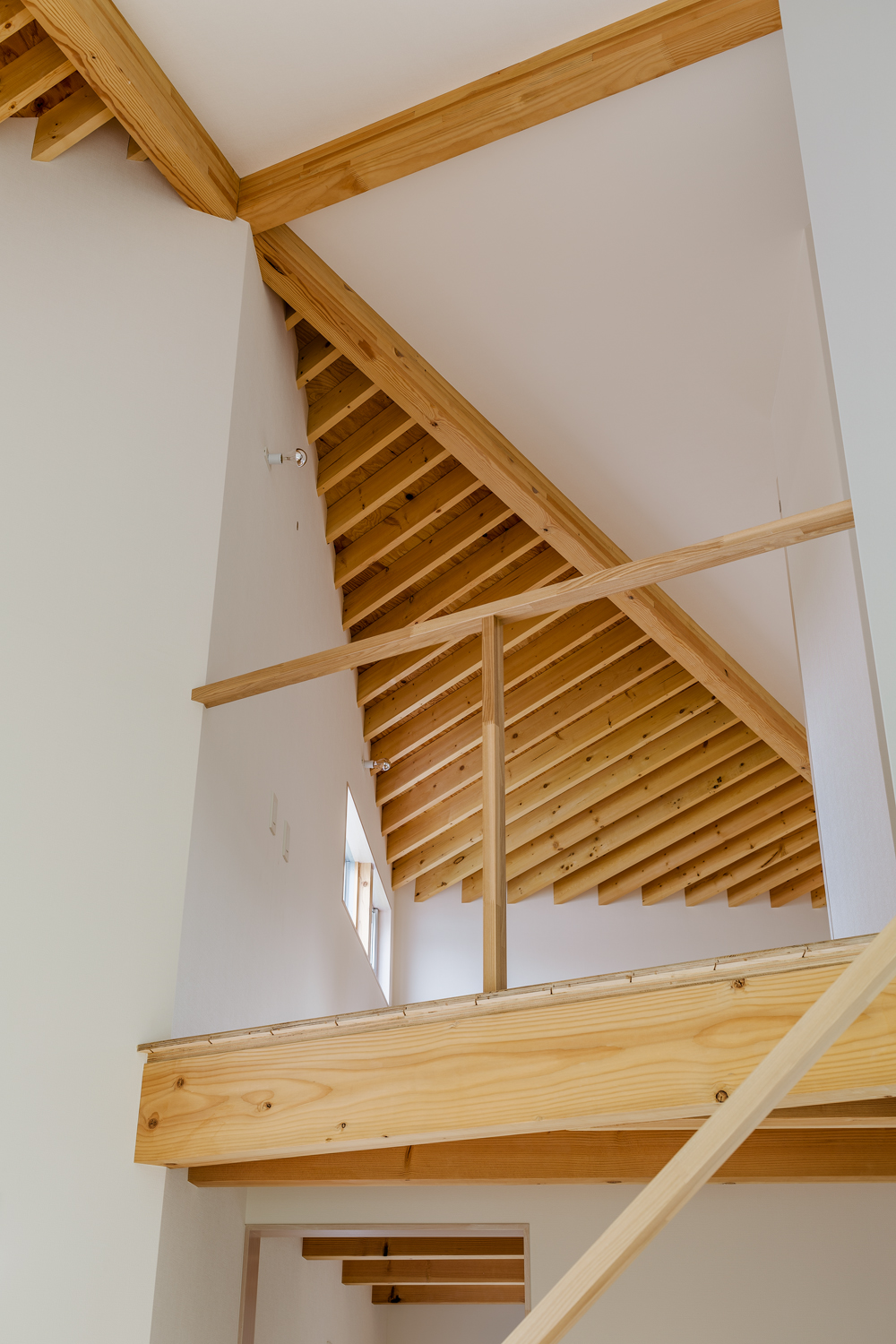
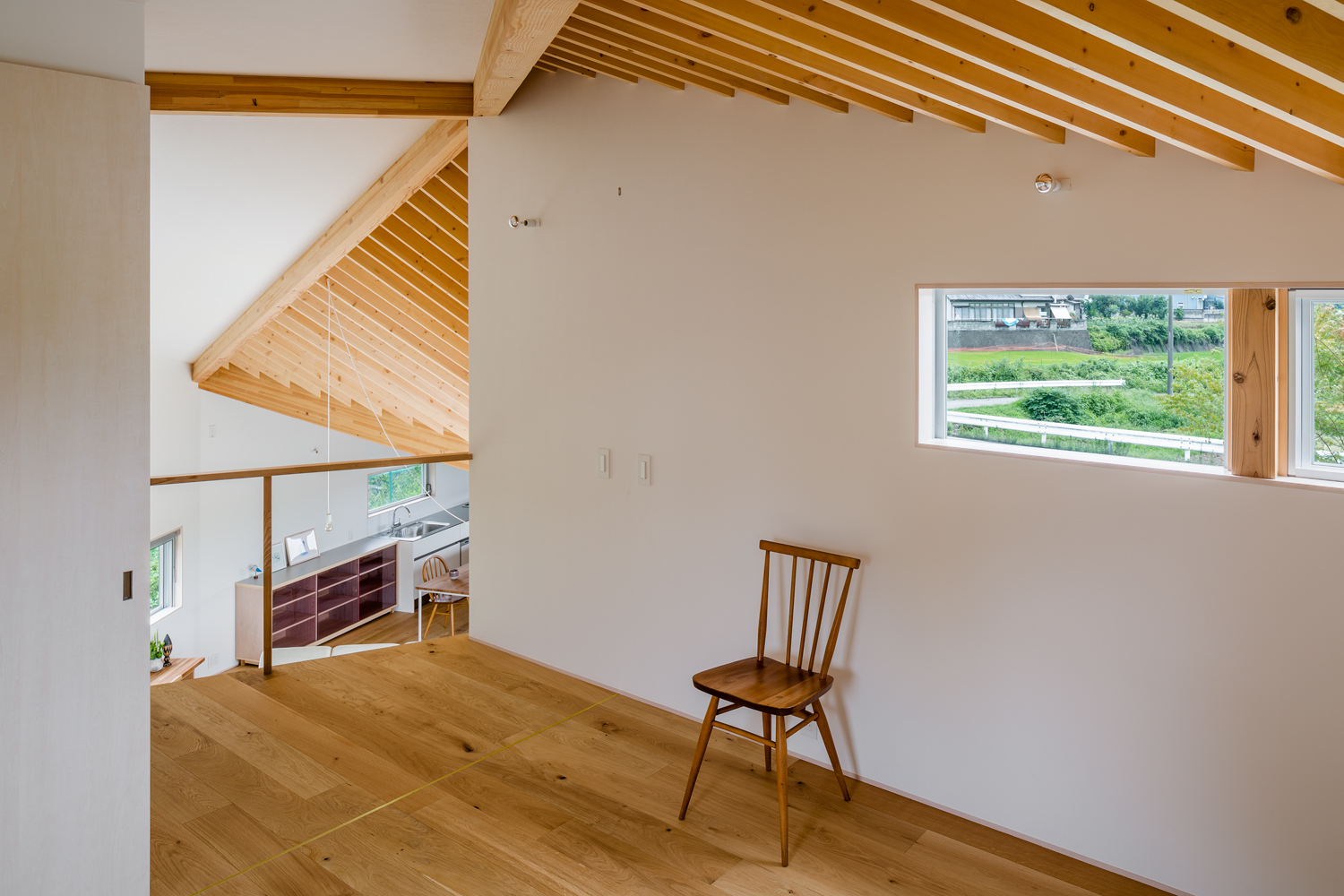
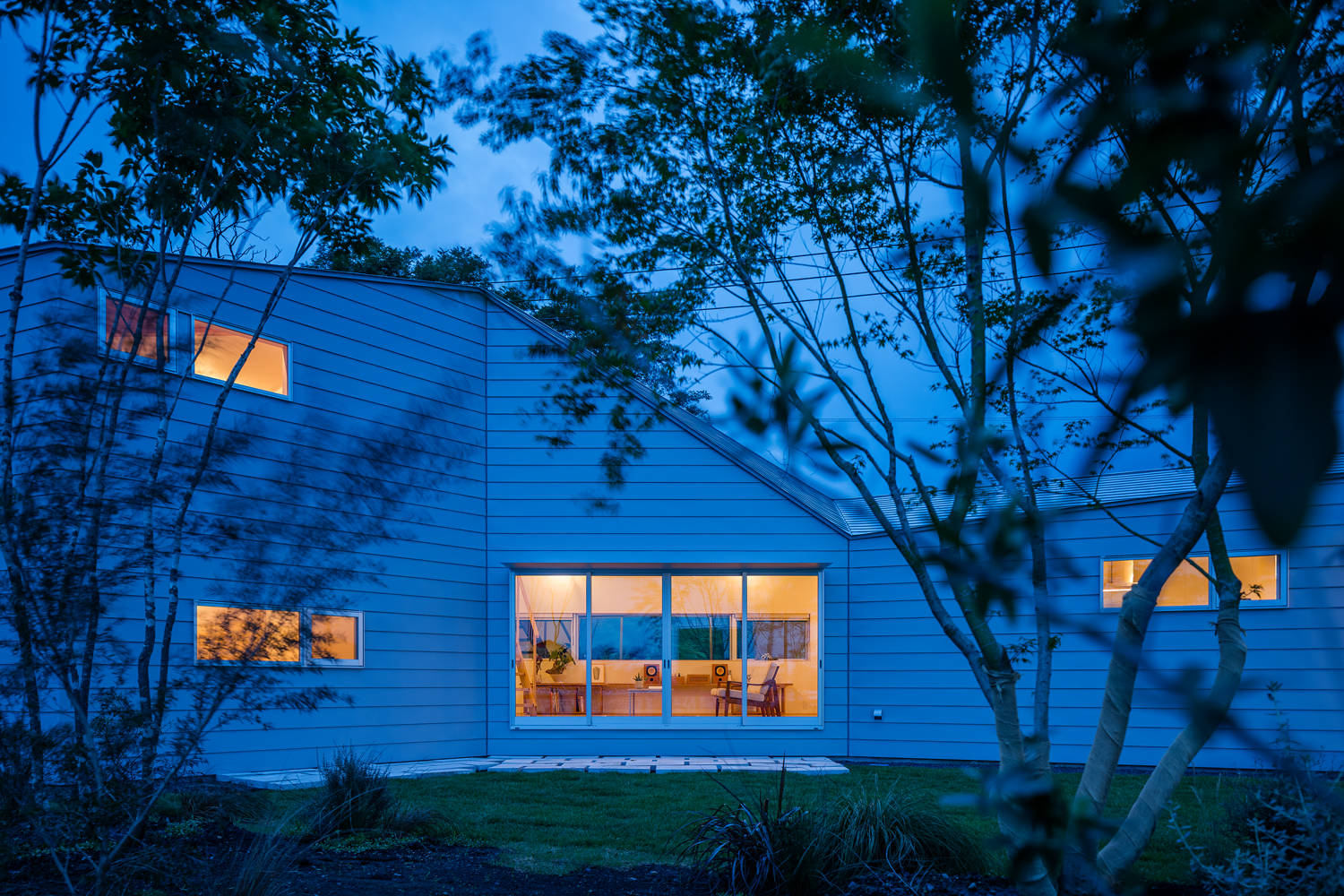
川の流れに倣うように生活を配置し、周辺環境と共に生活する住居を考えた。 住居は川の流れに沿った3つの角度を持つ、細長いボリュームからなる。屋根は各ボリュー ムの頂点を結んだ稜線を持つことで、全体のスケールを調整しつつ 、付近の川の流れや中洲の樹木、遠くの山並みとも呼応させている。外部には西日や北風から守られつつも敷地 周辺の環境から分断されない庭が生まれた。 内部は玄関、キッチン、リビングがひと続きとなる平面計画とし、部屋を分節する壁は最低限とした。様々な角度を持つ屋根面によってこれらの領域は緩く分節 されている。各ボリューム毎に2種類の仕上げの屋根面が共存していることにより、居場所によってボリュー ムや機能を横断した領域を感じさせる。
郊外の起伏のある豊かな田園風景が、住宅地への転用に伴い均されてゆく情景の中で、未だ残る川や中洲といった地形的な周辺環境を日々の生活の手がか りへとしながら、永く土地と共に暮らしていける居住環境を目指した。
Located at the foot of Mt. Haruna in suburban Maebashi, this wooden two-story residence was born from the clients’ deliberate selection of a site at the confluence of two rivers. The surrounding landscape is defined by an organic network of small waterways that meander through fields and homes, creating a pastoral scene where the boundaries between the natural and the built are blurred. While currently an expansive agricultural area, it is a region on the cusp of suburban transformation. The clients, drawn to the wild abundance of wildflowers and the richness of the riverbanks, sought a home that felt deeply rooted in the soil rather than detached from it.
The architecture traces the trajectory of the river, taking the form of a slender volume that pivots at three distinct angles. By connecting the vertices of each section, the roof forms a rhythmic ridgeline that not only moderates the building’s scale but also echoes the surrounding landscape—from the flow of the water and the trees on the sandbanks to the distant mountain silhouettes. This strategic placement carves out a garden that remains permeable to the landscape while providing a sanctuary from the harsh western sun and northern winds. The interior is conceived as a continuous sequence, where the entrance, kitchen, and living areas flow together with minimal partitioning. Instead of physical walls, the varied planes of the ceiling loosely delineate the different zones. Within each volume, two distinct roof finishes coexist, creating a spatial depth where functions overlap and boundaries dissolve depending on one’s vantage point.
As the undulating rural terrain is increasingly leveled for suburban development, the design uses the remaining topography—the rivers and sandbanks—as anchors for daily life. The result is a residence intended to evolve in harmony with the land, preserving the memory of the landscape within the rhythm of domestic life.