



Category :
House in Isesaki
伊勢崎の家
Residence+α @ Isesaki, Gunma
Design: Yu Yamada, Sunao Koase, Ryota Yamagishi /SNARK Inc.+ Shin Yokoo, Kakeru Tsuruta /OUVI
Construction: Soken House
Total area: 212.55㎡ (1F/106.30㎡ 2F/106.25㎡)
Completion: Jun.2020
Photo: Ippei Shinzawa
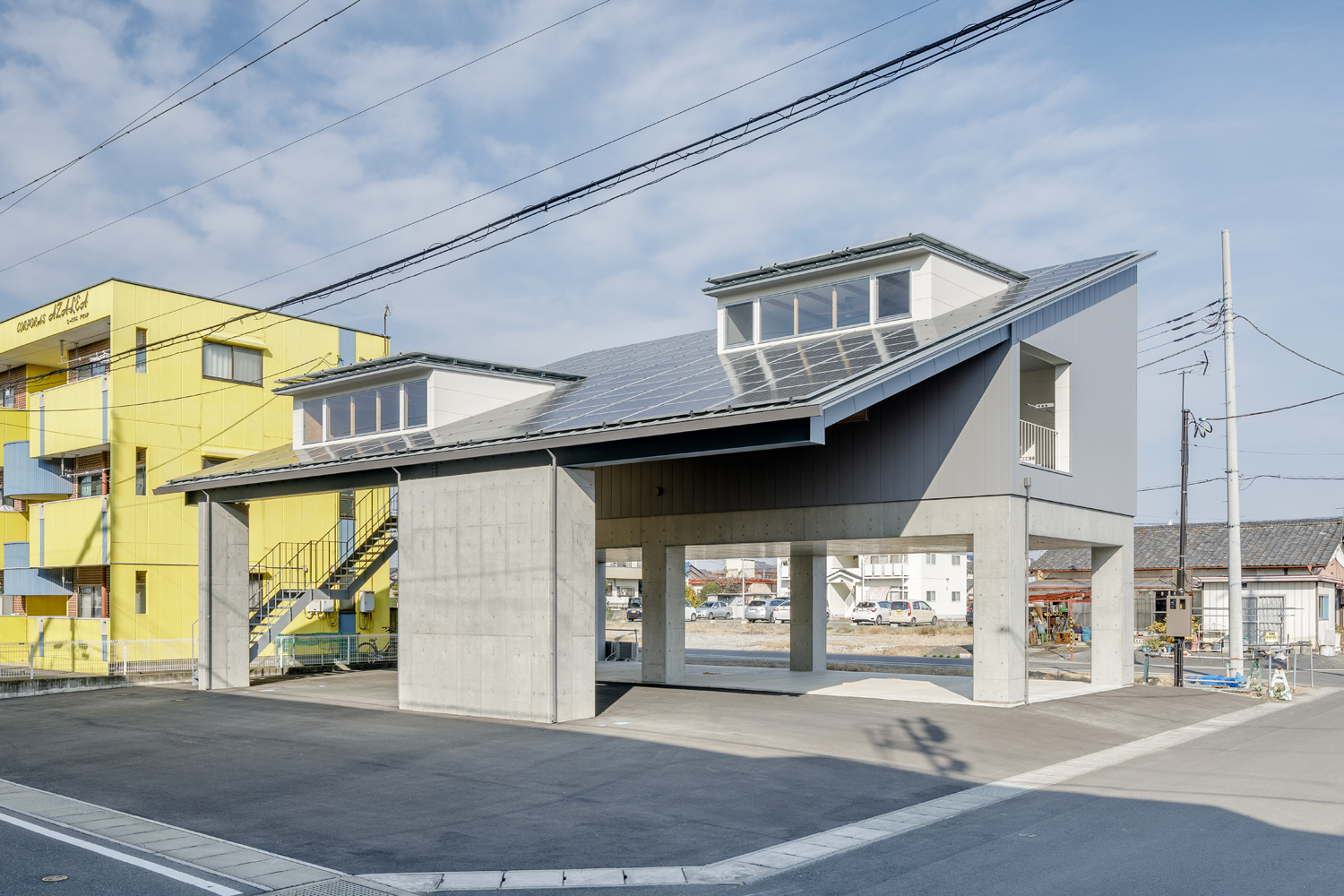
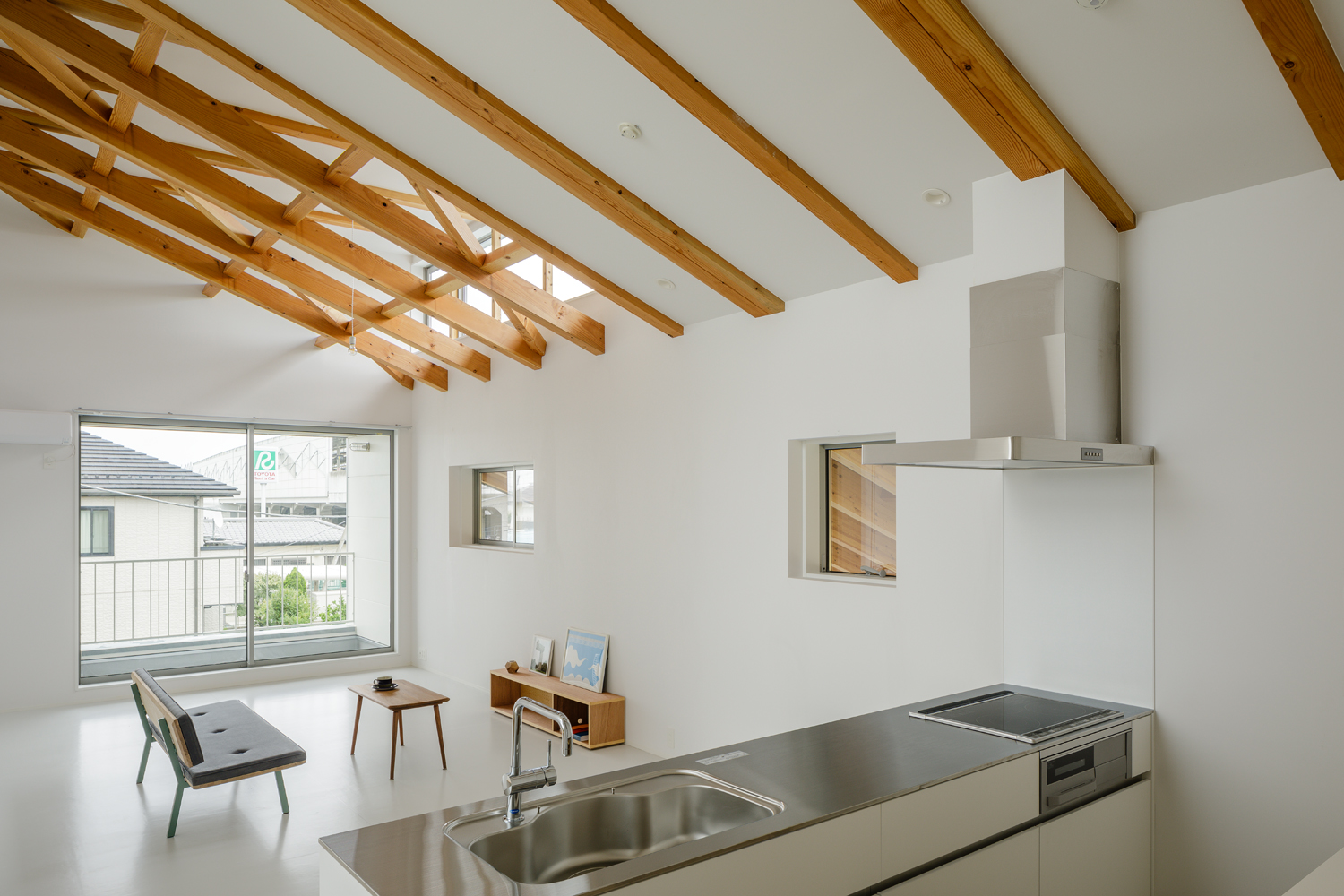
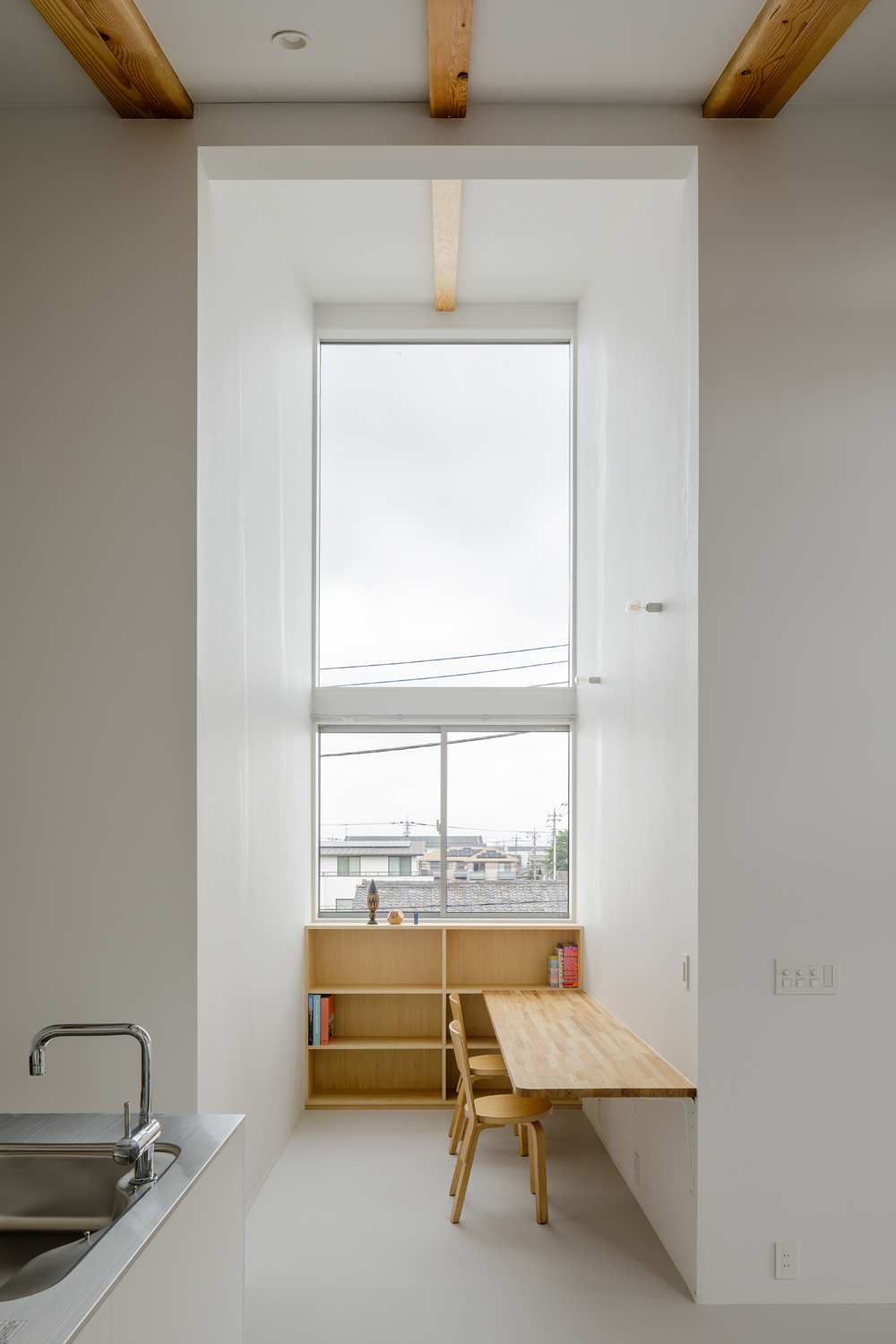
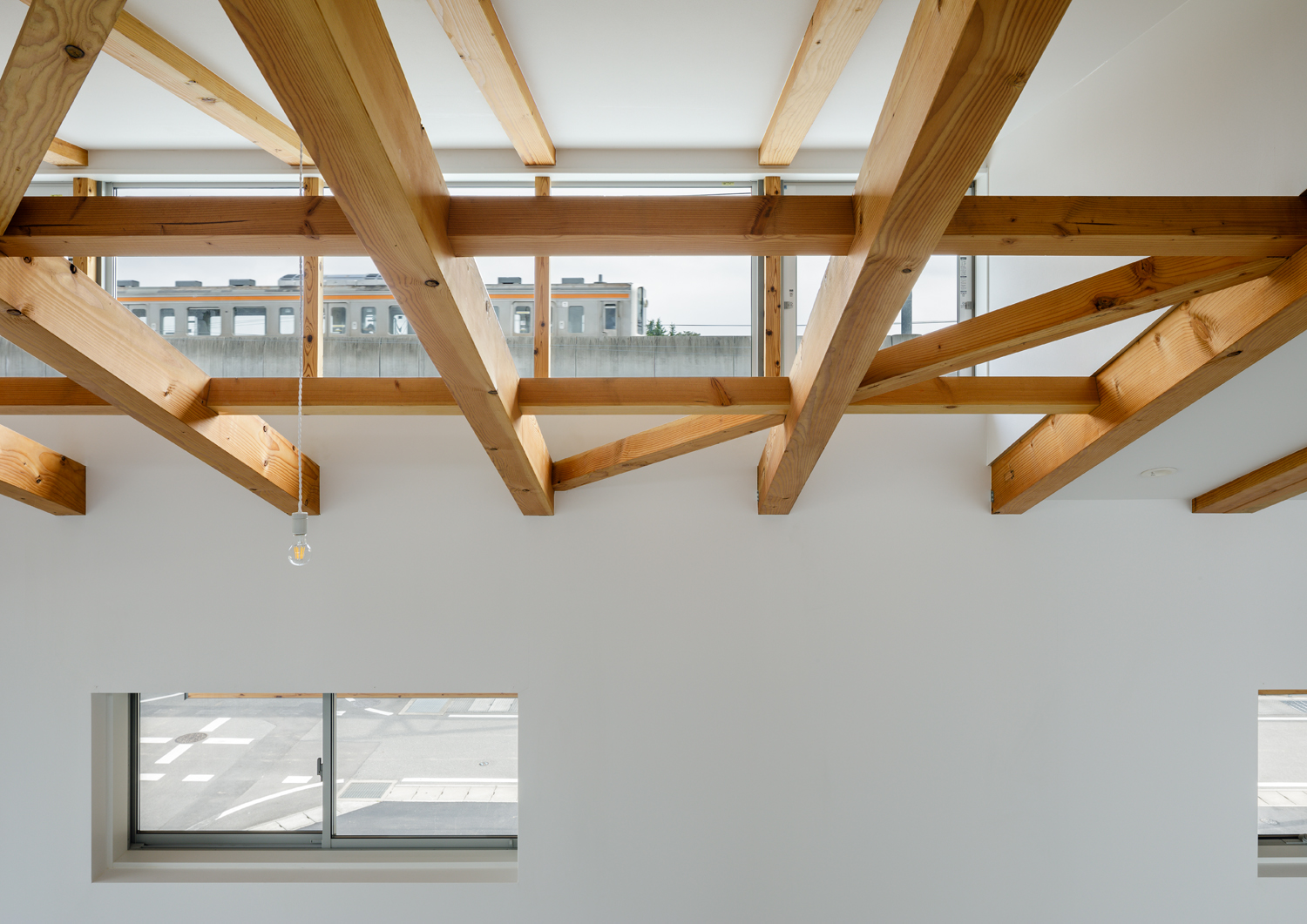
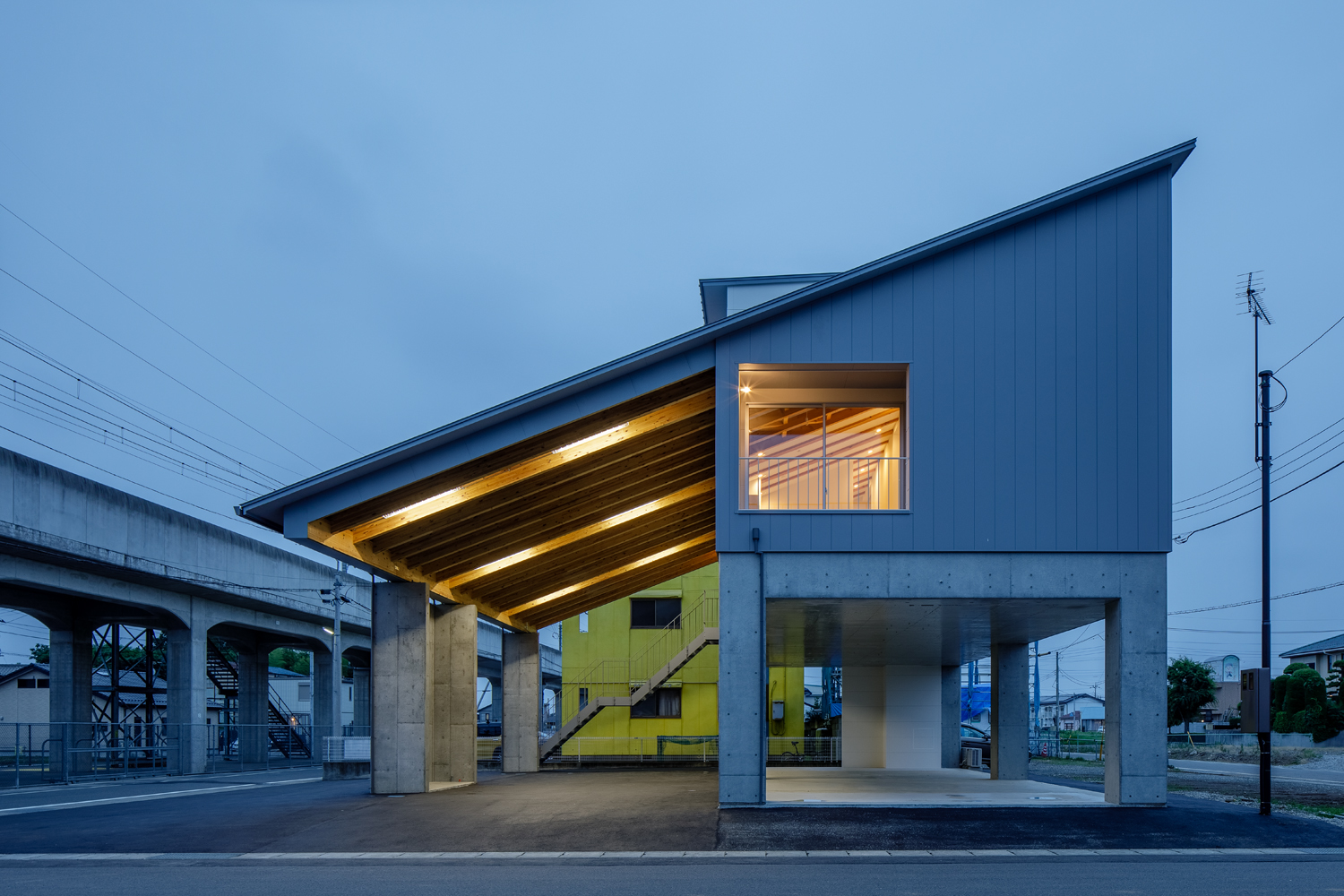
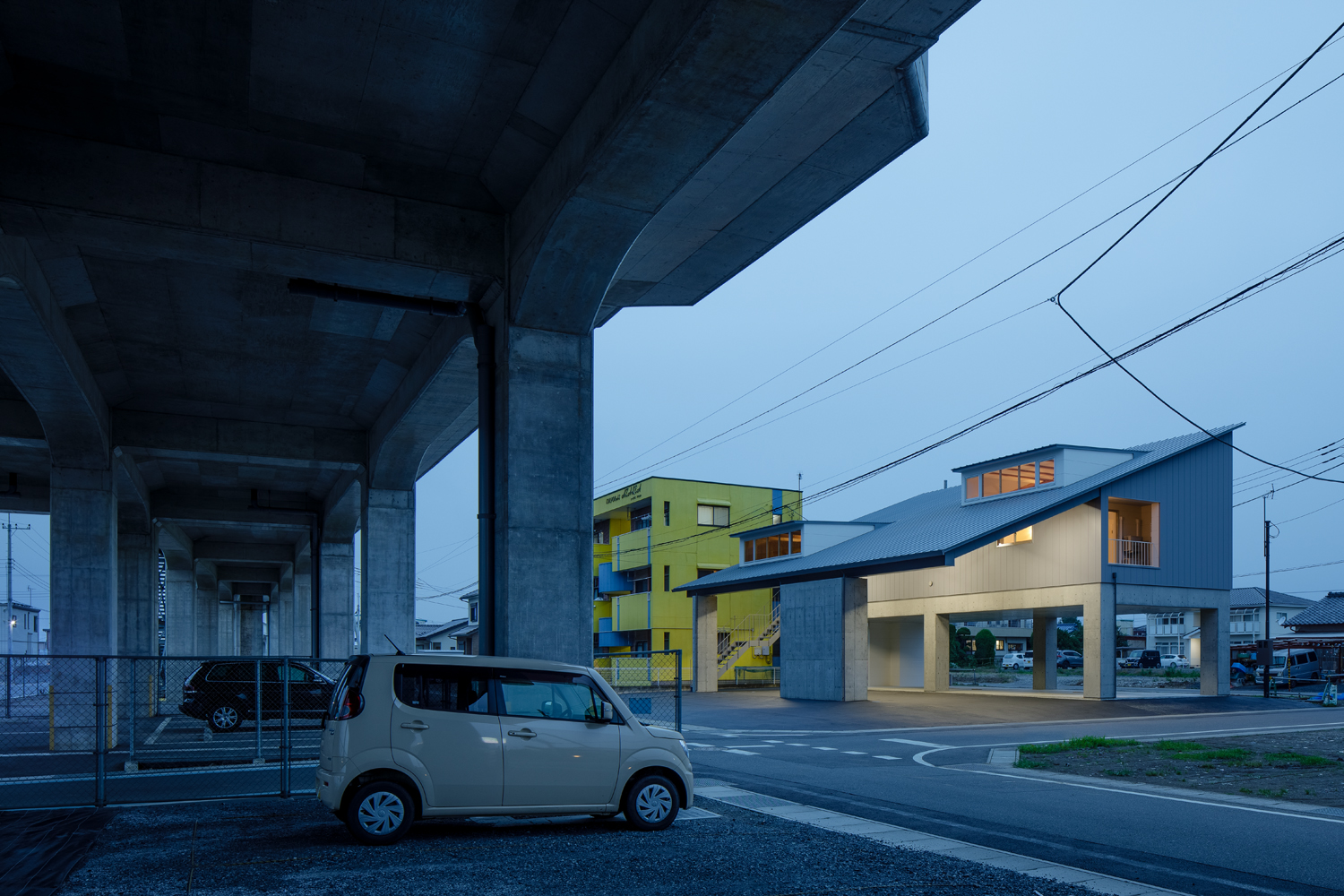
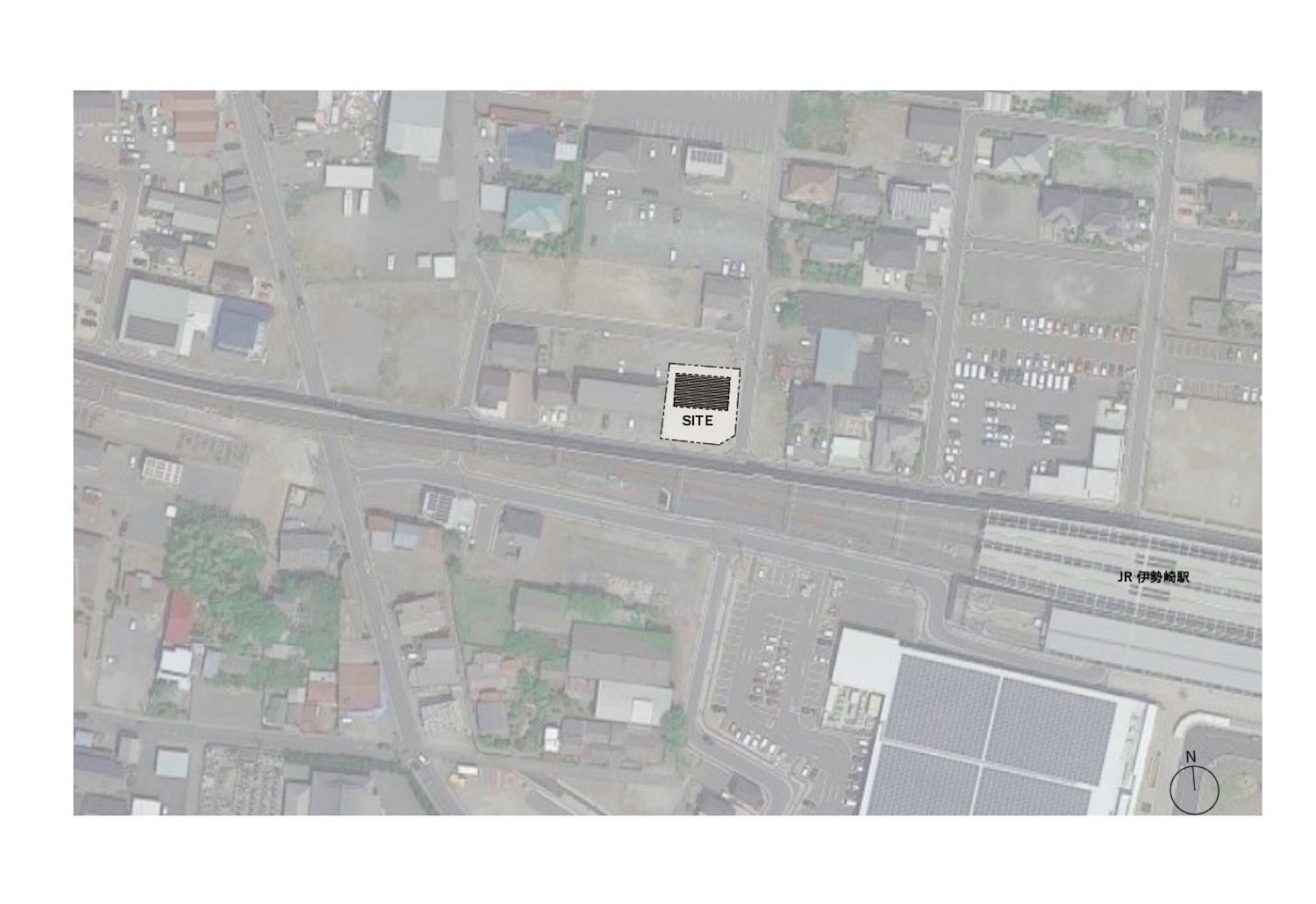
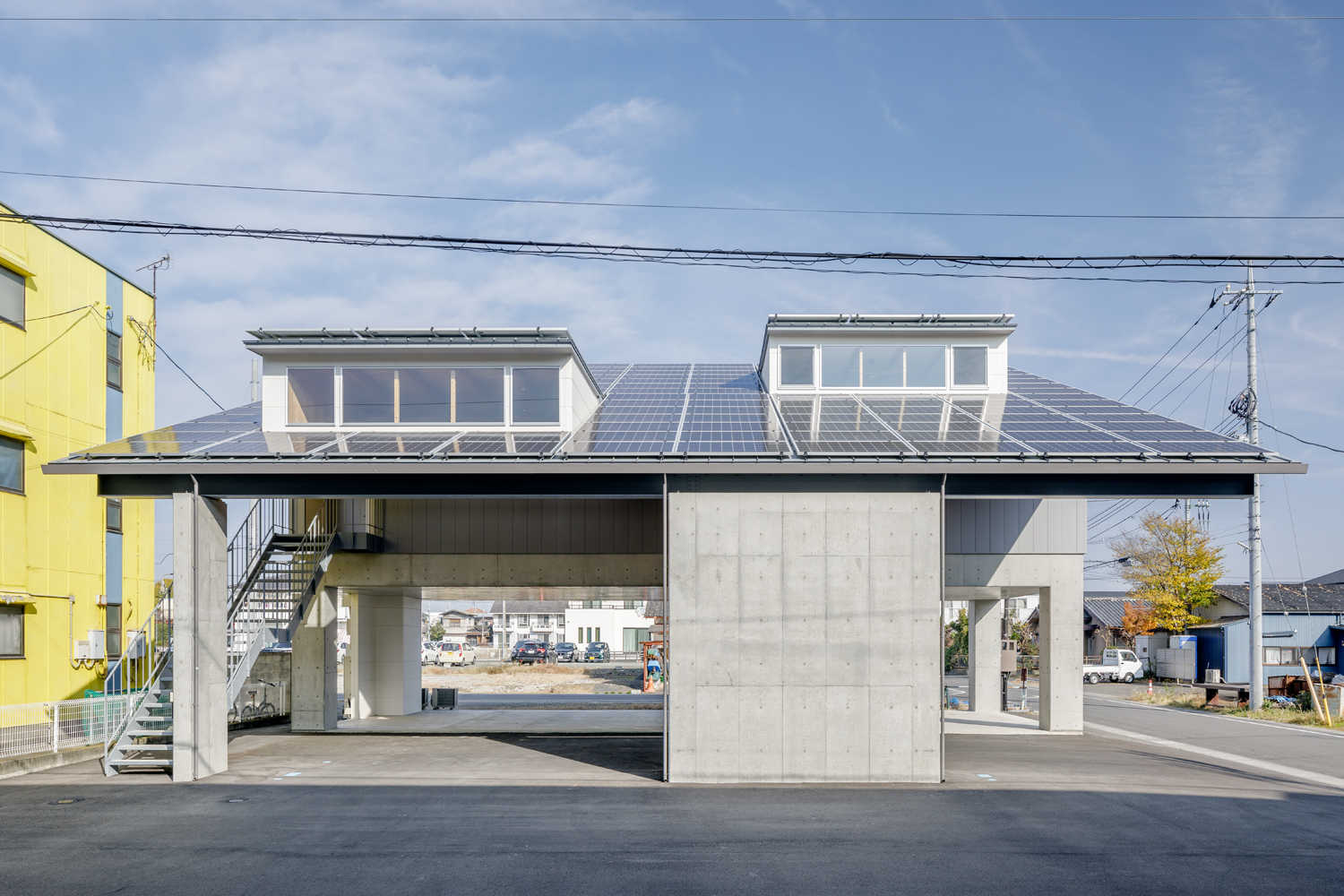
群馬県伊勢崎駅前に建つテナント併用住宅。高架化されたJR両毛線に隣接する敷地である。
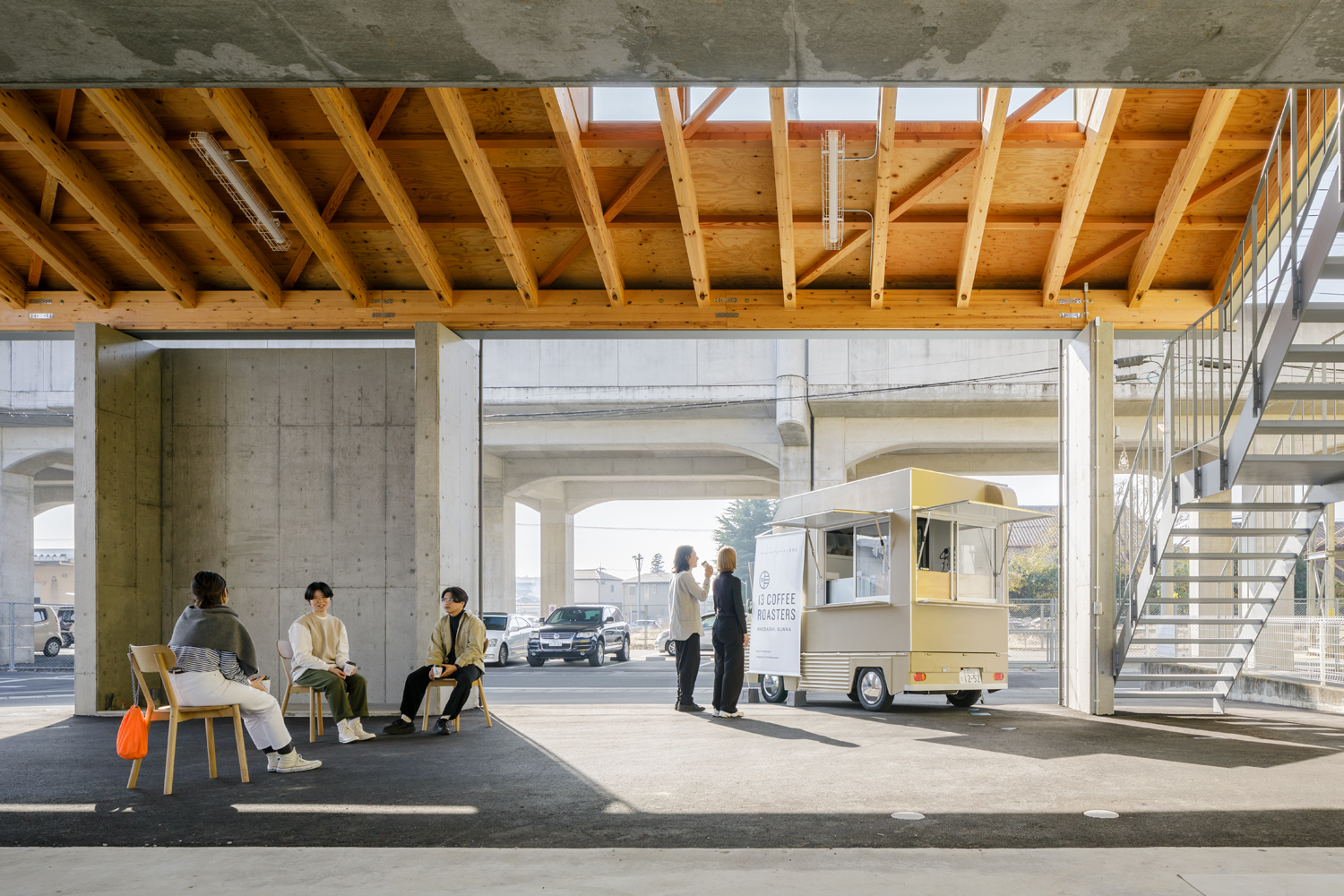
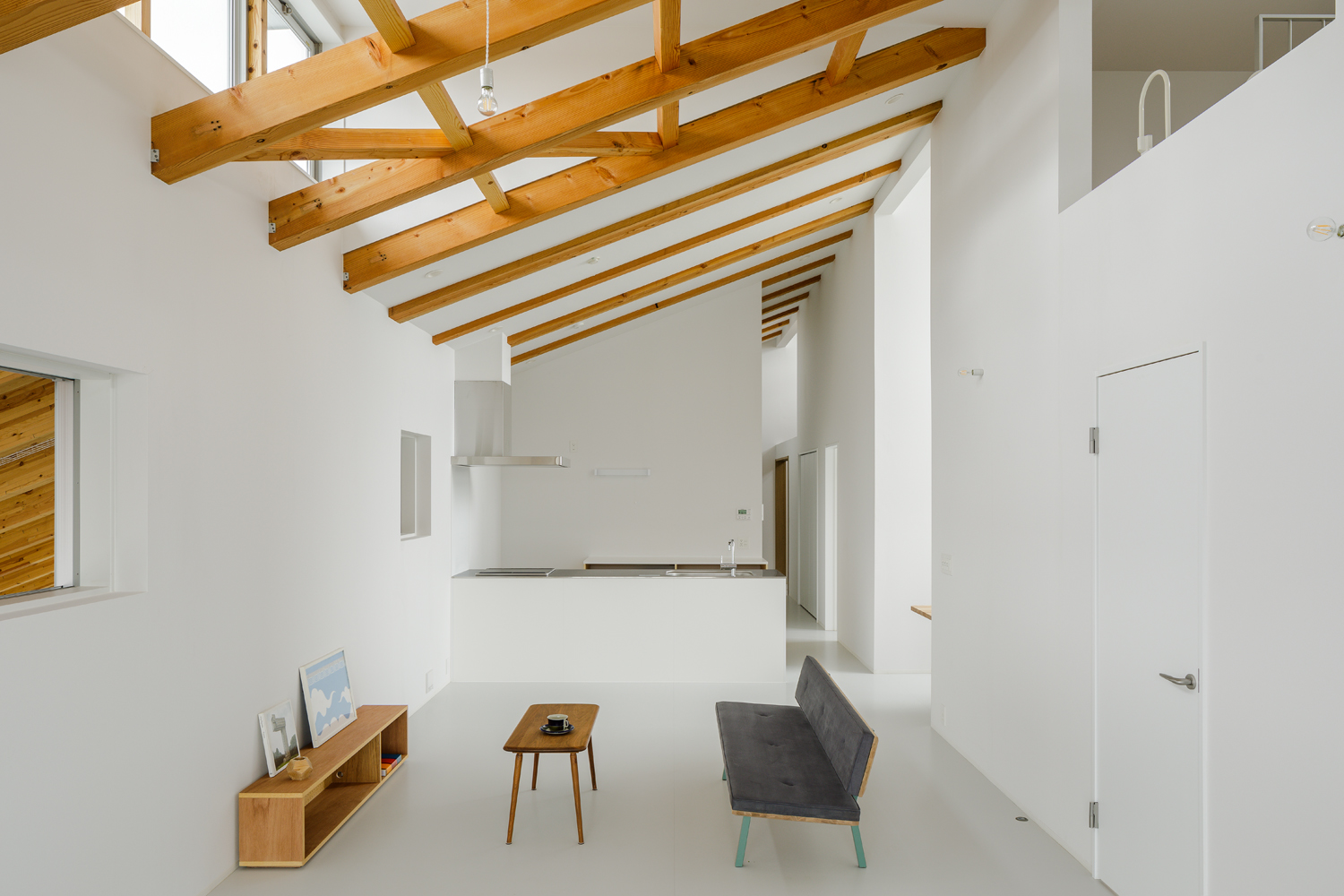
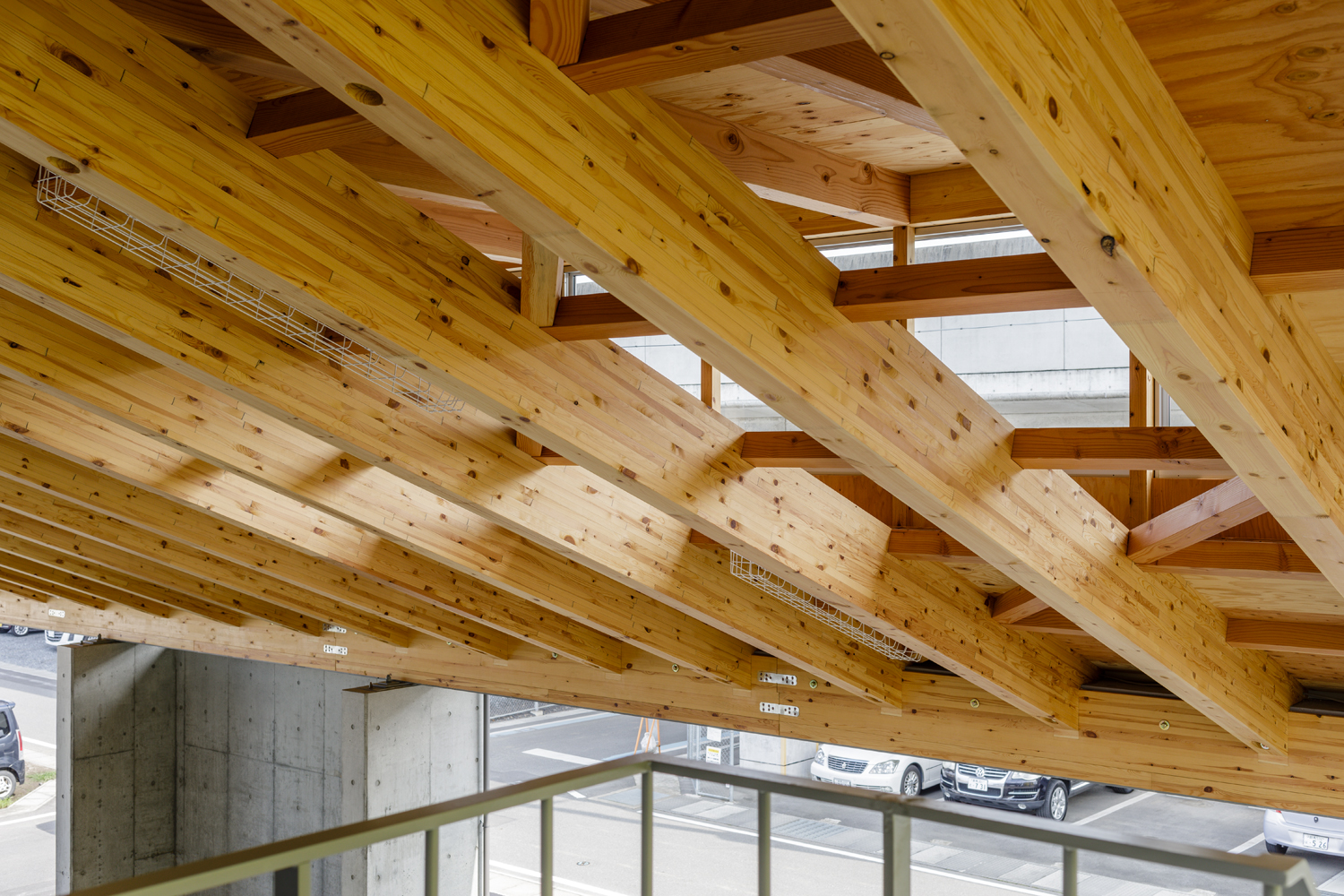
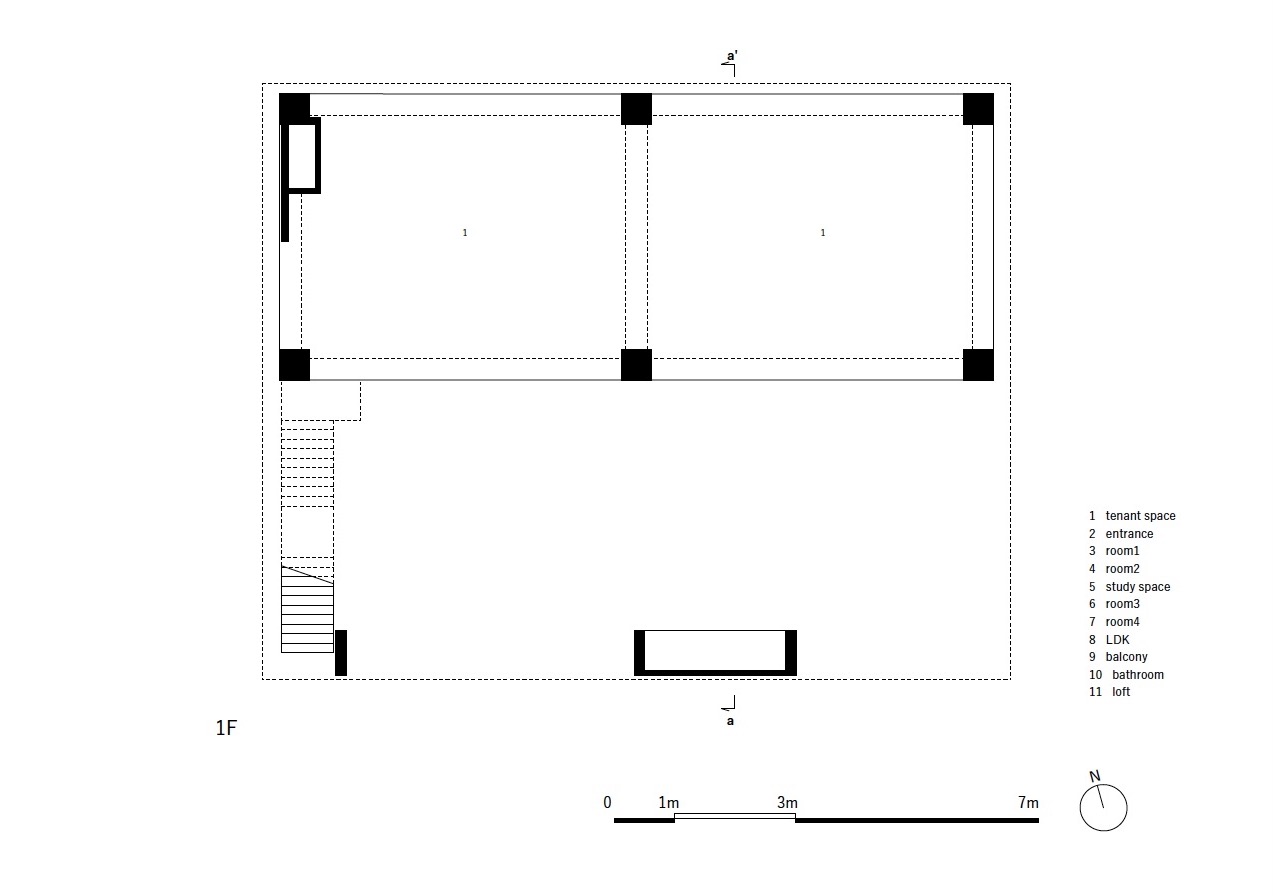
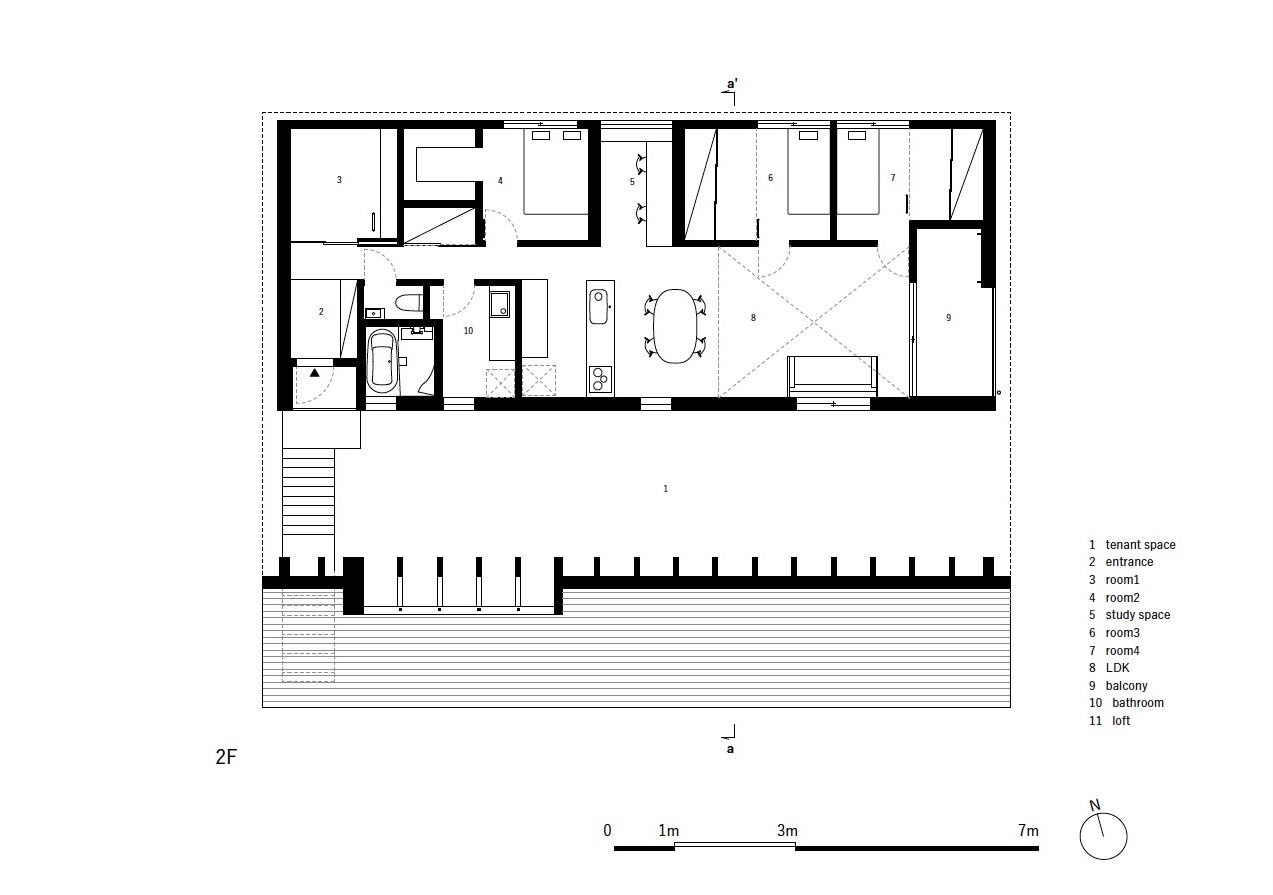
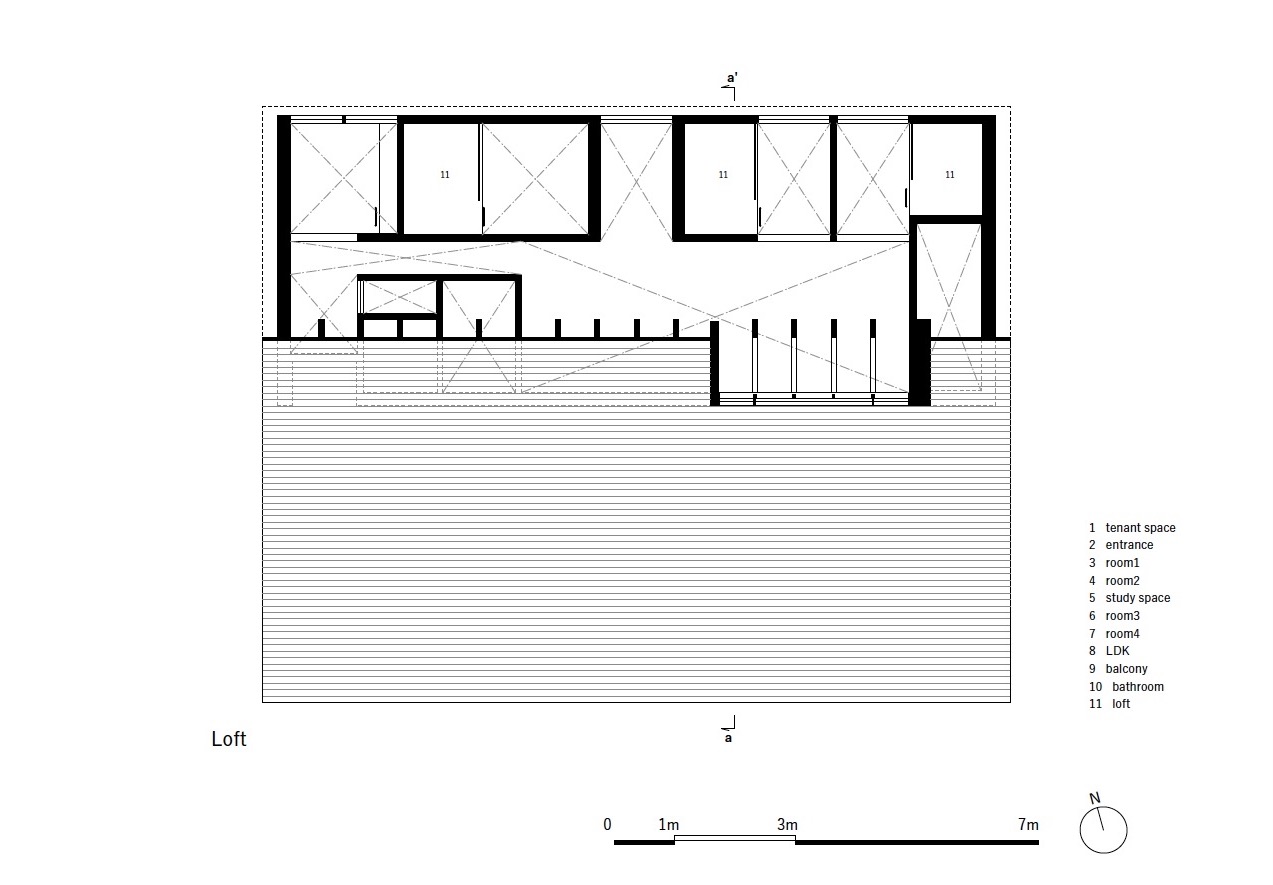
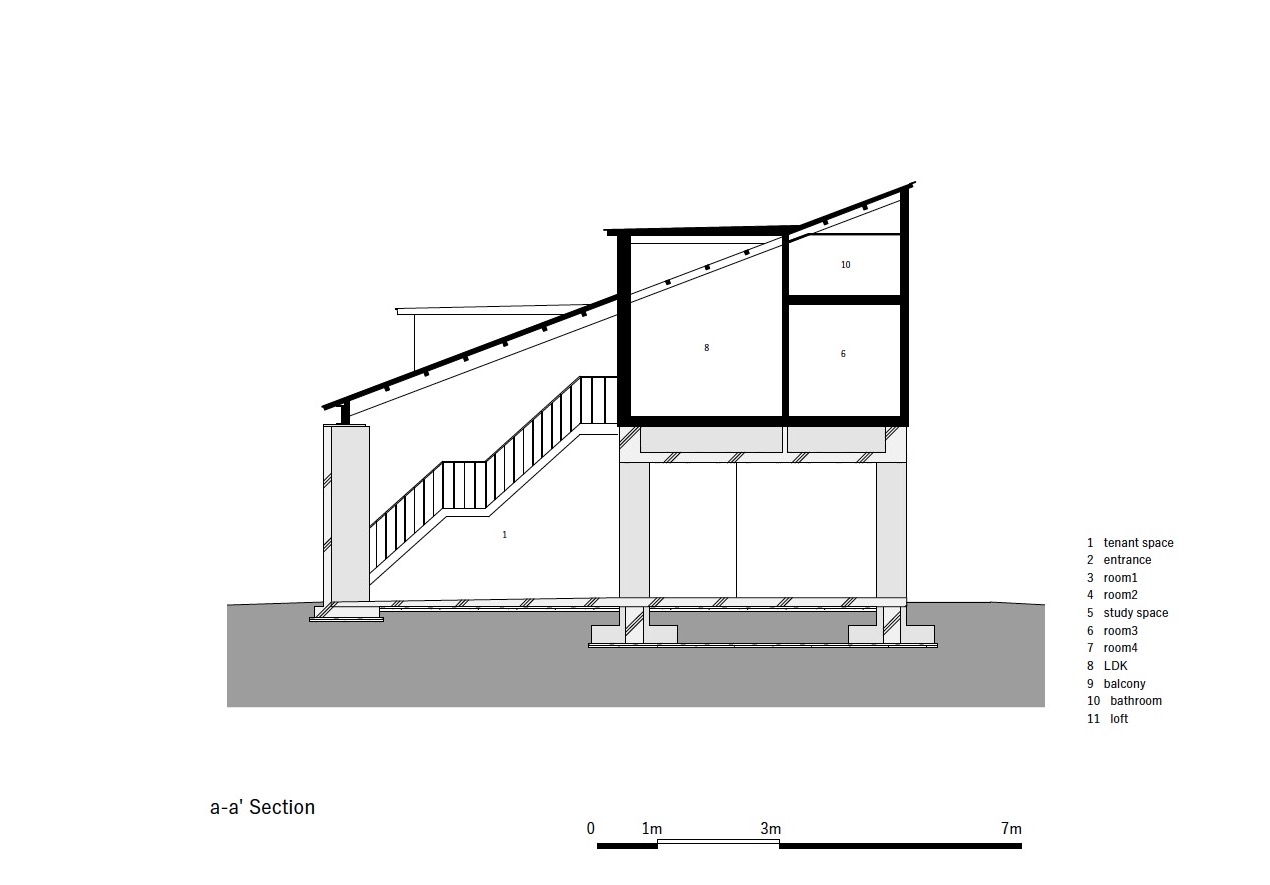
テナント併用とすること、できる限り太陽光発電パネルを載せることがクライアントの要望であった。テナントの家賃と太陽光発電の売電で得られた収入を建設費に充てる収支計画とし、住まいに加えて駅前にコミュニティを生み出す場をつくる計画である。電車の振動とテナント-住居間の騒音に配慮し、1階部分をコンクリート造のテナント、2階部分を木造の住宅として計画した。木造部の屋根は2階の床レベルまで延長させ大きな屋根下空間を生み出しながら、最適な角度で太陽光パネルを積載している。
今後、テナントが入り屋根下空間が積極的に使われ、人々が集まることでこの建築が小さな経済圏として循環し、レンタカー/ビジネスホテル/コンビニが点在する地方郊外の駅前のリアルに何かしらの影響を与えるきっかけをつくることを目指した。
Located in front of Isesaki Station in Gunma, this project is a mixed-use building combining tenant spaces and a private residence. The site sits directly adjacent to the elevated JR Ryomo Line. The client’s primary requests were to incorporate rental units and maximize the installation of solar panels. By utilizing both tenant rent and revenue from solar power sales to fund construction costs, the project was designed as a self-sustaining “small economic sphere” that fosters a new community hub in the station area.
To mitigate train vibrations and noise between the commercial and residential zones, we designed the first floor as a reinforced concrete structure for tenants and the second floor as a wooden structure for the residence. The roof of the wooden section extends down to the second-floor level, creating a large, sheltered outdoor space while maintaining the optimal angle for solar energy collection.
We aimed for this architecture to serve as a catalyst for change in the typical suburban station landscape—often dominated by rental car offices, business hotels, and convenience stores. As tenants move in and the space under the roof becomes a site for public activity, we envision the building circulating as a localized economy that brings new life to the station front.